Type D vs Type K Plugs: Differences & Compatibility
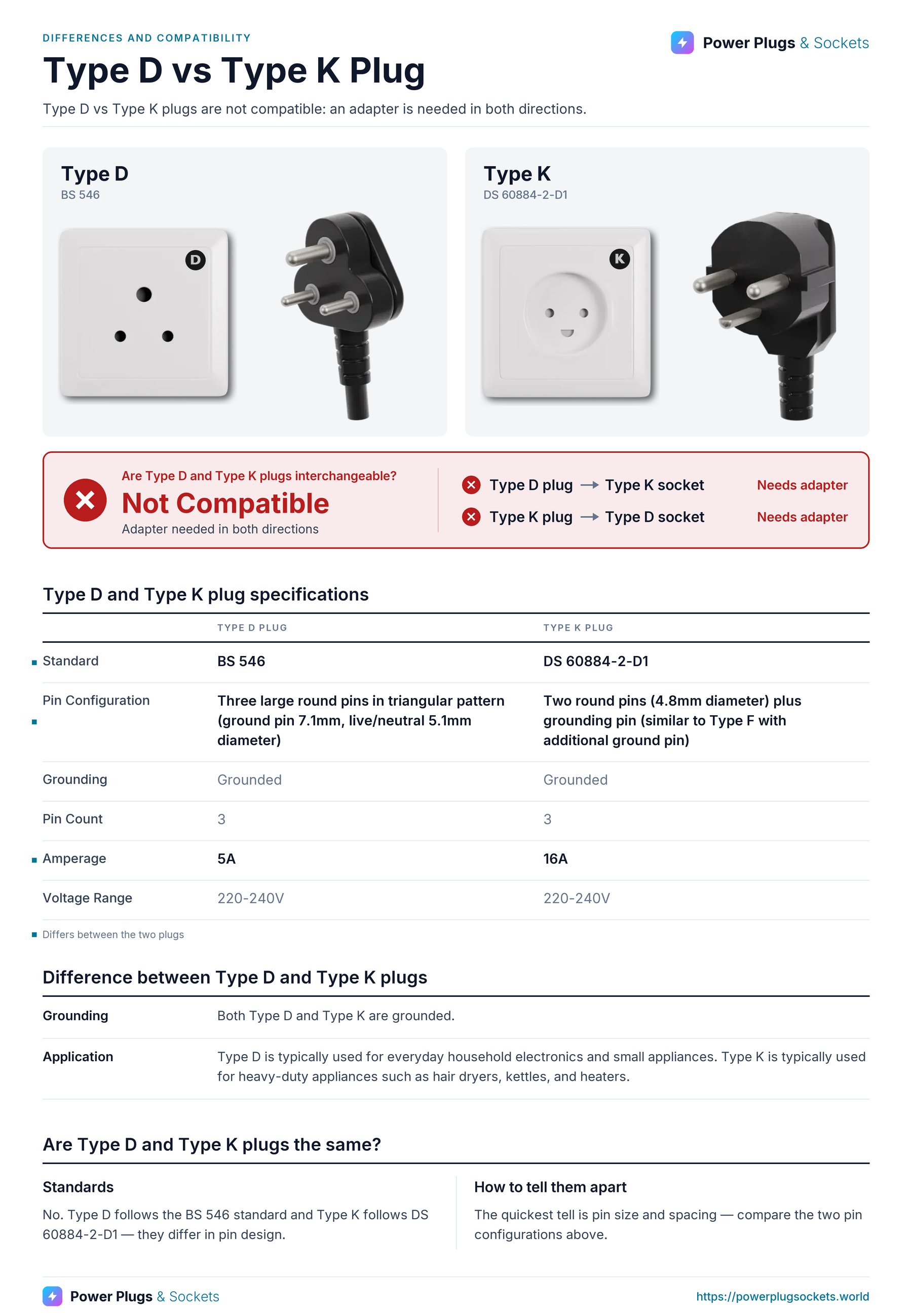
Type D vs Type K plugs are not compatible: an adapter is needed in both directions. Type D is a 3-pin, grounded plug rated 5A at 220-240V, while Type K is a 3-pin, grounded plug rated 16A at 220-240V. The two differ mainly in amperage and pin design, which is what decides compatibility — whether a Type D plug fits a Type K socket, and vice versa. Compare this with will a type C plug work in a type E socket without an adapter.
Swipe to compare
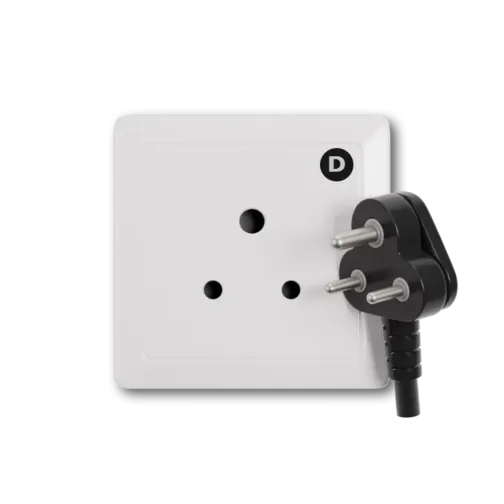
Type D
|
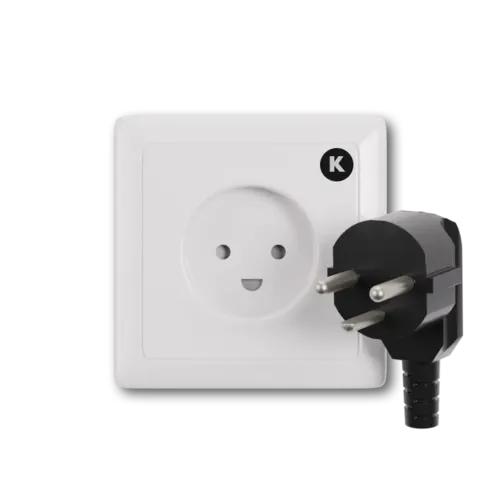
Type K
|
|
|---|---|---|
| Standard | BS 546 | DS 60884-2-D1 |
| Pin Configuration | Three large round pins in triangular pattern (ground pin 7.1mm, live/neutral 5.1mm diameter) | Two round pins (4.8mm diameter) plus grounding pin (similar to Type F with additional ground pin) |
| Grounding | Grounded | Grounded |
| Pin Count | 3 | 3 |
| Amperage | 5A | 16A |
| Voltage Range | 220-240V | 220-240V |
Pack a charger from Delhi and land in Copenhagen, and you'll find that the type D vs type K plug question settles itself the moment you reach for the wall: neither plug enters the other's socket. Both plug types run on the same 230 V supply, but they differ in pin size, earth pin shape, current rating and which foreign plugs each socket will safely accept.
Type D vs Type K Plug at a Glance
The Type D plug is the old British round-pin design, still defined by BS 546 in the UK and by IS 1293 in India. Type K is the Danish system, described in the 107-2-D1 standard sheet. Next, check should you choose type J or type O for an international travel adapter.
The letters come from the International Electrotechnical Commission (IEC) classification. They group plug & socket types by rough mechanical fit and aren't electrical standards in their own right.
| Feature | Type D | Type K |
|---|---|---|
| Governing standard | BS 546 (British), IS 1293 (Indian) | 107-2-D1 (Danish) |
| Pins | 3 pins, round, in a triangle | 3 pins: two round, one half-round earth |
| Rating | 5 A (BS 546) or 6 A (IS 1293), 250 V | 16 A, 250 V |
| Earthed (grounded) | Yes | Yes |
| Polarized | Yes | Yes |
| Fused plug | Optional | No |
| Insulated pins | Optional | No |
| Recessed socket | No | Optional |
| Socket accepts Europlug | Not by design | Yes |
| Socket compatible with plug types | D only (partial, unsafe fit for C, E, F) | C and K (partial, unsafe fit for E, F) |
| Main users | India and neighbouring countries | Denmark and its territories |
The headline gap is current: a Type K plug & socket pair is rated at 16 A, close to three times the 6 A of an Indian Type D outlet, which is why India pairs Type D with the bigger Type M for heavy loads.
How the Two Plug Types Are Built
Both plugs have a live pin, a neutral pin and an earth pin, yet the plug shapes follow two design traditions: one British, one continental European.
The BS 546 Three-Pin Layout
Plug type D uses three round pins in a triangular pattern: live and neutral side by side, roughly 19.1 mm apart, and a thicker earth pin above. BS 546 dates from 1934 and defines sizes of 2 A, 5 A, 15 A and 30 A, and it is still listed in BS 7671.
The 5 amps size is the classic round-pin plug. BS 1363, the Type G system, replaced it for everyday circuits, so BS 546 socket-outlets survive mainly for theatre lighting.
India kept the round pins and raised the rating to 6 A.
The Danish Plug and Its Half-Round Earth Pin
The Danish plug, or Danish standard plug, uses the two round power pins common across Europe plus a half-round earth pin, flat on one side, set below them. A Danish computer plug (DK 2-5a) tilts the power pins so it only fits a separate, surge protected computer circuit.
Pin Diameter, Length and Spacing Side by Side
- Type K power pins: a pin diameter of 4.8 mm, a pin length of 19 mm, and 19 mm pin centers.
- Type K earth pin: half-round, about 6.5 mm wide, centred 13 mm below the power pins.
- Type D power pins: about 5.1 mm in diameter and roughly 19.1 mm apart.
- Type D earth pin: round, about 7.1 mm, and longer so it connects first.
The spacing is almost identical, so the problem is diameter and the earth pin: the Indian plug's larger pins won't enter 4.8 mm Danish openings.
Socket Types, Ratings and Earthing Compared
The real differences sit in what each socket-outlet is designed to carry and how it protects you. The amp rating sets the biggest load.
A 2,000 W kettle on a 230 V supply draws about 8.7 A, comfortably inside a 16 A Danish outlet but well above the 6 A limit of an Indian Type D socket, while a 1,600 W travel hairdryer is borderline. Small electrical appliances suit Type D. Mains electricity in India and Denmark is nominally 230 V at a frequency of 50 Hz, within the 220 – 240 V band that product listings print as 220-240 V, so voltage is never why a plug fails to fit.
Both systems are grounded and polarized. Grounding sends a fault current to earth rather than through you, and Denmark has required earthed sockets in new installations since the early 1990s.
Insulated pins are only optional on Type D and absent on standard Type K. The Danish standard provides child-resistant shutters, and many Danish sockets are recessed as a receptacle, which hides the pins of a half-inserted plug.
Which Power Plugs Fit Each Socket
A Type K socket is compatible with plug types C and K, and only partially with E and F. A Type D socket is compatible with plug D alone by design, so an Indian wall is socket compatible with plug D only, although loose Indian sockets can give a partial, unsafe fit for C, E and F.
Europlug and Schuko Plugs in a Danish Outlet
The two-pin Europlug, CEE 7/16 or type C, and the CEE 7/17 contour plug fit a Danish socket safely, since neither expects an earth, so most chargers from continental Europe need no adapter. A Schuko plug, type F, earths through side earth clips, or grounding clips, that a Type K socket cannot meet, so it powers the appliance with no earth.
Unsafe Compatibility With French Plugs
The French type E plug gives the same unsafe compatibility in a Type K socket: power flows, the earth doesn't, and metal-bodied appliances can give noticeable electric shocks. This partial compatibility is why Denmark now allows Type E and F sockets alongside Type K.
Type M, the Larger Sibling of Type D
Type M is type D scaled up: the same triangle with fatter, wider-spaced pins and a 15 A (BS 546) or 16 A (Indian) rating. It serves high-current loads in India and is the main domestic socket in South Africa; it is not interchangeable with Type D.
Where Each Electrical Outlet Is Found
The power outlet type D map and the power outlet type K map barely overlap, so travel between them always involves an adapter. Next, check can i use a type A adapter with a type I socket.
Countries Built Around the Indian Socket
According to the IEC, some 40 countries use Type D, led by India, Sri Lanka, Nepal and Namibia. In several of them, notably Sri Lanka, Type D shares walls with Type G or Type M. Older sockets without shutters and loose plugs carry a real risk of electrocution.
Denmark, Greenland and the Faroe Islands
Type K is used in Denmark and its autonomous territories, Greenland and the Faroe Islands (also spelled Faeroe Islands). Most Danish homes and hotels now mix Type K outlets with Type E or F ones, and a type K socket still takes your two-pin Europlug charger.
Power Sockets Abroad: Adapters and Converters
Both countries run on 230 V, 50 Hz, so travelers moving between India and Denmark need adapters, not converters.
Choosing a Worldwide Adapter
A worldwide adapter or universal travel adapter should offer the following:
- A Type D output pin set; many cheaper models skip it, and Type M too.
- For an earthed laptop brick in Denmark, a plug adapter with a proper earth path, since the EU output suits only two-pin devices.
- Built-in USB ports, so one unit charges your phone and laptop.
- A rating and safety marks: most are limited to 10 A, below a Danish outlet's 16 A.
When You Also Need a Converter
You need a voltage converter only when a device built for 110-120 V, as many American and Japanese appliances are, goes into a 230 V socket. "100-240V" on the label means dual voltage, so only an adapter is needed, as with most phone and laptop chargers.