Type F vs Type G Plugs: Differences & Compatibility
Type F vs Type G plugs are not compatible: an adapter is needed in both directions. Type F is a 2-pin, grounded plug rated 16A at 220-240V, while Type G is a 3-pin, grounded plug rated 13A at 220-240V. The two differ mainly in amperage and pin design, which is what decides compatibility — whether a Type F plug fits a Type G socket, and vice versa. Next, check which countries use type B plugs versus type I plugs.
Swipe to compare
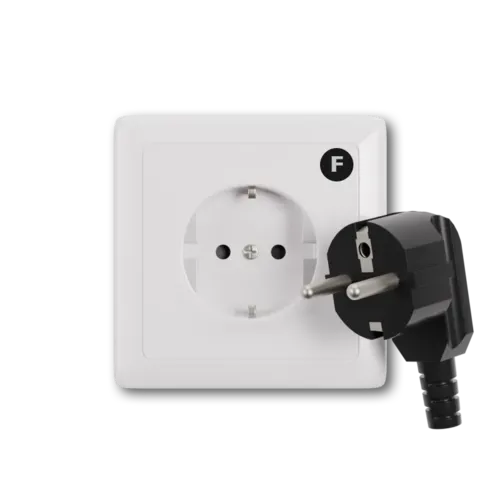
Type F
|
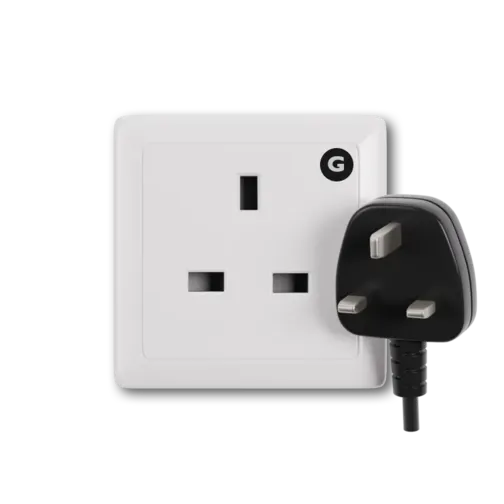
Type G
|
|
|---|---|---|
| Standard | CEE 7/4 (Schuko) | BS 1363 |
| Pin Configuration | Two round pins (4.8mm diameter, 19mm long) with grounding clips on sides | Three rectangular pins in triangular pattern (live/neutral 6.35x3.18mm, earth 3.18x7.92mm) |
| Grounding | Grounded | Grounded |
| Pin Count | 2 | 3 |
| Amperage | 16A | 13A |
| Voltage Range | 220-240V | 220-240V |
Packing a charger for a trip between Germany and London? The type F vs type G plug question comes down to the round-pinned Schuko plug used across mainland Europe and the three-pin, fused British plug used in the UK.
Below you'll see exactly how the pins, earthing, fuse, ratings and countries differ and what travel adapter keeps your appliances and devices safe on mains electricity in either place.
Type F vs Type G Plug: Side-by-Side Comparison
Both systems are in the IEC World Plugs guide. Type F is the German Schuko plug and socket defined in CEE 7 (the CEE 7/3 socket and CEE 7/4 plug); Type G is the British BS 1363, also published in Ireland, Malaysia and Singapore.
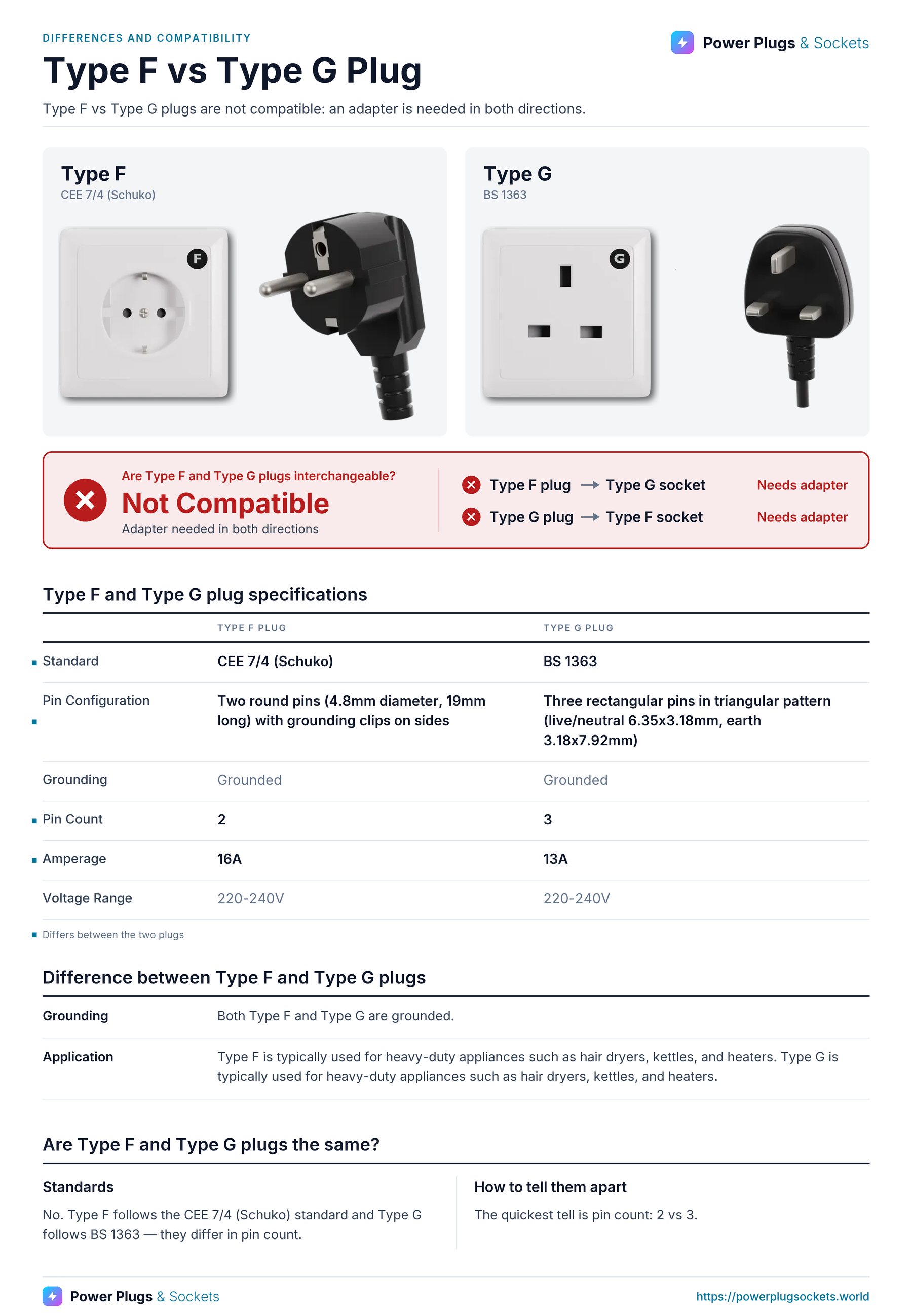
Neither plug fits the other socket without an adapter.
| Feature | Type F (Schuko) | Type G (BS 1363) |
|---|---|---|
| Standard | CEE 7/3 socket, CEE 7/4 plug | BS 1363 socket and plug |
| Power pins | Two round pins, 4.8 mm thick, 19 mm apart | Two flat rectangular pins |
| Earth connection | Two earth clips on the socket rim | Third rectangular earth pin on the plug |
| Rating | 16 A, 250 V | 13 A, 250 V |
| Typical mains supply | 230V, 50 Hz | 230V, 50 Hz |
| Fuse in plug | No | Yes, sized to the cord |
| Socket shutters | Optional, depends on country | Required, opened by the earth pin |
| Polarized | No, plug reverses either way | Yes, fixed live and neutral |
| Socket accepts Type C Europlug | Yes | No |
| Recessed socket | Yes, circular recess | No, flat face |
Both plugs are grounded, built for Class I appliances, while Class II appliances rely on double insulation and a protective earth is not needed.
Pin Layout and Earthing on the Type F Electric Plug and the British Plug
The earthing mechanism is the main design difference: one system earths through the socket, the other through the plug. Every mains socket-outlet is wired with live, neutral and earth (ground).
Type G plugs have three rectangular pins forming an isosceles triangle; the top earth pin, the circuit protective conductor of BS 7671, is longer, and insulated pins have insulating sleeves on live and neutral. The round BS 546 plug does not fit.
Two Round Pins and Earth Clips
The Type F electric plug, the CEE 7/4 plug, has two round pins 4.8 mm across, centres 19 mm apart, and no earth pin. The socket has two spring earthing clips in its circular recess that grip metal strips on the plug body, making the earth contact first.
Type F plugs are flat top and bottom. Schuko is short for Schutzkontakt, "protective contact."
Polarized vs Unpolarized Wiring
A Type F socket is unpolarized: the plug goes in either way up. The Type G system is polarized, with the line pin on the right, neutral on the left and earth at the top, so a switch or fuse always sits on the line side; the Type F plug is symmetrical.
Fuse, Shutters and Safety Features: Schuko vs BS 1363
Schuko relies on the recess and earth-first contact; BS 1363 layers more protection into the plug. Every UK plug contains a built-in fuse, usually 3 A or 13 A, as overcurrent protection, because a 32 A ring circuit is far more than a thin flexible cord can carry. Next, check type A vs type G plug.
A Type F plug has no fuse, since Schuko circuits are protected at 16 A or lower at the board.
Child Protection and Socket Shutters
A type G outlet blocks the live and neutral holes with shutters that only the longer earth pin opens, giving child protection against electric shock. Type F socket shutters are optional under DIN 49440-1, though Portugal, Finland, Denmark and Sweden demand child-proof shutters.
Voltage and Frequency for a Type F Electrical Outlet vs a UK Plug
A Type F electrical outlet and a BS 1363 outlet both deliver roughly 230 volts at 50 Hz, the frequency measured in hertz, or cycles per second, matching IEC 60038. A few Caribbean islands and parts of Asia use Type F on 110-127 V and 60 Hz.
16 A vs 13 A: Current Rating Differences
The current rating is the clearest difference: about 3,680 W at 16 A for Type F against about 2,990 W at 13 A for Type G.
- Type F socket: 16 A, 220 – 240 V, accepts plug types C, E and F
- Type G socket: 13 A, rated 250 V, accepts plug type G only
Most chargers are dual voltage, rated 100-240 V.
Countries That Use the Type F Socket vs the UK Standard
Type F is used in Germany, Austria, the Netherlands, Spain, Sweden, Russia and most of Eastern Europe, often beside Type C outlets. Type G is used in the United Kingdom, Ireland, Malta, Cyprus, Malaysia, Singapore, Hong Kong the Arabian Peninsula, Saudi Arabia and the UAE; more than 50 countries use the BS 1363 socket system.
| Country | Socket type | Voltage |
|---|---|---|
| Germany | Type C, Type F | 230V |
| Russia | Type C, Type F | 220V |
| South Korea | Type C, Type F | 220V |
| United Kingdom | Type G | 230V |
| Singapore | Type G | 230V |
| Malaysia | Type G | 240V |
Jordan, Myanmar, Bhutan and Macau can have a Type F socket and a Type G electrical outlet in one building, so check which socket type F or G is in your hotel room.
Compatibility: Plugging a Schuko Plug into a UK Socket and Back
There is no physical compatibility between the two systems, and forcing either is unsafe. Many electronics use a detachable IEC lead, so only the plug changes.
Some hotels in Asia fit a multi-standard universal socket or hybrid power strip or extension cords that meets no standard and may skip the earth connection.
Why a Europlug Fits One Socket and Not the Other
The two-pin Europlug (Type C, CEE 7/16) fits every Type F socket through 19 mm-spaced holes, but a Type G socket rejects it because its shutters stay closed. The exception is the UK bathroom shaver socket, BS 4573, for low-power devices only, never a hair dryer.
Travel Adapter Options for a Type F Receptacle or a UK Outlet
UK travellers heading into Europe need a plug type G to Type F adapter (a British-to-Schuko travel adaptor), and visitors to the UK need the reverse, sold as a Type F adapter to UK. The adapter only changes the pin shape, not the electricity. Next, check comparing type D and type I plugs for international travel.
Picking a Plug Adapter That Keeps the Earth
Choose a plug adaptor that carries the earth through: earth strips that meet the socket's clips, or a real earth pin that opens the shutters, not a plastic one. An adapter that passes only two pins removes the protection both standards were built around.
When You Need a Voltage Converter
A voltage converter or step-down transformer is needed only when supply voltage differs, such as a 120 V US hair dryer on a 230 V Type F outlet. Between Schuko and BS 1363 countries no converter is needed, and a charger marked 100-240 V needs only an adapter.
CEE 7/3, CEE 7/7 and the Wider Type F Family
The Schuko plug was patented by Siemens-Schuckertwerke in 1929, and the CEE 7/3 socket sits beside the French and Belgian CEE 7/5, known as Type E, which has a projecting earth pin; a Type E plug has a hole for it, and Type C plugs fit both.
The CEE 7/7 hybrid plug has side earth strips and a hole for the earth pin, so one plug fits both Type E and Type F sockets, labelled "Type E/F." The unearthed CEE 7/17 contour plug, 10 A or 16 A, and the Europlug also fit both. BS 1363 is one plug and one socket in every Type G country.