Type D vs Type I Plugs: Differences & Compatibility
Type D vs Type I plugs are not compatible: an adapter is needed in both directions. Type D is a 3-pin, grounded plug rated 5A at 220-240V, while Type I is a 3-pin, grounded plug rated 10A at 220-240V. The two differ mainly in amperage and pin design, which is what decides compatibility — whether a Type D plug fits a Type I socket, and vice versa. For a related pairing, see type F plugs run on 220-240V while type G plugs run on 220-240V.
Swipe to compare
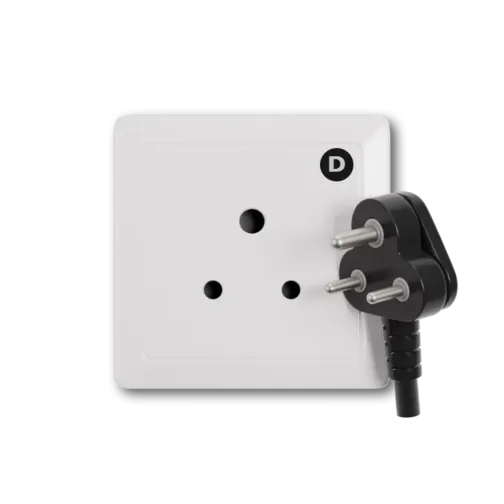
Type D
|
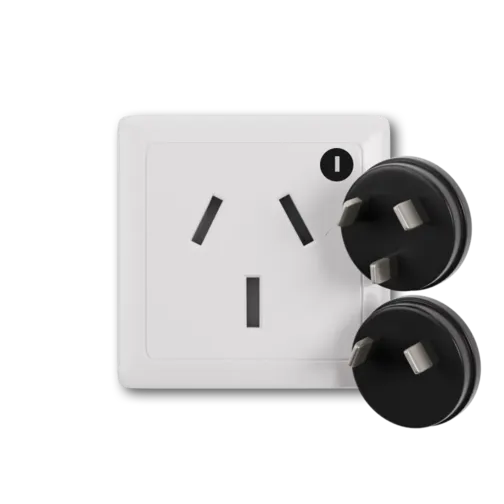
Type I
|
|
|---|---|---|
| Standard | BS 546 | AS/NZS 3112 |
| Pin Configuration | Three large round pins in triangular pattern (ground pin 7.1mm, live/neutral 5.1mm diameter) | Two angled flat pins (8mm long, 6.5mm wide, 30 degree angle) plus vertical grounding pin |
| Grounding | Grounded | Grounded |
| Pin Count | 3 | 3 |
| Amperage | 5A | 10A |
| Voltage Range | 220-240V | 220-240V |
Flying between India and Australia, or packing a charger made for Beijing to use in Kathmandu, you meet the type D vs type I plug problem: one plug has three round pins in a triangle, the other flat blades in a V, and neither fits the other's socket. Both run on similar mains voltage, so the difference is shape, amp rating and safety, and a simple plug adapter is usually enough.
Type D vs Type I Plug at a Glance: Plug Types Compared
Both plug types are listed in the International Electrotechnical Commission (IEC) guide to world plugs, a naming convention for power plugs and sockets used by travellers, not one standard; the current rating and rated voltage are what matter. Type D covers the old British round-pin standard and the Indian and South African standards built on it; type I covers the Australian, New Zealand, Chinese and Argentine flat-pin standards.
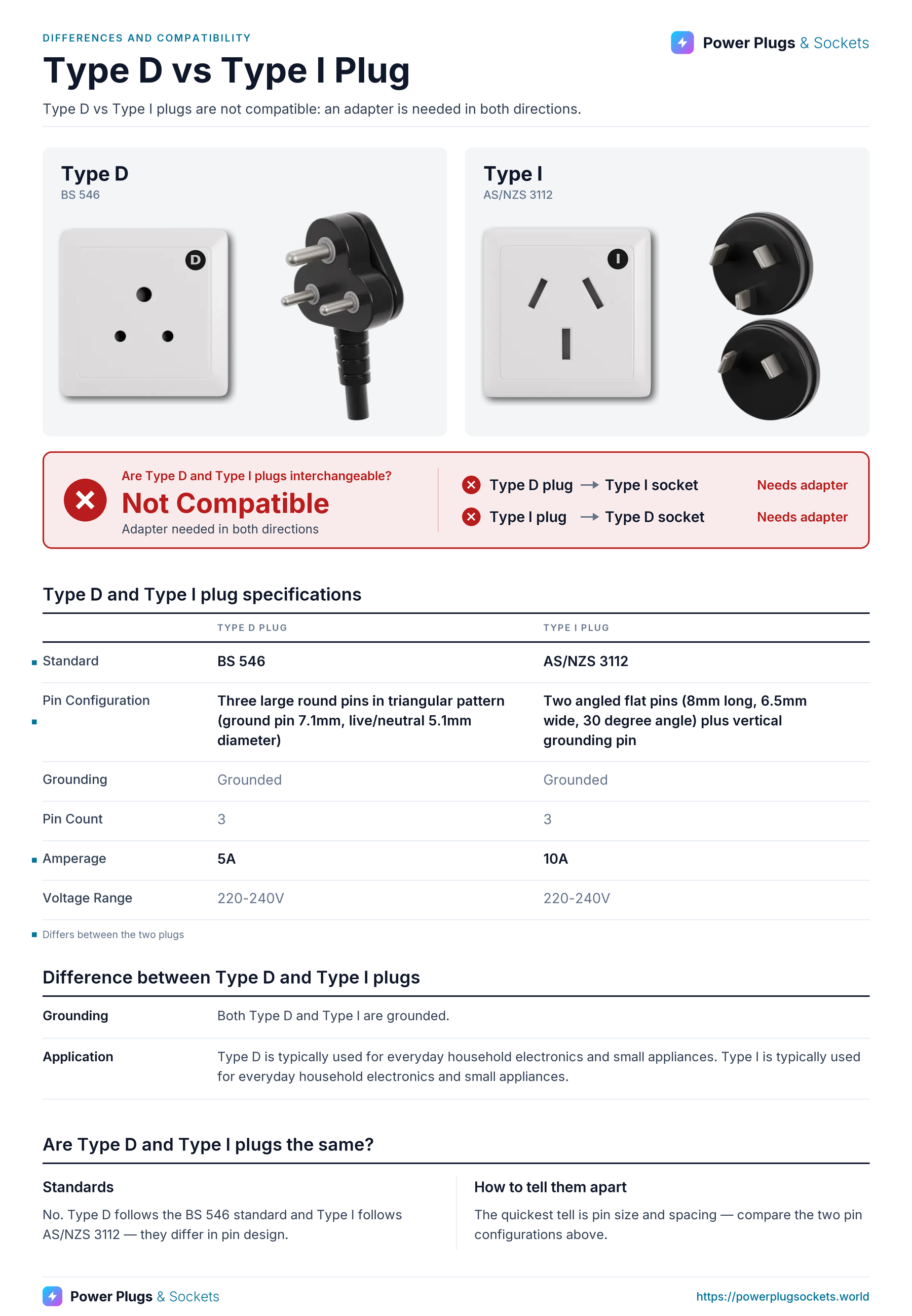
| Feature | Type D plug and socket | Type I plug and socket |
|---|---|---|
| Main standards | BS 546, IS 1293, SANS 164-3 | AS/NZS 3112, GB 1002, IRAM 2073 |
| Pins | Three round pins in a triangle | Two flat pins in an inverted V, plus a flat earth pin |
| Typical rating | 5 A (British), 6 A (Indian) at 250 V | 10 A at 250 V (16 A and 20 A versions exist) |
| Earthed (grounded) | Yes | Yes (unearthed two-pin version for Class II appliances) |
| Polarized | Yes | Yes |
| Insulated pins | Optional, often missing | Required in Australia and New Zealand |
| Recessed socket | No | No |
| Supply voltage where used | 230 V, 50 Hz in India | 230 V in Australia, 220 V in China |
Both systems deliver single-phase mains electricity of around 220-240 V, so only the plug shape changes between India and Australia; frequency is 50 Hz in both. The electrical power is the same, but there is no physical compatibility between a receptacle and a plug of the other family, even in hotels.
Three Round Pins vs Two Flat Pins in an Inverted V
A type D plug has three round pins in a triangle, with a live pin and neutral pin (line and neutral) at the bottom and a fatter earth contact on top. A type I plug (plug I) has two flat pins angled in an inverted V, with a third flat pin for earth.
Neither shape can enter the other's socket without an adapter.
Type D Plug Explained: BS 546 and IS 1293
The BS 546 standard, introduced in 1934, defined British round-pin plugs; the 5 A size is what the IEC calls type D. The United Kingdom moved to the type G plug after 1947. India kept the design as IS 1293, rated 6 A and 250 V, and South Africa has SANS 164-3. You might also want what are the differences between a type G and a type O plug.
Many cheap type D plugs are unearthed two-pin copies for double-insulated chargers that rely on double insulation (Class I appliances need the earth).
Type D Pin Dimensions, Pin Length and Pin Spacing
The 5 A/6 A plug has a 5.08 mm pin diameter, 14.9 mm pin length and 19.1 mm pin spacing, plus a 7.06 mm earth pin, 20.6 mm long and offset 22.2 mm, that makes contact first. The short power pins are why longer European pins cannot be pushed fully home.
Where Plug D Is Used: India, Nepal and Sri Lanka
Plug D is used mainly in India, Nepal and Sri Lanka, with plug type D also found in Pakistan, South Africa, Botswana and Namibia. India supplies 230 V at 50 Hz, as do the other countries on this list, so appliances bought in one usually run in another.
Type D and Type M: Amp Rating of the Round-Pin Family
For heavy appliances India uses type M, the larger 15 A round-pin plug (16 A under the 2005 Indian standard), which will not enter a type D socket. A 6 A type D socket tops out near 1,400 W at 230 V; a 10 A type I socket handles about 2,300 W, and Australia needs larger sockets only for air conditioners.
Plug Type I Explained: AS/NZS 3112, GB 1002 and IRAM 2073
Plug type I is the flat-pin system of Australia, New Zealand and much of Oceania, set out in AS/NZS 3112 (first AS 3112) and used in Fiji, Papua New Guinea and the South Pacific. China uses GB 1002 and Argentina IRAM 2073, so the 10 A versions physically fit one another's sockets. You might also want which countries use type A plugs versus type G plugs.
The Argentine plug is wired with live and neutral swapped, a polarity reversal that rarely matters, and China's 16 A version has wider-spaced pins that are incompatible with every Australian socket outlet. New Zealand's piggy-back plugs have no round-pin equivalent, and licensed electricians alone may change a wall socket.
Australia also defines grounded plugs from 10 A to 32 A with a growing earth pin.
The V-Shape and Earthing Pin Layout
The two power pins sit at 30° to the vertical, forming a V, with the earthing pin below them in Australian sockets. All three flat pins measure 6.35 mm by 1.63 mm, the power pins are 17.06 mm long, and the angled blades give the plug polarization.
Safety: How Type D Sockets Compare with Type I
On safety, the families are not equal: type D dates from the 1930s and often lacks features newer standards require. Australian type I plugs have insulated pins with plastic insulating sleeves, and often shutters, so a partially inserted plug is safe to touch, while most type D plugs have bare pins and risk an electric shock.
Both plugs are polarized and have a longer earth pin, the protective conductor that carries fault current away; a type D grounding pin sits on top of the triangle, a type I earth pin below or above the V.
Type D Outlets, Type I Plugs and Travel Adapter Compatibility
Type D outlets and type I plugs are not compatible in any direction, but India, Nepal, Sri Lanka, Australia, New Zealand and China all supply 220-240 V at 50 Hz, so with the right travel adapter an appliance from one region works in the other. Avoid so-called universal socket or multi-standard outlets, which meet no official standard.
Neither plug has a fuse, so a short circuit trips the circuit breaker in the board.
Will a Type I Plug Fit a Type D Outlet?
No. Choose one of the travel adaptors, an adaptor with type I slots on the front and type D pins on the back, with a real earth pin if the appliance has one. Check the adapter rating too: a 10 A Australian heater in a 6 A type D socket can overload it.
Europlug, Schuko and Type C Plugs on Round-Pin Sockets
A Europlug (type C) often goes into a type D socket, but its longer pins sit poorly, with sparking a risk. A Schuko (type F) or French type E plug must be forced in and runs without earthing, so do not do it.
A plug adapter only changes pin shape; a voltage converter is needed only for a different supply, such as a 120 V hair dryer. Most chargers are dual voltage, marked 100-240 V, 50/60 Hz.