Type H vs Type K Plugs: Differences & Compatibility
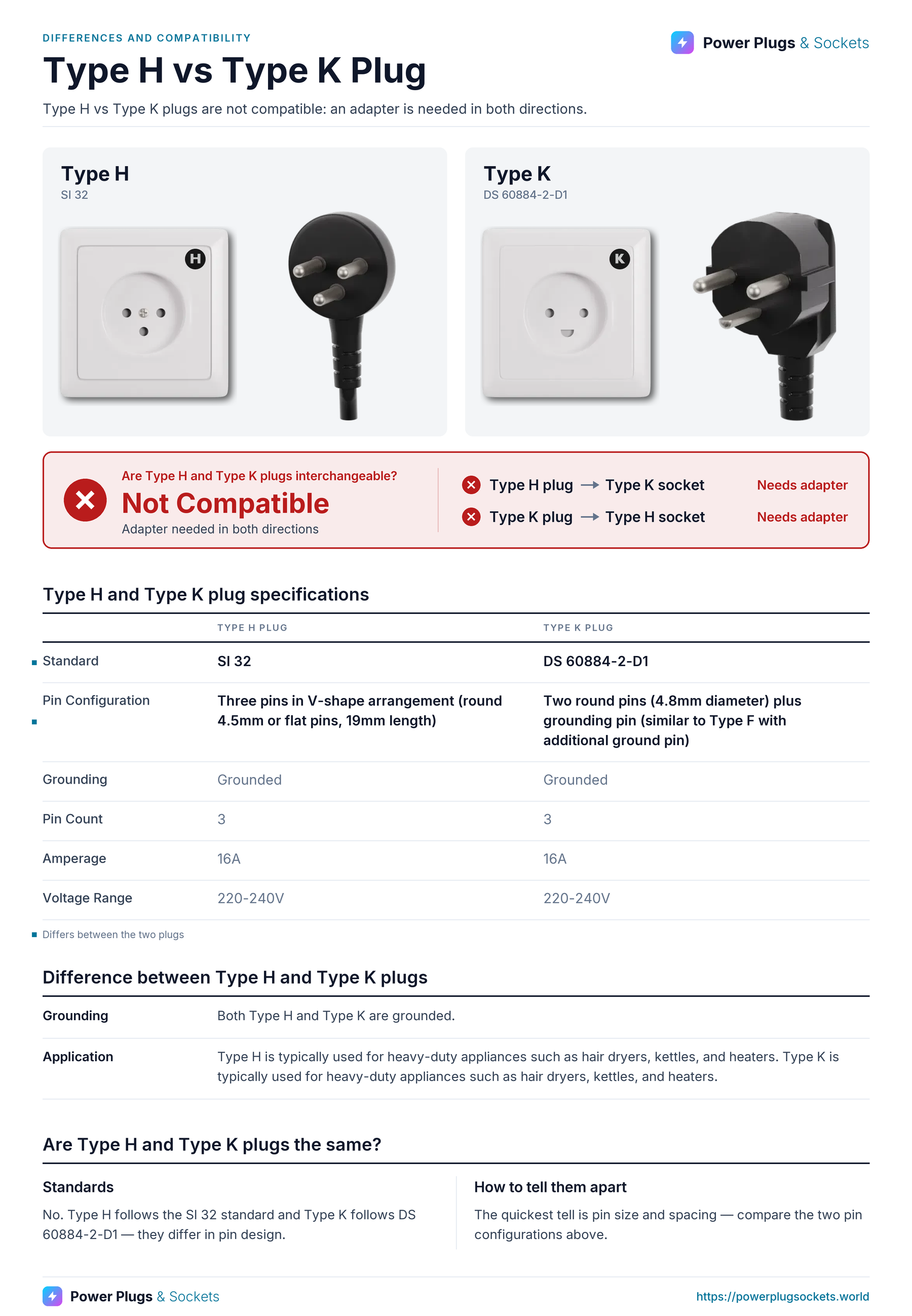
Type H vs Type K plugs are not compatible: an adapter is needed in both directions. Type H is a 3-pin, grounded plug rated 16A at 220-240V, while Type K is a 3-pin, grounded plug rated 16A at 220-240V. The two differ mainly in pin design, which is what decides compatibility — whether a Type H plug fits a Type K socket, and vice versa. For a related pairing, see type C vs type J socket.
Swipe to compare
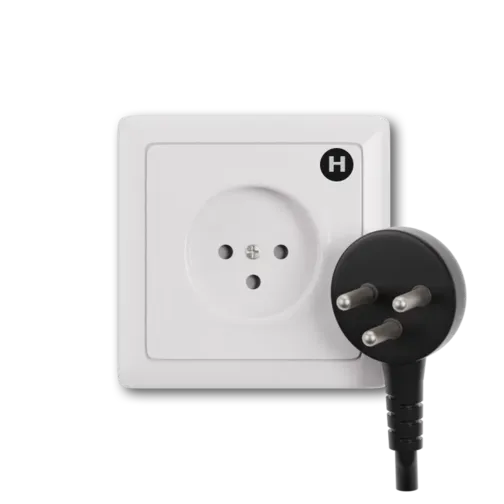
Type H
|
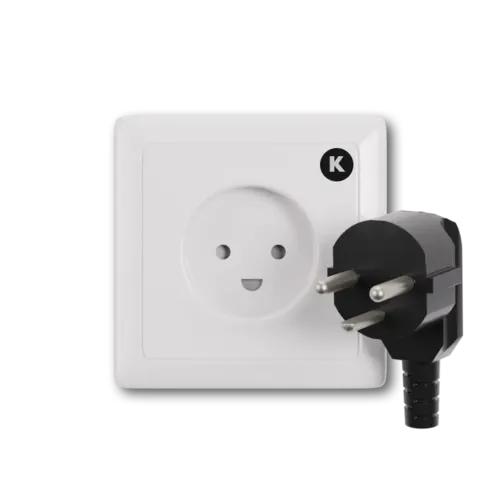
Type K
|
|
|---|---|---|
| Standard | SI 32 | DS 60884-2-D1 |
| Pin Configuration | Three pins in V-shape arrangement (round 4.5mm or flat pins, 19mm length) | Two round pins (4.8mm diameter) plus grounding pin (similar to Type F with additional ground pin) |
| Grounding | Grounded | Grounded |
| Pin Count | 3 | 3 |
| Amperage | 16A | 16A |
| Voltage Range | 220-240V | 220-240V |
Heading to Tel Aviv and Copenhagen on the same trip? The type H vs type K plug question matters because each country uses a three-pin domestic electrical outlet that looks similar yet accepts a different set of plugs.
This page shows how the two systems differ in pin layout, earthing and ratings, and which plug adapter or voltage converter your appliances really need to draw electricity safely in Israel and Denmark.
Type H vs Type K Plug at a Glance
Both systems are earthed, rated at 16 A (16 amps) and 250 V, and sit on a 230 V, 50 Hz supply. The differences are where the pins sit, the earth contact, and which foreign plugs each socket accepts.
| Feature | Israeli system | Danish system |
|---|---|---|
| National standard | SI32 | 107-2-D1 |
| Plug rating | 16 A, 250 V | 16 A, 250 V |
| Supply voltage and frequency | 230 V, 50 Hz | 230 V, 50 Hz |
| Pins on the plug | Three round pins (flat before 1989) | Two round pins plus a half-round earth pin |
| Earthed (grounded) | Yes | Yes |
| Polarized socket | Yes | Yes |
| Fused plug | No | No |
| Recessed socket | No | Optional |
| Accepts the Europlug | Yes | Yes |
| Accepts Schuko and French plugs | Partly, with no earth | Partly, with no earth |
Power plug & outlet Type H is found in Israel, the West Bank and the Gaza Strip: 3 pins, grounded, 16 A, 220 – 240 V, socket compatible with plug types C and H, with partial and unsafe compatibility for E and F plugs. Power plug & outlet Type K is found in Denmark, Greenland and the Faroe Islands, with the same ratings; E and F plugs fit without an earth connection.
Neither plug is fused or insulated on the pins; protection comes from the socket design and wiring.
Plug Types and Socket Types Explained
The letters H and K are labels, not specifications, and the IEC reuses them, from a list compiled by the US Department of Commerce International Trade Administration. The binding details, such as pin diameter and earth position, live in each national standard, so treat the letter as a shortcut and the standard as the final word.
Where You Find Each Power Outlet
The Israeli power outlet is used only in Israel, the West Bank and the Gaza Strip. The Danish design covers Denmark, Greenland and the Faroe Islands (also spelled Faeroe Islands).
Mains electricity and mains voltage match, so only the plug shapes differ.
How Israeli Plugs and Danish Plugs Are Built
Both designs carry two power pins plus an earth contact. The Israeli layout angles its pins toward each other, while the Danish one keeps the power pins parallel and adds an earth pin underneath. For a related pairing, see how the pin configuration of a type B plug differs from a type L plug.
Type H: Three Pins in a V Shape
A type H plug follows the Israeli standard SI 32. Its live and neutral prongs sit at the top in a V shape, angled toward an earth pin at the bottom in a triangular pattern.
Type K: Round Power Pins and a Half-Round Earth Pin
The Danish plug keeps two round power pins side by side, each 4.8 mm in diameter and 19 mm long, spaced 19 mm apart. Below them sits a half-round earth pin, D-shaped and part of the plug rather than the socket.
Pre-1989 Flat Pins and the 1989 Round-Pin Revision
Israeli plugs originally had three flat pins. In 1989 the standard changed to three round 4.5 mm pins in the same locations, and new sockets take both and unearthed Europlugs.
Pin spacing is 19 mm; pre-1989 sockets and old-style plugs with flat pins are now rare.
Which Plugs Fit Israeli Sockets and Danish Sockets
Each Israeli or Danish socket is compatible with plug types C safely, and both physically take some earthed European plugs without connecting their earth. Neither accepts the other's own plug.
The Europlug Fits Both
The Europlug (CEE 7/16 Alternative II) is a flat two-pin plug rated 2.5 A, with round pins 4 mm thick and 19 mm long, not grounded. Phone chargers and most small electronics ship with a type C plug.
The CEE 7/17 contour plug fits Danish sockets safely; check it seats fully in Israel.
Schuko and French Plugs: Partial and Unsafe Compatibility
A Schuko plug (CEE 7/4) earths through metal earth clips (grounding clips) on its sides, and a French plug (CEE 7/6) has a hole for the CEE 7/5 socket's earth pin. Both often push into an Israeli or Danish socket but make no earth connection: partial and unsafe compatibility.
Denmark now also allows CEE 7/3 and CEE 7/5 sockets, but Israel does not, so use an earthed adapter there.
Can a Danish Plug Go Into an Israeli Socket?
No, and an Israeli plug will not fit a type K socket. Among plug shapes, the Danish power pins are thicker than the SI32 openings, and the Israeli V layout puts pins where a Danish face has no holes.
Use an adapter or a replacement cord.
Round Pins Versus Dedicated Earth Contacts
Both systems put the earth on the plug, not the socket, but at different places: a round pin at the base of the V in Israel, a half-round pin below parallel pins in Denmark. France puts the earth pin in the socket and Schuko earths through side clips, so a grounded plug from Germany or Switzerland-style designs has nothing to connect to; a grounding pin must sit on the plug here.
SI 32 and Danish Plug Standard Safety Differences
Each national standard sets requirements for earthing, shutters and special variants; the safety gap shows up when foreign plugs and sockets meet. Danish rules have required earthed sockets in new electric installations since the early 1990s, and every socket had to sit behind earth-fault interrupters by 1 July 2008.
The Danish standard provides for child-resistant shutters, and with no insulation sleeves on the pins, recessing does that job; a socket without a switch must be recessed deep enough to keep fingers off live pins. Denmark also has a dedicated computer plug (DK 2-5a) for surge-protected sockets, and Israel has no such variants.
Electric Shocks From Missing Earth Contacts
Plugging earthed European appliances into a Danish or Israeli socket can give electric shocks, even risk electrocution, and the fault is the missing earth, not the voltage. If a washing machine or kettle gives you a tingle, stop using it until the earth is connected.
Travel Tips for SI32 and 107-2-D1 Outlets: Plug Adapter Choices
For travelers, the choice comes down to one adapter decision and one voltage check.
Do You Need a Travel Adapter?
From North America, the UK, Australia or Asia you need a travel adapter for each country or a universal one listing both H and K. From mainland Europe with Europlug devices you need none; with earthed German or French plugs, use an earthed adapter in Israel. Many universal adapters skip the Israeli pattern.
Voltage Converter or Dual Voltage?
An adapter changes the shape, not the voltage. A device rated only for 110–120 V needs a voltage converter; anything marked 100–240 V is dual voltage and needs only the adapter, and between these two countries never a converter.
Hair Appliances and High-Power Devices
A 1,800-2,000 W hair dryer draws close to the 16 A both systems are rated for, so the adapter must be earthed and rated for that current. A single-voltage 120 V dryer will burn out on 230 V.