Type I vs Type K Plugs: Differences & Compatibility
Type I vs Type K plugs are not compatible: an adapter is needed in both directions. Type I is a 3-pin, grounded plug rated 10A at 220-240V, while Type K is a 3-pin, grounded plug rated 16A at 220-240V. The two differ mainly in amperage and pin design, which is what decides compatibility — whether a Type I plug fits a Type K socket, and vice versa. Also see what adapter converts a type L plug to a type O socket.
Swipe to compare
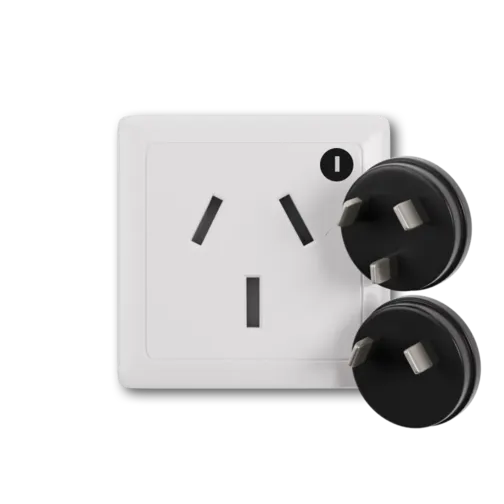
Type I
|
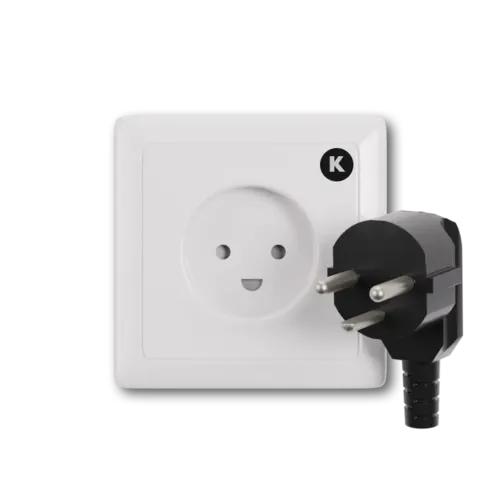
Type K
|
|
|---|---|---|
| Standard | AS/NZS 3112 | DS 60884-2-D1 |
| Pin Configuration | Two angled flat pins (8mm long, 6.5mm wide, 30 degree angle) plus vertical grounding pin | Two round pins (4.8mm diameter) plus grounding pin (similar to Type F with additional ground pin) |
| Grounding | Grounded | Grounded |
| Pin Count | 3 | 3 |
| Amperage | 10A | 16A |
| Voltage Range | 220-240V | 220-240V |
Packing for a trip between Australia and Denmark? The type I vs type K plug question is real: one uses angled flat blades, the other round pins with the earth on the plug, so neither accepts the other without a plug adapter.
The electricity is 230 V at the same frequency, so you almost never need a voltage converter, only the right type K electrical plug or Type I adapter for travel.
Type I vs Type K Plug at a Glance
These plugs and sockets appear in the IEC World Plugs reference and IEC TR 60083 report. Type I is the Australasian design that also spread to China and Argentina; Type K is the Danish design.
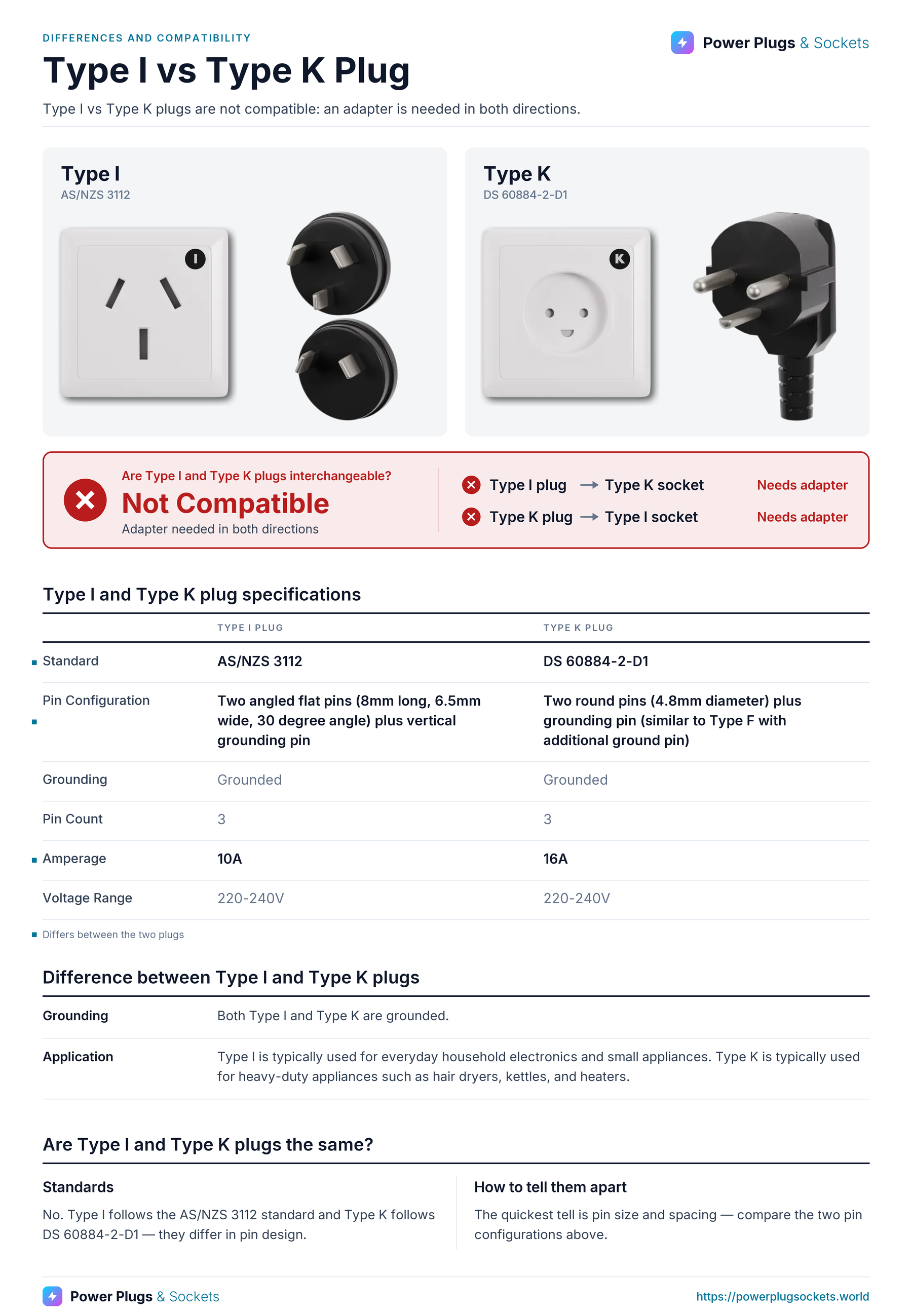
The table compares the two plug types and the plug and socket pairs.
| Feature | Type I | Type K |
|---|---|---|
| Main standard | AS/NZS 3112 (Australia, New Zealand); IRAM 2073 (Argentina); GB 1002 (China) | Danish standard DS 60884-2-D1, built on IEC 60884-1 |
| Live and neutral pins | Two flat blades set in an inverted V | Two round pins, 4.8 mm across |
| Earth | Flat vertical pin on the plug | Half-round grounding pin on the plug; earth hole in the socket |
| Typical rating | Rated 10 A (15 A, 20 A and 32 A versions exist) | Rated 16 A |
| Voltage and frequency | 220-230 V, 50 Hz | 230 V, 50 Hz |
| Socket also takes | Only Type I | Europlug (Type C), plus Type E and Schuko plugs without earth |
The headline difference is where the earth lives: on Type I a third blade, on Type K a male earth pin on the plug with the hole in the receptacle, the reverse of the French Type E system.
The AS/NZS 3112 Plug: Power Pins in a V-Shape
Type I is defined in AS/NZS 3112 and used across Oceania and the South Pacific, including Fiji, Papua New Guinea and Tonga. The earthed version has two flat pins in an upside-down V-shape with a flat vertical grounding pin below. Also see what are the differences between a type C and a type G plug.
The earth blade is longest.
Flat Pins, Pin Dimensions and Insulated Pins
The two power pins sit at 30 degrees, and Type I plugs from different countries usually fit each other's sockets despite a slightly different pin length. Since 2005 new Australian plugs need insulating sleeves on the live and neutral blades, and piggy-back plugs exist only for Australia.
Only licensed electricians may replace a socket in Australia. The Argentine plug (IRAM 2073) swaps live and neutral polarity against Australian practice, and Chinese sockets are often installed upside down, with the earth at the top, and Argentina's 10 A and 20 A plugs are mutually incompatible.
Unearthed Two-Pin Type I Plugs and Higher Ratings
A dual socket once took Type A in China. Class II appliances such as phone chargers often use an unearthed two-pin version in the same socket, while Class I appliances use the grounded plug.
The everyday plug is rated 10 A, 15 A plugs widen the earth pin, and 20 A and 32 A plugs enlarge the other blades, so a 10 A plug fits a 15 A socket but not the reverse.
The Danish Plug and the DS 60884-2-D1 Standard
Type K is used in domestic and household wiring in Denmark, Greenland and the Faroe Islands. DS 60884-2-D1, once standard sheet 107-2-D1, sits on top of IEC 60884-1, making it an IEC-based design.
Round Pins and the U-Shaped Earthing Pin
The power pins are round, 4.8 mm in diameter, 19 mm long and spaced 19 mm apart. Below them sits a U-shaped earthing pin, a half-round blade about 6.5 mm across and 14 mm long, offset 13 mm from the power pins.
Because the earth pin is on the plug, the Danish socket needs only a hole. Pin diameter tells the systems apart: Type K pins are round, Type I blades flat.
Danish sockets were traditionally fitted with a switch to cut power before insertion; switchless ones must be recessed, and the standard provides child-resistant shutters (a shutter over each live hole). The variation DK 2-5a serves surge protected computer sockets and cannot enter a Type I socket.
Type K Socket Compatibility with Europlug, Type E and Type F
A type K socket fits several continental plugs with the same 19 mm spacing, and the live pins fit, but only some keep a working earth contact.
- Type C (Europlug, CEE 7/16) and contour plugs (CEE 7/17) fit safely, since they never had an earth to lose.
- Type E and type F plugs, including the CEE 7/4 Schuko, fit the power pins but stay unearthed.
- Type I blades are not compatible at all.
Under European Union single-market rules, Denmark stopped requiring type K plugs on imported earthed appliances, so most arrive with a Schuko plug or CEE 7/7. People report a buzzing sensation touching a toaster or laptop, and electric shocks from an unearthed metal appliance can be life-threatening.
Danish rules have since allowed Type E sockets from 2008 and type F from 2011.
Why the Danish Standard and Australasian Outlets Don't Mix
Neither plug can enter the other socket. A Type I socket has two slanted and one vertical slot, so a round 4.8 mm pin has nowhere to go, and a Type K socket outlet's round holes cannot accept flat blades.
Wall outlets in either country do not mix, and the plug types never partly fit. A hotel hybrid universal socket cannot be counted on.
Choosing a Type K Adapter or Travel Adapter
Because the voltage is the same, the adapter only changes the plug shape. Next, check will a type B plug work in a type C socket without an adapter.
- Type I appliance in Denmark: a type K adapter with a male earth pin.
- Danish appliance in Australia, China or Argentina: a Type I travel adapter taking round-pin plugs.
- Several countries: a universal travel adaptor, with a real earth on its Danish setting.
Picking a Grounded Plug Adapter
Cheap European adapters behave like a Schuko plug in a Danish wall: power but no earth, which hardly matters for a two-pin charger. For a kettle or metal-cased heater, choose a grounded adapter with a true Danish earth pin and a rating for the load.
Both run at 220 – 240 V and 50 hertz, so no electrical transformer or plug converter is needed. A 10 A Type I socket supports about 2,300 W, a 16 A Type K outlet about 3,680 W.
Countries, Voltage and Frequency for Each Type K Electrical Outlet
Denmark, Greenland and the Faroe Islands
Type K covers nearly every older household in Denmark, plus Greenland and the Faroe Islands, all at 230 V and 50 Hz. Newer buildings may also have Type E or F outlets, which suit Europe's plugs; older outlets leave them unearthed.
Australia, New Zealand, China and Argentina
Type I covers China, Australia, Argentina and New Zealand, plus Pacific nations, typically 10 A at 220-230 V and 50 Hz. Outlets take only Type I plugs, so European and Danish plugs need an adapter.
Type K Receptacle Safety: Earthing, RCDs and Child Shutters
A plug in a type K receptacle is earthed only if it is a genuine Danish earthed plug or proper adapter. Grounding, not shape or electrical rating, gives the type K electric outlet its mixed reputation.
Child shutters add protection on newer Danish outlets, while Australasian walls rely on sleeved blades and the socket switch.
Earthed Sockets and RCD Protection
Since the early 1990s new Danish electric installations need earthed sockets, and older ones without earthing must have an RCD, called HFI or HPFI in Danish, which cuts the supply when current leaks through a person. Australia and New Zealand require residual current protection in new homes, with grounded outlets standard.
Before plugging in metal-cased electrical appliances and electrical devices abroad, check that the socket is earthed and the adapter carries the earth through.