Type J vs Type K Plugs: Differences & Compatibility
Type J vs Type K plugs are not compatible: an adapter is needed in both directions. Type J is a 3-pin, grounded plug rated 10A at 220-240V, while Type K is a 3-pin, grounded plug rated 16A at 220-240V. The two differ mainly in amperage and pin design, which is what decides compatibility — whether a Type J plug fits a Type K socket, and vice versa. Also see does a type B plug fit into a type H socket.
Swipe to compare
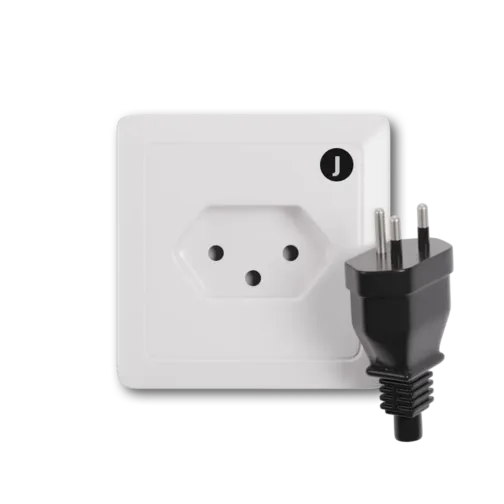
Type J
|
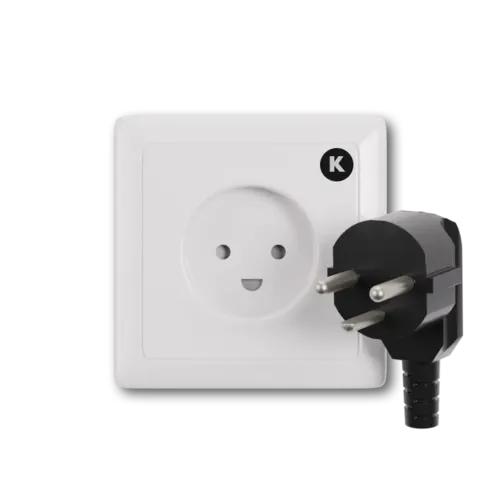
Type K
|
|
|---|---|---|
| Standard | SEV 1011 | DS 60884-2-D1 |
| Pin Configuration | Two round pins (4mm diameter) plus offset grounding pin (center pin 10mm from others) | Two round pins (4.8mm diameter) plus grounding pin (similar to Type F with additional ground pin) |
| Grounding | Grounded | Grounded |
| Pin Count | 3 | 3 |
| Amperage | 10A | 16A |
| Voltage Range | 220-240V | 220-240V |
Heading from Zurich to Copenhagen, or the other way round, you will find that the type J vs type K plug question is not about electricity at all: Switzerland and Denmark both supply 230 V, yet a plug from one country will not go into the wall in the other. The difference is purely the physical shape of the pins and power sockets, so the right plug adapter matters more than any converter when you travel abroad, and this guide shows travelers exactly which one to pack.
Type J vs Type K Plug: Side-by-Side Comparison
Both designs use 3 pins in a triangle, both are earthed, and both accept the slim two-pin Europlug. That is where the similarity ends.
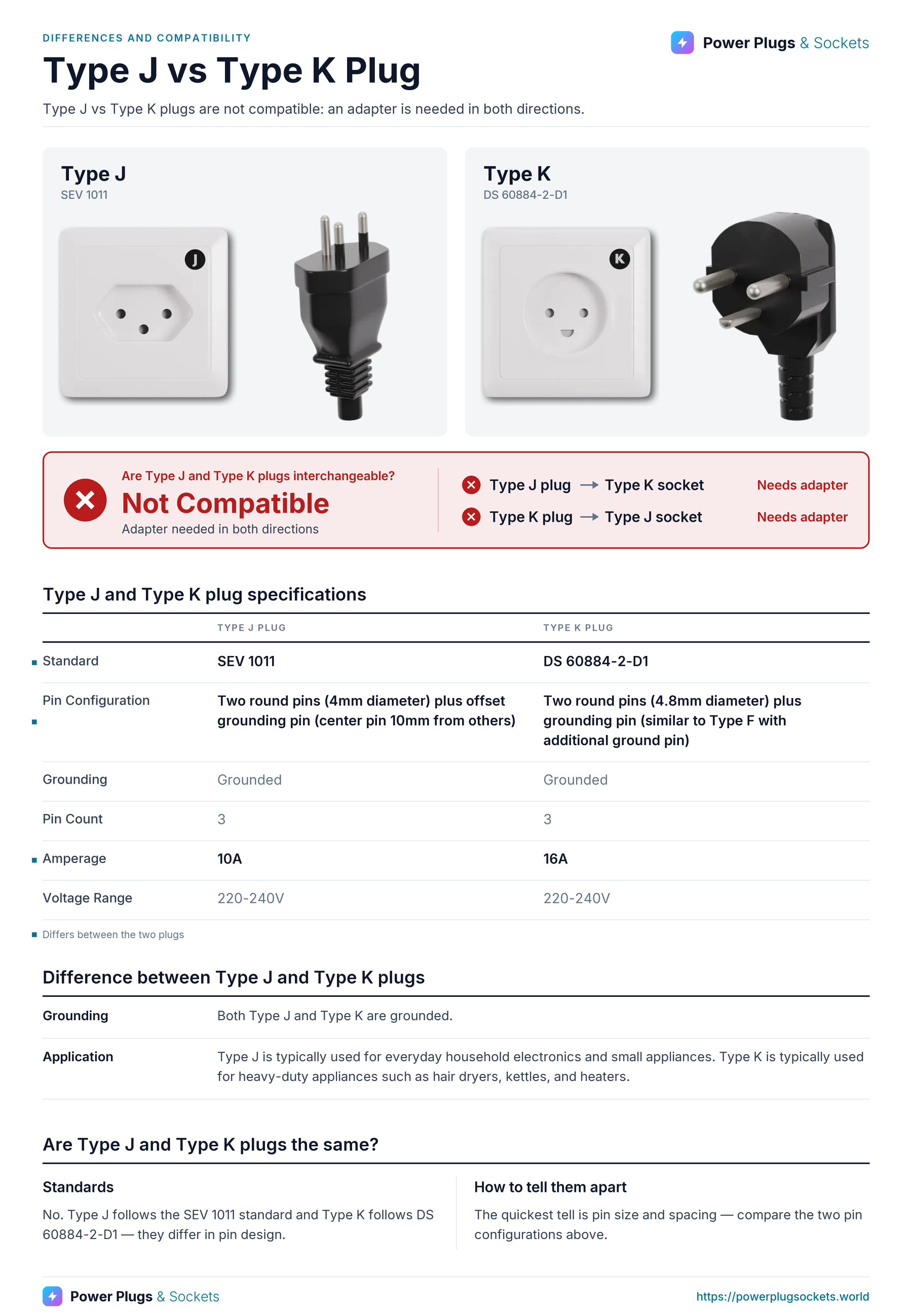
Read the table below row by row: the pin diameter and the position of the third pin are what decide whether the type J vs type K plug pairing can ever work without an adapter.
| Feature | Swiss type J plug | Danish type K plug |
|---|---|---|
| Standard | SEV 1011 (T12 plug, T13 socket) | DS 60884-2-D1 |
| Pins | 3 pins, all round, earthed | 3 pins, two round plus a half-round earth |
| Live/neutral pin diameter | 4.0 mm | 4.8 mm |
| Live/neutral centres | 19 mm | 19 mm |
| Third pin position | Offset about 5 mm below centre | Well below centre, on the centre line |
| Rated current (typical) | 10 A (16 A version with rectangular pins) | 16 A |
| Standard voltage / standard frequency | 230 V, 50 Hz | 230 V, 50 Hz |
| Socket compatible with plug types | C and J | C and K, plus E and F (partial) |
| Main users | Switzerland, Liechtenstein | Denmark, Greenland |
The short version: a Swiss plug cannot enter a Danish wall, and a Danish plug cannot enter type J sockets either. Only a Type C Europlug crosses the border in both directions.
Swiss Plug Design Under SEV 1011
The Swiss plug is defined by the national SEV 1011 electrical standard, which describes a complete plug and socket system rather than a single connector. Switzerland built it independently of its neighbours, which is why the type J standard looks nothing like the French or German designs next door.
Pin Spacing on the T12 Plug and T13 Socket
A three-pin T12 plug carries three round pins, each 4.0 mm thick. The live and neutral pins sit 19 mm apart, the same centres used by the Europlug, and the T13 socket wraps them in a compact, often hexagonal recess roughly 26 mm across.
Because the holes are sized for 4.0 mm, any plug with fatter power pins is stopped at the faceplate. That is also why a plug socket type J installation looks so small next to a German or Danish outlet.
Type J Earth Pin Offset and Polarity
The defining detail of the type J plug is its offset earth pin. Instead of sitting on the centre line, it is shifted a few millimetres to one side, so the three pins form an asymmetric triangle.
The plug can only go in one way round, which fixes polarity: live always lands on the same side. Grounding is made through that third pin rather than through clips on the socket wall, so any plug that relies on clips gets no earth in a Swiss socket.
IEC Plug Types and the Swiss Standard
The letter labels come from the IEC, which catalogued the national plug types and gave the Swiss design the letter J and the Danish one K. The letters did not unify anything: each country kept the system it had already wired into millions of buildings. Switzerland's early, hydroelectric-driven electrification locked its standard in before most of Europe settled on a common design, and the Danes had likewise wired their own layout into every home.
Switzerland has never been required to switch, and neither has its Danish counterpart, which is why the Swiss and Danish designs never converged and why you still need an adapter between them today.
The Danish 3-Pin Design of Danish Origin
The Danish plug is the other half of the comparison. Plug type K is a 3-pin design of Danish origin.
Its live and neutral contacts are thicker than the Swiss ones and its third pin is shaped differently, so even at a glance you can tell the two apart.
Pin Diameter and the Half-Round Grounding Pin
On the type K plug, the live and neutral pins are 4.8 mm round pins on 19 mm centres, the same pin diameter used by French and German plugs. The grounding pin is the giveaway: it is half-round, with a flat face, and sits centred below the two power pins.
A related Danish variant with a different earth pin exists for dedicated IT circuits, but the half-round version is what you meet in homes. Unearthed Danish appliances simply use 2 pins.
Why Type E and Type F Plugs Fit Danish Sockets
Because the Danish power holes are 4.8 mm apart on 19 mm centres, a French Type E or German Type F (Schuko) plug will physically go in. The Danes have allowed Type E and Type F outlets in new installations for years, so in Danish homes you will often find them side by side with the old design.
The catch is the earth:
- The traditional Danish socket also works with plug type C without any issue.
- A Schuko plug (CEE 7/4) relies on side clips for earth contact, which the Danish socket does not have.
- A hybrid CEE 7/7 plug fits, but its earth hole has nothing to meet in a traditional Danish socket.
- Result: partial and unsafe compatibility. The appliance runs, but it is not grounded.
Cross-Compatibility Between Swiss Sockets and Danish Sockets
Put the two systems face to face and the answer is blunt: the Danish plug is too thick for Swiss sockets, and the type J plug's offset third pin hits the faceplate of a Danish outlet. Here is what each wall actually accepts:
- Type J sockets are compatible with plug types C and J.
- The Danish socket is compatible with plug types C and K, and fits E and F without earth.
- Neither socket is compatible with plug J and K at the same time.
Why the Europlug (Type C) Fits Both
The Europlug (CEE 7/16) has two 4.0 mm pins on 19 mm centres and no earth. That matches the live and neutral holes of a Swiss type J socket exactly, and it slides into the larger Danish holes too.
It is rated at 2.5A, which covers phones, cameras and most laptop bricks. Plug type J cannot go into a bare Type C wall socket, but Type C goes into Type J: the compatibility only runs one way.
If your devices end in a Type C plug, you need nothing at all in either country; just remember a Type C connection is not grounded.
Why a Schuko Plug Fails in Swiss Outlets
The common mistake is packing a "Europe adapter" with Schuko-style pins and expecting it to work in Swiss type J outlets. It cannot: the 4.8 mm pins do not enter 4.0 mm holes, and the round Schuko body, about 34 mm across, will not seat in the narrow socket recess either.
Fat pins that are perfectly at home in Copenhagen are a dead end in Switzerland, so this single adapter choice decides whether a two-country trip works for travel between the two.
Type L and Type N Lookalikes in a Swiss Socket
Italian Type L and Brazilian Type N plugs both use slim pins and can look like they belong in Swiss walls. Type L puts its third pin in the centre line, so it either will not seat or makes no earth contact.
The Brazilian design is closer in shape, but its earth position also differs, so it should not be forced in. The Danish wall is no friendlier to them: neither third pin lines up with its half-round earth hole.
So when you compare the two systems, these lookalikes count as a third plug that fits neither. For safety, only use plugs that match the Swiss type J layout or the Danish layout exactly, or a two-pin Type C.
Voltage, Frequency and Rated Current for Each Swiss Socket
Here the two countries are identical: both deliver 230 V at 50 Hz, inside the 220 - 240 V band used across most of Europe. Moving a device from a Swiss type J socket to a Danish wall needs only a change of plug shape, never a change of voltage.
The electrical difference that does exist is current: a standard 10 A Swiss outlet against a 16 A Danish one.
Class I Devices and Class II Devices
Whether the missing earth matters depends on the device. Class II devices are double-insulated and need no earth, so a two-pin Type C connection is fine.
Class I devices have a metal body and depend on the protective earth: a kettle, an iron or a powerful hair dryer belongs on a grounded connection. Plugging Class I appliances into a Danish wall through an unearthed Schuko fit, or into any adapter that drops the earth, removes the protection the design relies on.
When in doubt, use the hotel's own wall outlet or a grounded adapter.
When a Voltage Converter Is Needed
For travel between Switzerland and the Danish mainland, never. Coming from North America, where the supply is 100 - 127 V, read the label on each device first.
If the label says 100-240V, it is dual voltage and only needs an adapter. If it lists 120 V only, you need a voltage converter, and a step-down converter must be rated above the device's wattage.
Picking a Plug Adapter for a 3 Prong Plug
Most travelers on a travel itinerary covering both countries do not need a Swiss adapter and a Danish adapter. What you pack depends on what plug your devices already use and whether the trip covers one country or several. Compare this with type A vs type F plug.
A grounded 3 prong plug from home needs a grounded power plug adapter for each destination; a two-pin charger usually needs none.
Universal Travel Adapter or a Single-Country Plug Adapter
A universal travel adapter is convenient, but check its continental-Europe output: many fold out 4.8 mm pins that work in Danish sockets and fail in Switzerland. A multi-region adapter with slim Type C pins works in both countries.
For grounded devices, a dedicated Swiss type J travel adapter plus a Danish one is the safer pairing, since a cheap all-in-one often drops the earth.
USB-C Chargers and Dual-Voltage Gear
Modern USB-C chargers sidestep most of this. A laptop charger with a fold-out two-pin Europlug head fits Swiss and Danish walls directly, and almost all chargers are already rated 100-240V. Charge several devices from one multi-port unit and you only need one compatible plug between them.
Hotels and Universal Outlets
Larger hotels in both countries sometimes fit universal outlets at the desk, but usually only one or two per room. Budget hotels and rentals keep national sockets throughout, so pack for the wall, not for the hope of a universal socket.
Where Swiss Outlets and Danish Plugs Are Used
Each standard is close to exclusive to its home country and a handful of neighbours tied to it. Expect national sockets as the default in every home, train station and office you pass through on your travel.
Switzerland and Liechtenstein
Type J is used almost only in Switzerland and Liechtenstein, which shares the Swiss grid and its standard. You will also find Type C plugs everywhere there, because the Swiss socket accepts them.
Denmark, Greenland and the Faroe Islands
The Danish system covers Denmark and its North Atlantic territories, and is common in the Faroe Islands. Expect Type E and Type F outlets alongside it in newer Danish buildings, so a travel adapter with the wider continental pins earns its place in your bag here.