Type B vs Type H Plugs: Differences & Compatibility
Type B vs Type H plugs are not compatible: an adapter is needed in both directions. Type B is a 3-pin, grounded plug rated 15A at 100-127V, while Type H is a 3-pin, grounded plug rated 16A at 220-240V. The two differ mainly in voltage, amperage and pin design, which is what decides compatibility — whether a Type B plug fits a Type H socket, and vice versa. Next, check do you need a type A to type F plug adapter.
Swipe to compare
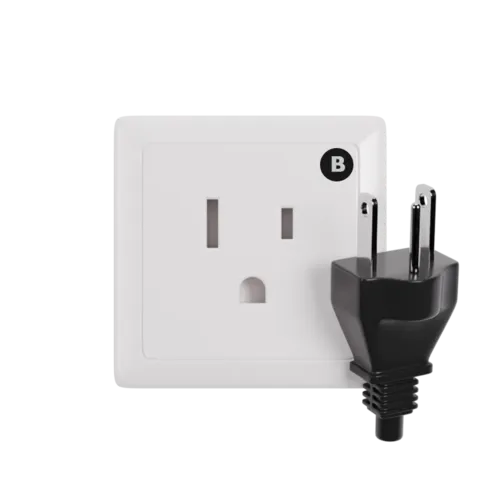
Type B
|
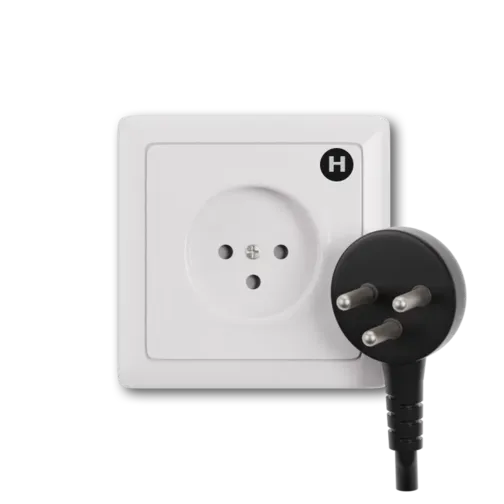
Type H
|
|
|---|---|---|
| Standard | NEMA 5-15 | SI 32 |
| Pin Configuration | Two flat parallel pins plus round grounding pin (4.8mm diameter) | Three pins in V-shape arrangement (round 4.5mm or flat pins, 19mm length) |
| Grounding | Grounded | Grounded |
| Pin Count | 3 | 3 |
| Amperage | 15A | 16A |
| Voltage Range | 100-127V | 220-240V |
Packing a laptop charger for Tel Aviv, or bringing an Israeli kettle to Chicago? The type B vs type H plug question decides whether your gear works on arrival.
These plugs and sockets share almost nothing: one runs on 120-volt electricity through flat blades, the other on 230 volts through pins in a triangle. You will learn exactly which adapter or converter you need abroad, since the wrong electrical outlet pairing between these power sockets can ruin an appliance.
Type B vs Type H Plug: Side-by-Side Comparison
Both connectors are earthed designs with 3 pins from different standards bodies: NEMA for the American plug, a national standard for the Israeli one. The IEC 60083 report and the World Plugs catalogue give each a letter, which is only a label.
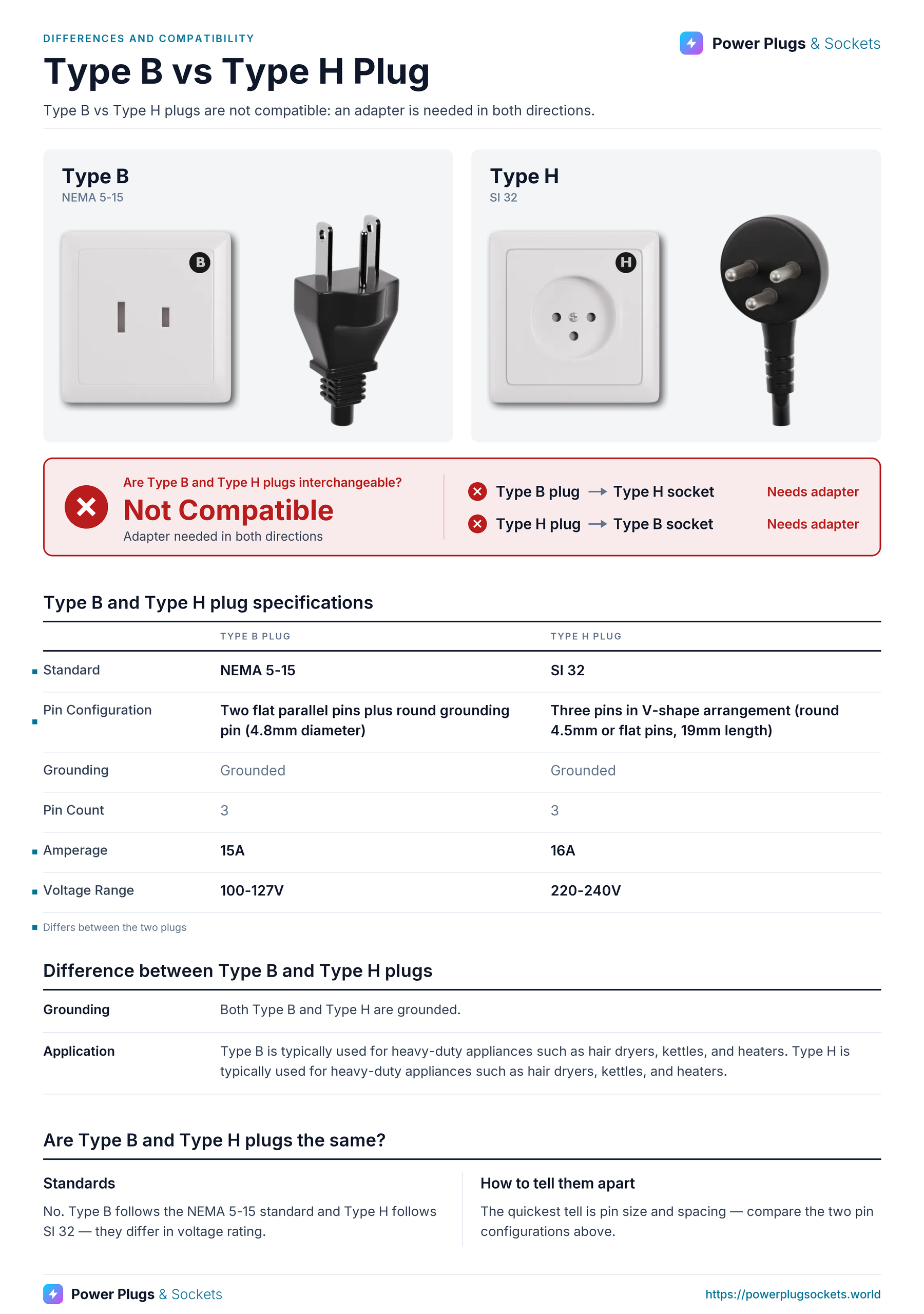
Compare these outlet types and socket types, and neither fits the other; every plug and socket combination needs an adapter.
| Feature | NEMA 5-15 (American) | SI32 (Israeli) |
|---|---|---|
| Pins | 3 pins: two flat blades plus a round earth pin | 3 pins: round (flat on pre-revision plugs) in a triangle |
| Grounded | Yes | Yes |
| Rated current | 15 A | 16 A |
| Plug rating (volts) | 125 V | 250 V |
| Mains supply | 100 – 127 V, 50 or 60 Hz | 220 – 240 V, 50 Hz |
| Polarized | Yes, wider neutral slot | Yes, fixed live and neutral positions |
| Also accepts | plug A (two-blade, ungrounded) | plug C (Europlug) |
| Main countries | United States, Canada, Mexico, Japan, Taiwan | Israel, West Bank, Gaza Strip |
The voltage and frequency also differ: NEMA 5-15 outlets across North and Central America deliver 120 volts at 60 Hz, Japan 100 volts at 50 or 60 Hz, and Israel 230 volts at 50 Hz. Like all AC power plugs, ratings of 125 volts and 250 volts are a safety margin, not permission to feed one country's mains electricity into a device built for the other.
Flat Pins Versus Round Pins
The American connector uses two flat pins, or blades, on 12.7 mm centres with a rounder earth pin below. The Israeli connector uses three round pins with a pin diameter of 4.5 mm in a triangle, live and neutral 19 mm apart.
A blade cannot enter a round hole, nor a pin a blade slot.
Current Rating: 15 A Against 16 A
An American outlet is limited to 15 A, about 1,800 watts at 120 volts; the Israeli outlet is rated 16 A, roughly 3,680 watts at 230 volts. A 1,500 W kettle draws 12.5 A in America, while a 2,200 W Israeli kettle draws 9.6 A.
How the NEMA 5-15 Plug Is Built
The NEMA 5-15 plug is the grounded member of the North American family; its ungrounded sibling, NEMA 1-15, has 2 pins, is not grounded and is the plug A design. Type B plugs & outlets, meaning type B plugs and type B outlets, are the household standard across the United States (USA) and Canada, Mexico, Japan (JIS C 8303), Taiwan and the Caribbean, though older buildings may keep ungrounded sockets in their wiring. Also see what adapter converts a type J plug to a type K socket.
Parallel Blades and the Ground Pin
The two parallel blades carry the current, and the ground pin, officially D-shaped though often round or U-shaped, is an extra prong for grounding. It is longer than the blades, so the plug connects to ground before power reaches the appliance.
The "5" in NEMA 5-15 identifies the earthed layout and the "15" its 15 A limit.
Neutral Blade and Hot Blade Widths
The neutral blade slot is wider than the hot blade slot, with a wider opening, so polarized plugs go in one way and the switch interrupts the live side. Each receptacle is usually a duplex pair, mounted earth hole up or down.
How the SI 32 Israeli Plug Is Built
Israeli plugs are the domestic standard, which no other country uses; shops call them Type H plugs & outlets, rated 16 A at 250 volts with full earthing. The territories some lists group under Palestine use it too.
On the socket face neutral is on the left, live on the right and the earth pin contact at the bottom, giving it defined polarity.
The Old Flat-Pin Y-Shape
Before 1989 the standard specified three flat blades in a Y-shape: the live and neutral blades angled toward each other as V-shaped pins 19 mm apart, earth blade below, also rated 16 A. Sockets for only these are now rare.
Rounded Pins After the 1989 Revision
The revision swapped blades for three cylindrical pins in the same positions, so a newer socket accepts old plugs, new plugs and the two-pin Europlug, which runs at 230 volts but only up to its own 2.5 A rating.
Plugs and Sockets Compatibility Between the Two Systems
Neither connector is compatible with plug types from the other family. Every plug and socket pairing needs an adapter, and no hybrid wall socket accepts both, so treat any universal hotel unit with caution.
An adapter is enough only for dual voltage devices: a label reading "INPUT 100-240V, 50/60Hz" covers most chargers. Otherwise you need a voltage converter.
A 1,500 W American kettle in a 230-volt socket would dissipate about 5,510 W and burn out within seconds, while a 2,200 W Israeli kettle on 120 volts produces only about 600 W. A converter for electrical appliances like these should be rated 25% above wattage, though buying locally is often more practical.
Choosing an Adapter for Either Direction
A travel adapter changes the shape of the connection, not the volts. In Tel Aviv you need a plug adapter taking NEMA blades and presenting three round pins or a Europlug; Israeli visitors to North America need type B adapters.
- Choose travel adaptors with an earth contact on both sides for any three-pin cord.
- Cheap two-pin adaptors and an adaptor without earth drop the earth: fine for a Class II charger, not a metal-bodied appliance.
- Pick adaptors rated for at least 16 A for a 230-volt appliance, and avoid power strips through one adapter, and support heavy power cords.
Europlug and Other Socket Compatible Plugs
The Israeli socket is socket compatible with the Europlug (CEE 7/16, 19 mm spacing); the American socket also takes two-blade NEMA 1-15 plugs. French and Schuko plugs have 4.8 mm pins and force in only with partial and unsafe compatibility, straining contacts and losing earth.
Use a proper adapter.
Grounded Plug Safety in Both Plug Types
Both families are earthed, so a grounded plug gives fault current a safe path. The bigger safety gap is the supply: an electric shock at 230 volts drives roughly twice the current of one at 120 volts. For a related pairing, see which countries use type D plugs versus type H plugs.
Class I appliances such as kettles and metal-cased PCs rely on earthing and need the full three-pin plug; Class II appliances use double insulation and ship with two-pin plugs.
Grounding Pin Contact and Shutters
The grounding pin engages before or alongside the live contacts. New American outlets add tamper-resistant shutters for child protection, shuttered Israeli sockets are widely sold, and moulded insulation on pin bases keeps fingers from live metal.
Choosing Power Plugs for 120 V and 230 V Trips
Matching 120 volts to 230 volts protects your gear, so sort everything by label rather than plug shape:
- Check each label for its input range; dual-range items (100-240 V) need only an adapter.
- Leave single-rating heating appliances, such as a 120-volt hair straightener, at home.
- Carry one grounded adapter per socket in use, plus a spare Europlug adapter for two-pin chargers.