Type J Power Plug & Socket
Type J plugs have three round pins with the grounding pin offset from center. It's similar to Type C but with a third grounding pin. Travelling on? Check check if your appliance is compatible with Turks and Caicos Islands's power sockets.
Standard: SEV 1011
Pin Configuration: Two round pins (4mm diameter) plus offset grounding pin (center pin 10mm from others)
Usage Notes: Type J sockets accept Type C (Europlug) devices. The Swiss standard is known for its compact and recessed design.
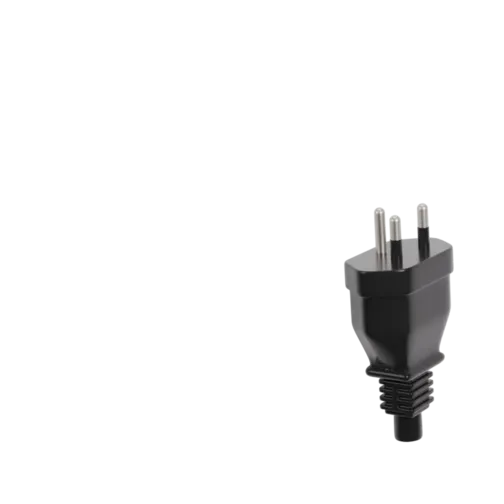
Plug
Type J
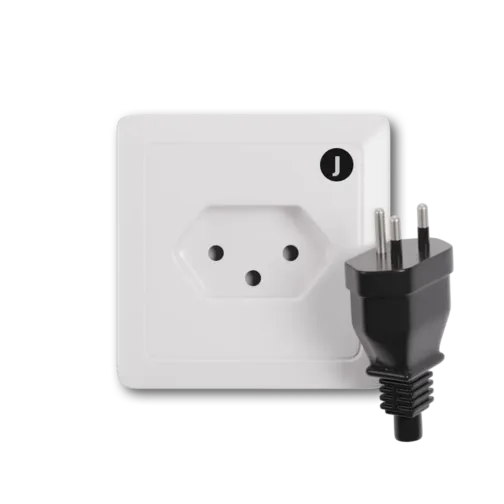
Plug & Socket
Type J
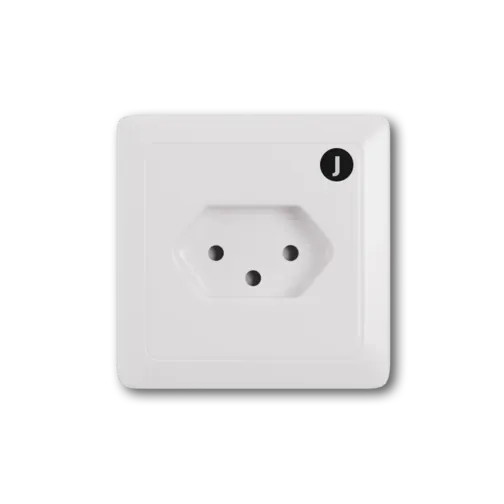
Socket
Type J
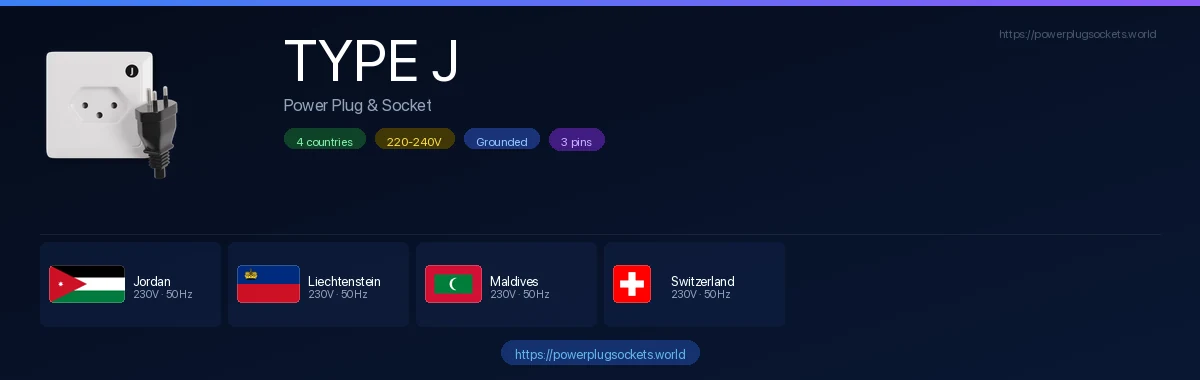
Heading to Zurich? Plug type J is the Swiss grounded plug: three round pins, with the earth pin set slightly off-centre.
Here are its dimensions, the countries that use it, which plugs are compatible, and when domestic appliances need more than an adapter.
What Is Plug Type J?
Switzerland defines plug type J in SEV 1011, which adds an earth contact to the two-pin European layout.
Type J Pin Dimensions and the 5 mm Offset
The round pins are 4 mm thick and 19 mm long. Line and neutral sit 19 mm apart with 10 mm insulated sleeves.
The grounding pin lies off the centre line (center line in US spelling), shifted 5 mm to one side. That offset makes the shape uniquely Swiss.
Older Versions With Unsleeved Pins
Older versions have unsleeved pins that expose live metal when half inserted. Replace such plugs rather than forcing them into modern sockets.
Ratings: 10 Amps, 230V and 50Hz
The system is rated for 10 amps, about 2,300 W on Swiss mains. High power equipment must be permanently wired with branch circuit protection or use an industrial connector.
Which Countries Use the Switzerland Plug?
A few nations rely on this socket; others mix it with different plug types.
| Country | Mains supply | Sockets in use |
|---|---|---|
| Switzerland | 230 V, 50 Hz | C, J |
| Liechtenstein | 230 V, 50 Hz | C, J |
| Rwanda | 230 V, 50 Hz | C, J |
| Jordan | 230 V, 50 Hz | B, C, D, F, G, J |
| Madagascar | 127 V / 220 V, 50 Hz | C, D, E, J, K |
| Maldives | 230 V, 50 Hz | A, C, D, G, J, K, L |
Where Type J Is the Main Standard
In Switzerland and Liechtenstein nearly every wall outlet uses recessed Type J sockets. Rwanda is the main adopter in Africa, a rare primary user outside Europe.
Shared Sockets in Jordan, Madagascar and the Maldives
A hotel room may have a Type J socket beside British outlets, so pack a universal adapter. Parts of the Malagasy grid still run at 127 V.
J Plug Compatibility With Type C and Type N
Some lookalike plugs fit the Swiss socket; others don't. Next, look at travel adapter for Botswana.
Why a Type C Plug Fits Perfectly
A two-pin Type C plug fits perfectly into a Type J socket, using line and neutral and ignoring the earth hole. Thick 2-prong Schuko plugs (Type E/F) don't fit Swiss sockets and need an adapter.
Why the Brazilian Plug Is Incompatible
Brazil's Type N looks similar, but its earth contact sits only 3 mm off-centre. They are incompatible: Type J plugs won't seat in a Brazilian socket, nor the reverse.
Adapters and Converters for SEV 1011 Outlets
An adapter changes plug shape, never the supply. See also do i need a voltage converter for India.
Choosing a Type J Plug Adapter
From North America, choose a plug adapter that accepts a 3-prong NEMA 5-15 plug and keeps the connection grounded. Extra input sockets share the same 10 A limit.
Dual USB and ETL Listed Switzerland Travel Adapter Features
A good travel adapter adds USB ports, surge protection and an unbreakable body. Look for ETL listed and RoHS compliant marks, and check the max.
amps: units printing 13A and 250V are still capped at 10 A by the wall socket.
When You Need a Voltage Converter
Laptop chargers and phone chargers are almost always dual voltage; the input voltage label reads 100-240V. A Swiss adapter only changes the pin shape, and the socket behind it still delivers 230 V, so devices built only for 120 V, like many hair dryers, need a converter.
Type J Outlet Tips for Your Trip
Recessed sockets reject bulky adapters, so slim models seat better. Many hotel outlet strips take only Europlugs; pack one for your trip.