Type O Power Plug & Socket
Type O plugs have three round pins and are used exclusively in Thailand. Similar in appearance to Type F but with a third grounding pin. Travelling on? Check power outlet type in Hungary.
Standard: TIS 166-2549
Pin Configuration: Three round pins in triangular pattern (4.8mm diameter power pins, 4mm grounding pin)
Usage Notes: Thai outlets often accept multiple plug types including Type A, B, C, and O. Type O provides grounding which Types A and C lack.
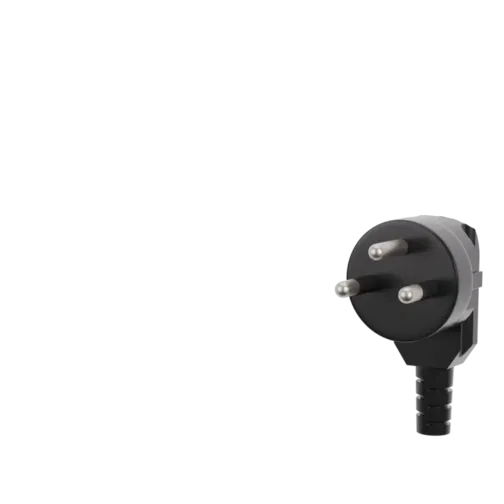
Plug
Type O
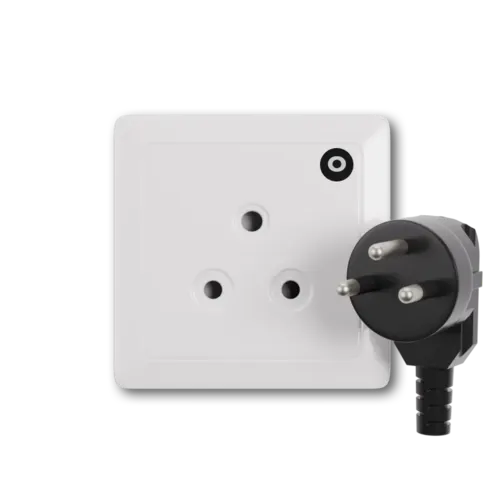
Plug & Socket
Type O
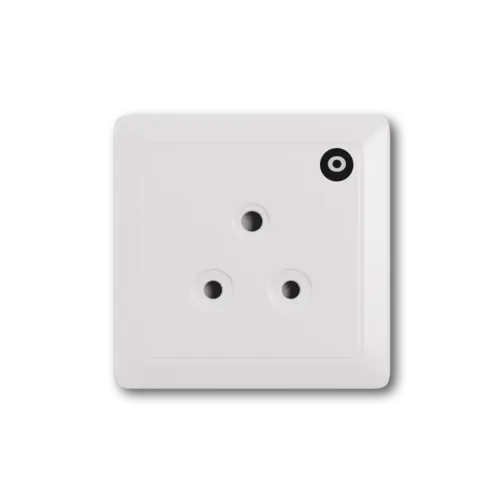
Socket
Type O
Heading to Thailand, or shipping an appliance there? Then plug type O is the connector you need to understand: a three-pin, round-pin design rated at 16 A that fits the country's 220-240 V mains electricity.
Below you'll find its pin measurements, which plugs its power sockets accept, and what travellers should pack so devices charge without risk.
Plug Type O at a Glance: Thailand's 16 A Standard
The type O plug and socket system is the national system of Thailand, defined by the Thai Industrial Standard TIS 166-2549 and listed under the letter O in the IEC World Plugs reference (IEC TR 60083). No other country in Asia has adopted it as an official standard.
The number is a Buddhist year, so 2549 corresponds to 2006 on the Gregorian calendar. It replaced older North American NEMA 1-15 and NEMA 5-15 designs.
- Rating: up to 250 V.
- Pins: three round pins (two power pins plus an earth pin).
- Mains supply: 230 V, 50 Hz.
- Earthed: yes on the three-pin version; a two-pin unearthed version also exists.
Most type o outlets you meet are hybrids and few follow the pure design, so foreign plugs often fit alongside type o plugs.
Thai Plug Dimensions: Earth Pin, Power Pins and Pin Spacing
Every dimension of the Thai plug is set in TIS 166-2549. Because all three pins are round, people often mistake this power plug for a European one, but the pin length decides which sockets it is compatible with. You may also need will my charger work in Tristan da Cunha on 240V.
| Feature | Type O measurement |
|---|---|
| Pin diameter (all three pins) | 4.8 mm |
| Length of each power pin | 19 mm |
| Insulated part of each power pin | 10 mm from the plug face |
| Spacing between the two current-carrying pins | 19 mm |
| Length of the earth pin | 21.4 mm |
| Earth pin offset from the line joining the other two pins | 11.9 mm |
| Rating | 16 A, 250 V |
The earth pin, also called the grounding pin, has a longer pin length and touches the socket first. Its centre sits 11.9 mm below the power pins, matching American earthed plugs, while the pin spacing matches European plugs.
The insulated sleeves on the live pins cover the first 10 mm, so fingers cannot reach live metal when a plug is partially inserted into a shallow, not recessed, socket, which risks electric shock. The amp rating of 16 amps is the maximum continuous current; divide wattage by 230 volts to check it, so a 2,000 W kettle draws about 8.7 A. The voltage range is up to 250 V, and an input of "100-240 V" on your device means it works here.
Grounded Plug and Ungrounded Plug Versions
The grounded plug is the three-pin version with round power pins for earthed household appliances such as kettles and irons. The ungrounded plug drops the earth pin and looks like a slightly taller Europlug, yet keeps the full rating against 2.5 A for a Europlug, for double insulated appliances.
Thai Socket Compatibility with Other Plug Types
A true Thai socket accepts only the Thai plug, its two-pin version and the Europlug, but you will rarely see one. Almost every wall point in homes, hotels and offices are hybrids, compatible with a wider range of plug types than is always safe, so a pure one is rare.
"Fits" below only means the pins go in.
| Plug | Hybrid outlet | Pure TIS socket | Earth connection |
|---|---|---|---|
| Thai three-pin (grounded) | Fits | Fits | Yes |
| Thai two-pin (unearthed) | Fits | Fits | Not needed |
| Type A (NEMA 1-15) | Fits | No | Not needed |
| Type B (US earthed) | Fits | No | Yes |
| Type C (Europlug) | Fits | Fits | Not needed |
| Type E / Type F (Schuko) | Fits, unsafely | Fits, unsafely | No, earth is lost |
| Type H (Israel) | No | No | N/a |
| Type K (Danish) | No | No | N/a |
Type O Sockets and the Hybrid Socket in Thai Homes
The hybrid socket combines flat slots for American blades with round holes for European and Thai pins, plus one earth hole in the NEMA position. A three-pin NEMA 5-15 plug fits, even though the supply is nearly twice a US outlet's.
Europlug, Type C, Type A and Type B Plugs
The Europlug fits both hybrid and pure Thai versions and is compatible here. A US 2-prong or 3-prong plug fits too, but the supply is 220-240 V, so on a 120 V-only device the fit is a trap.
Why Type E and Type F Plugs Are a Safety Problem
A French or German (Schuko) plug has 4.8 mm pins 19 mm apart, so it slides in, but it makes no earth contact. Its large body can also leave live pins exposed.
The Thai Government banned new products with E/F plugs in 2008, so use a special adapter that connects the earth properly.
Type H and Type K Look-Alikes
The Israeli and Danish plugs look almost like a type O plug, with three pins and a different earth position. They are not interchangeable: neither fits here, and a Thai plug will not go into theirs.
TIS 166-2547 Safety Design and Its History
When TIS 166-2547 was drafted, a 230-volt electrical network ran through wall points designed for American 120 V plugs. It set out to give every socket a proper earth, insulated pins and a single plug shape. Travelling on? Check Azerbaijan power socket.
It also allows shutters over the live and neutral holes so a child cannot push a hairpin into a live contact.
The earthing pin is the longest pin, so earth connects first and disconnects last, and an insulation fault sends current down it instead of through you. The design is polarized like NEMA 5-15, so a switch can sit on the live side, which unpolarized plugs cannot guarantee.
Hybrid Sockets Being Phased Out
The plan is to phase out hybrids so American plugs cannot reach full mains power, but hybrids are still sold and installed. Assume any socket takes American, European and Thai plugs, and check your device's label.
Travelling with Thai Plugs: Adapter or Converter?
Most visitors need nothing special for Thai plugs, as hotels accept the two most common foreign shapes. A plug adapter only changes the plug shape, not 230 V into 120 V or the frequency.
For that you need a voltage converter, and only for devices that cannot run on the local supply. Check two things in order:
- Does the plug fit? Europlug and US two- or three-blade plugs fit hybrids. UK, Australian, Indian and Swiss plugs don't.
- Does the supply match? 100-240 V means yes. 110-120 V alone means no.
A 1,200 W hair dryer built for 120 V would pull roughly 4,400 W on Thai mains and burn out, and a converter for it is heavy, so buying a dual-voltage dryer is usually cheaper.
Choosing a Travel Adapter
Travel adapters with a Thai three-pin plug fit both kinds and keep the earth connected. A good travel adapter has an earthed input, a rating of 10 A or higher, and USB ports (USB-A and USB-C) for phones and tablets.
Universal adapters often skip the earth and leave pins exposed.
Dual Voltage Chargers and Laptops
Most modern electronics are dual voltage: phone chargers and laptop bricks accept 100-240 V at 50 or 60 Hz and need only a plug the socket takes. Hair straighteners, electric toothbrushes and shavers are most often built for one supply, so check those first.