Type A vs Type D Plugs: Differences & Compatibility
Type A vs Type D plugs are not compatible: an adapter is needed in both directions. Type A is a 2-pin, ungrounded plug rated 15A at 100-127V, while Type D is a 3-pin, grounded plug rated 5A at 220-240V. The two differ mainly in grounding, voltage, amperage and pin design, which is what decides compatibility — whether a Type A plug fits a Type D socket, and vice versa. Also see what adapter converts a type C plug to a type J socket.
Swipe to compare
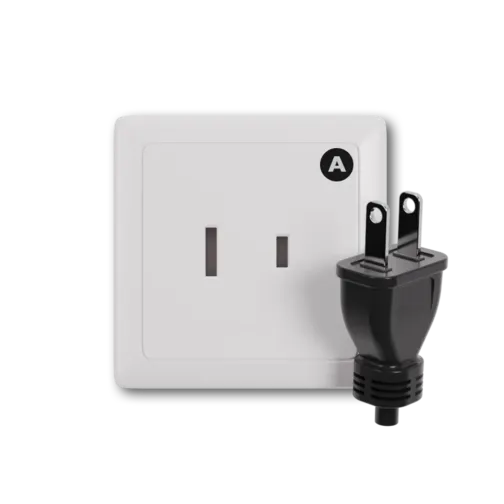
Type A
|
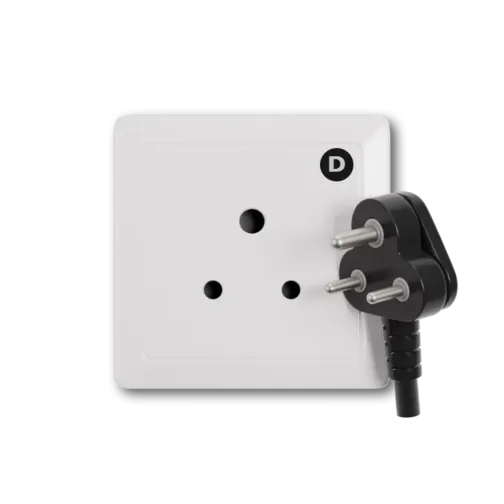
Type D
|
|
|---|---|---|
| Standard | NEMA 1-15 | BS 546 |
| Pin Configuration | Two flat parallel pins (15.9mm apart, 15.9mm long, 6.3mm wide) | Three large round pins in triangular pattern (ground pin 7.1mm, live/neutral 5.1mm diameter) |
| Grounding | Ungrounded | Grounded |
| Pin Count | 2 | 3 |
| Amperage | 15A | 5A |
| Voltage Range | 100-127V | 220-240V |
Packing electronics from Toronto for Delhi? The Type A vs Type D plug answer is that the two share nothing: Type A uses two flat blades for 100 – 127 V grids, Type D three round pins on 220 – 240 V mains, so you need an adapter every time, and sometimes a voltage converter too.
This guide compares both for travellers abroad.
Type A vs Type D Plug Comparison Chart
The IEC assigns the letters. Type A is defined by the American NEMA 1-15 standard; Type D comes from British Standard BS 546 and lives on through the Indian standard IS 1293. Next, check what is the difference between type I and type N electrical sockets.
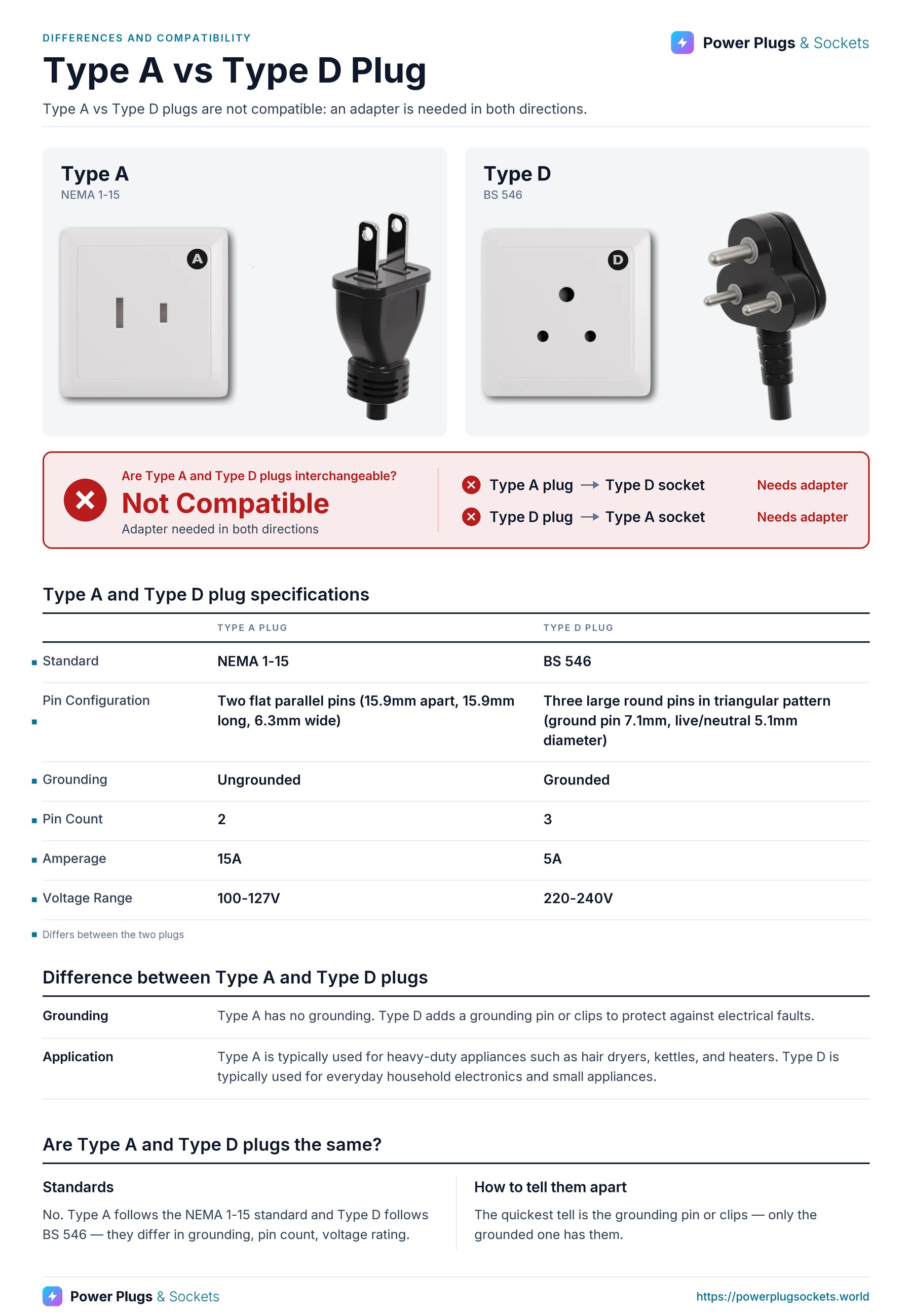
| Feature | Type A | Type D |
|---|---|---|
| Standard | NEMA 1-15 (also JIS C 8303 Class II, GB 1002) | BS 546 (5 A), IS 1293 (6 A) |
| Pins | Two flat parallel blades, two-pin | Three round pins in a triangular configuration, three-pin |
| Rated current | 15 A | 5 A or 6 A (Type M: 15 A UK, 16 A IS 1293) |
| Larger sibling | Type B (NEMA 5-15, grounded) | Type M (16 A 250 V) |
| Rated voltage | 125 V (10 A 250 V in China) | 250 V |
| Typical supply | 100 – 127 V, 60 Hz | 220 – 240 V, 50 Hz |
| Grounded | No | Yes |
| Polarized | Optional (wider neutral blade) | Yes |
| Insulated pins | No | Optional, rarely fitted |
| Recessed socket | No | No |
| Accepts a Europlug | No | Loosely, and unsafely |
| Main regions | USA, Canada, Mexico, Japan | India, Nepal, Sri Lanka |
Reading the Chart: Plug Type A and Type D Power Plugs Side by Side
When a row differs, as almost every row does, the two power plugs cannot share power sockets, and each plug and socket pair accepts only the types its standard names.
Plug Type A: The NEMA 1-15 With Two Flat Blades
Plug type A is the North American two-prong plug: two flat parallel blades 12.7 mm apart and no earth pin, rated 15 A at 125 V. Being ungrounded, it suits double-insulated Class II appliances such as phone chargers. It is used across North America, Central America and Asia, from Japan, where it runs on 100 V, to China, whose flat-blade sockets run at 220 V. Most modern Type A plugs are polarized: the wider neutral blade means one way round only; older unpolarized plugs fit either way. Also see type C vs type G plug.
Type A vs Type B: Adding a Ground Pin
Type B (NEMA 5-15) adds a round or D-shaped ground pin to the same blades. A Type A plug fits a Type B socket, but neither fits Type D sockets.
Plug Type D: The Old British Plug With Three Round Prongs
Plug type D is the old British plug, standard in Great Britain until BS 1363 (Type G) replaced it in the 1940s. The type D electrical plug has three round prongs in a triangle and is grounded, polarized and unfused at 250 V; India standardized on a 6 amp version, the everyday type D outlet.
Under BS 546 and IS 1293 the earth pin is 7.1 mm thick and 20.6 mm long, the line and neutral pins 5.1 mm thick and 14.9 mm long, 19.1 mm apart. The earth pin is offset 22.2 mm and enters first, opening shutters.
BS 546 survives in United Kingdom hotels and theatres, where round-pin 5 A sockets serve a light switch or dimmer on lighting circuits; tourists should leave them alone.
Type M, the Larger 16 A Version
Type M looks like Type D with bigger pins and is rated 16 A at 250 V, feeding air conditioners in India and Nepal. It will not enter a 6 A socket, by design.
Type D Receptacle and Type A Plug Compatibility
A type D receptacle and a Type A plug are incompatible in either direction: flat blades cannot enter round holes, and the voltages differ twofold.
Is a Type D Socket Compatible With a Type A Plug?
No. Type D outlets are socket compatible with Type D plugs only, and an American plug and socket pair has nothing for a round earth pin.
Hybrid Sockets, the Europlug and Type C Fit
A Type C Europlug often slides into a Type D socket by the elasticity of its pins but seats poorly, with sparking and short-circuit risk: partial and unsafe compatibility. Dual sockets taking flat blades give a 120 V device 230 V.
Grounding and Safety Differences in Type A vs Type D Plugs
Type D plugs carry an earth pin, but neither socket is recessed and neither plug is fused. Your safety depends on installation and a residual-current device or circuit breaker protecting the electric current.
Earthing gives fault current a path away from you: a Type D plug is grounded through its top pin; a Type A plug is not grounded, and a grounded appliance on a flat-blade adapter loses its earth contact. Type D pins usually have no insulation sleeve, so a partially inserted plug leaves live pins and an exposed live prong within reach, an unsafe electric shock and safety hazard for children.
Voltage and Frequency at a Type D Electrical Outlet vs Type A
A type D electrical outlet in India supplies a nominal 230 V at 50 Hz, a Type A outlet in the USA 120 V at 60 Hz. The plug adapter fixes the shape, not the electricity and power.
120 V vs 230 V and Dual Voltage Devices
A charger reading "100-240 V" is dual voltage and needs only a shape adapter. A "120 V" only device burns out on Indian mains; hair dryers and kettles are typical.
60 Hz vs 50 Hz Appliances
Frequency is measured in hertz, or cycles per second. Chargers do not care, but a 60 Hz fan runs slower on 50 Hz, and no adapter changes it.
Which Countries Use These Plug Types: Type D Electric Plug vs Type A
About 40 countries use the type D electric plug, almost all former British territories: India, Nepal, Sri Lanka, Pakistan, Bangladesh and parts of Africa such as Namibia. Type A covers the United States, Canada, Mexico and Japan.
Choosing a Type D Travel Adapter or Voltage Converter
A type D travel adapter lets your flat-blade plug reach a round-pin socket; a voltage converter changes 230 V to 120 V. Check that a universal travel adapter has the small 5 A slider, not the larger Type M one. Keep a multi-socket adaptor under 6 A in total. Next, check how does the amperage rating of a type D plug compare to a type M plug.
Hotel shaver sockets offer 115 volts through an isolation transformer and about 20-50 VA, so they suit a razor, never hair dryers; electrical outlets and any electrical socket strip should meet the standard.
What a Plug Adapter Can and Cannot Do
A type D adapter plug only changes shape. A good type D plug adaptor has a grounded earth pin and an amps rating above your device's draw.
When You Need an Electrical Transformer
A 120 V-only device needs a step-down converter or electrical transformer rated above its wattage. For heavy items it is often cheaper to buy a local 230 V version.