Type A vs Type N Plugs: Differences & Compatibility
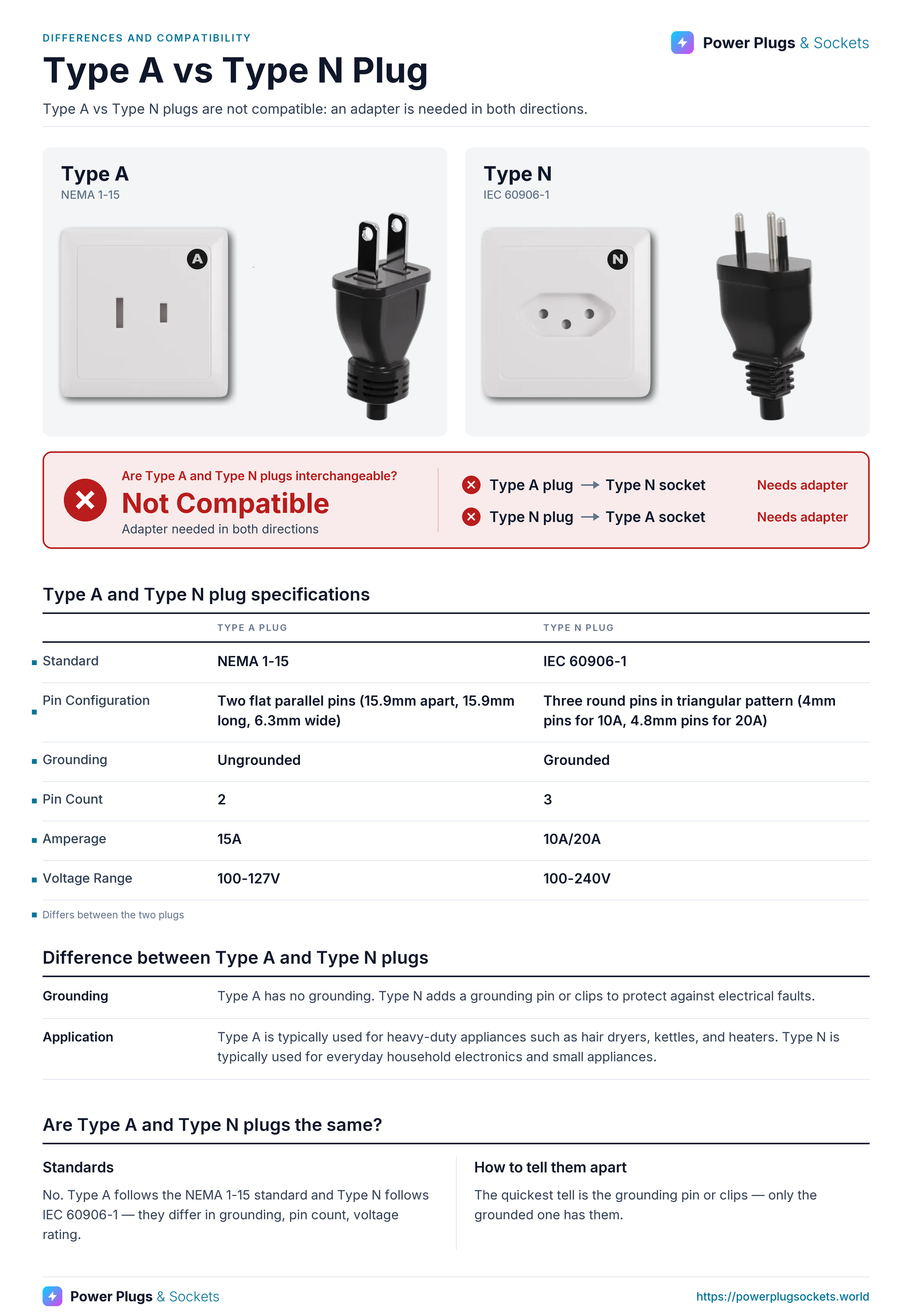
Type A vs Type N plugs are not compatible: an adapter is needed in both directions. Type A is a 2-pin, ungrounded plug rated 15A at 100-127V, while Type N is a 3-pin, grounded plug rated 10A/20A at 100-240V. The two differ mainly in grounding, voltage, amperage and pin design, which is what decides compatibility — whether a Type A plug fits a Type N socket, and vice versa. Compare this with type F plugs run on 220-240V while type O plugs run on 220-240V.
Swipe to compare
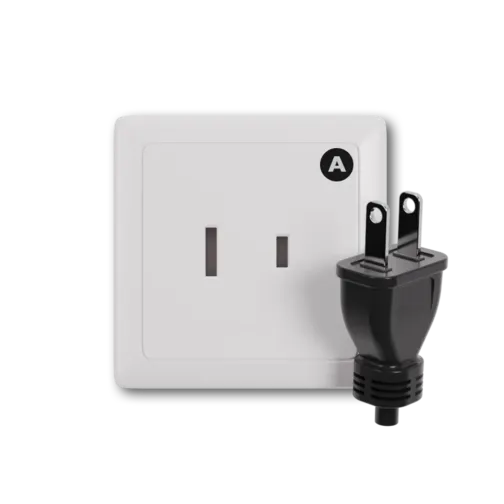
Type A
|
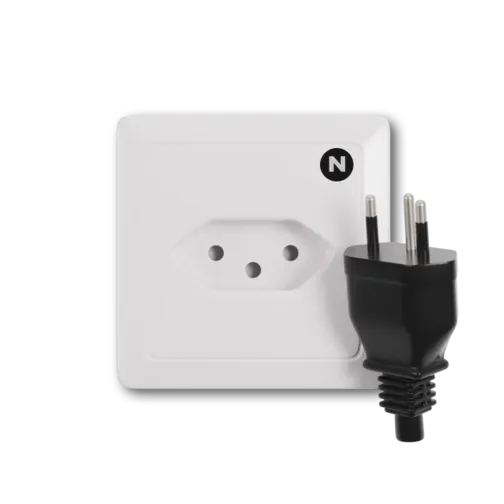
Type N
|
|
|---|---|---|
| Standard | NEMA 1-15 | IEC 60906-1 |
| Pin Configuration | Two flat parallel pins (15.9mm apart, 15.9mm long, 6.3mm wide) | Three round pins in triangular pattern (4mm pins for 10A, 4.8mm pins for 20A) |
| Grounding | Ungrounded | Grounded |
| Pin Count | 2 | 3 |
| Amperage | 15A | 10A/20A |
| Voltage Range | 100-127V | 100-240V |
Packing a laptop charger from Chicago for a week in São Paulo or Cape Town? The type A vs type N plug question comes down to one fact: a flat-bladed American power plug and a round-pin Type N outlet do not physically mate, so you need a plug adapter and should check the voltage and frequency on your appliances before trusting local electricity.
Type A vs Type N Plug at a Glance
Type A is a century-old North American shape with two flat blades and no earth. Type N is a 1986 international design with round pins, earthing and a deep recess, adopted nationally in only two countries. Compare this with should you choose type C or type N for an international travel adapter.
| Feature | Type A | Type N |
|---|---|---|
| Standard | NEMA 1-15 (US and Canada), JIS C 8303 Class II (Japan), GB 1002 (China) | IEC 60906-1, NBR 14136 (Brazil), SANS 164-2 (South Africa) |
| Contacts | Two flat parallel blades | Two round power pins plus a central earth pin, arranged in a shallow triangle |
| Earth connection | None (unearthed) | Earthed three-pin version; a two-pin unearthed version for double-insulated devices |
| Polarization | Optional, by a wider blade | Fixed by the off-centre earth pin |
| Typical rating | 15 A 125 V (US); 10 A 250 V (China) | 10 A or 20 A (NBR version); 16 A (IEC version) |
| Recessed socket | No, the receptacle face is flat | Yes, a hexagonal well |
| Socket accepts | Type A only (a grounded NEMA 5-15 power socket also takes A) | Type N and the Type C Europlug |
| Mains voltage | 100-120 V in most Type A countries | From 127 to 240 volts, depending on the country and city |
Read the last two rows first when packing: they decide whether you need an adapter, a converter, or both, and the rows above explain why the shapes never fit together.
What a Type A Plug Looks Like Under NEMA 1-15
The type A plug is the two-blade connector on phone chargers and desk lamps across the Americas. In the United States and Canada, NEMA 1-15 defines a 15 A, 125 V ungrounded plug with two flat pins, about 12.7 mm apart on parallel prongs.
Harvey Hubbell patented the parallel-blade plug in 1913. Many are polarized, with a wider neutral blade so the plug enters only one way, keeping an appliance's switch on the live side.
Type A is compatible with a NEMA 5-15 outlet in North America and runs on 100 – 127 V.
Where Type A Plugs Are Used
The two-blade design is standard across North and Central America, much of the Caribbean and Japan, and appears alongside other types in China and Taiwan. Japan's JIS C 8303 runs 100 V; China's GB 1002 is rated 10 A 250 V on 220 V. The plug shape tells you nothing about the supply, so check the rating plate.
How the Type N Standard Is Built Under IEC 60906-1
The type N standard began when the International Electrotechnical Commission published IEC 60906-1 in 1986, a plug and socket system rated 16 A at 250 V for systems between 200 V and 250 V, as a step toward standardization. The European rollout stalled in the mid-1990s, and the design found its home in two national standards. For a related pairing, see is a type C plug compatible with a type H socket.
Round Pins and an Offset Earth Pin
The plug has two cylindrical line and neutral power pins, 4.5 mm across and 19 mm apart in the IEC version, plus an earth pin offset 3 mm from the line between them, which fixes orientation by shape. The Swiss type J looks similar but is incompatible.
Insulated Sleeves That Block Accidental Contact
The power pins carry insulated sleeves about 10 mm long at the base, so a partially inserted plug exposes no live metal. A Type A plug lacks this protection against an electric shock.
The Hexagonal Profile of a Type N Socket
The socket is recessed into a hexagonal profile well, so the plug body seats before the pins reach live contacts. Its shape mirrors the Europlug, which is why the socket also takes those plugs.
Modern injection moulding makes the system compact and robust.
Brazil's NBR 14136 and South Africa's SANS 164-2
Two countries made the drawing national law. NBR 14136 in Brazil has a 10 A version with 4 mm pins and a 20 A version with 4.8 mm pins.
SANS 164-2 in South Africa is the IEC 16 A version with 4.5 mm pins, rolled out in new installations from 2018.
Can Type A Plugs Go Into a Type N Socket Outlet?
No. Two flat blades will not fit round holes of 4 to 4.8 mm, and Type N pins will not enter a Type A outlet's thin slots. These two share no contact geometry, and forcing either damages the contacts and defeats the shutters and sleeves meant to protect you.
Why the Type C Europlug Fits Both Worlds Differently
The Europlug, with two 4 mm pins and a flat tapering body, was the template for the Type N recess, so it slides into a Type N outlet. It will not go into a Type A outlet, so many travellers carry a Type C lead for Type N countries.
Grounding Pin Differences When Type B Enters the Picture
Type B (NEMA 5-15) is Type A with a round grounding pin added below the blades, and its receptacle accepts a two-blade plug. A grounded laptop cord needs an adapter that passes the earth through; a grounded plug in a two-pin adapter silently loses its protection.
Plug Adapter or Voltage Converter for Type N Plugs?
An adapter only changes the shape of the connection; a voltage converter changes the supply. Read the rating plate, compare it with local voltage and frequency, and for grounded devices pick a travel adapter that passes the earth connection through.
Many compact adapters are rated only 10 A, fine for a charger but not a 16 A heater.
Brazil has two household voltages: 127 V in São Paulo and Rio de Janeiro, 220 V in Brasília and Fortaleza, all at 60 Hz, while South Africa supplies 230 V at 50 Hz. A dual voltage label such as "100-240V ~ 50/60Hz" means you only need an adapter; a 120 V-only hair dryer on 230 V overheats within seconds and needs a step-down converter.
Some Brazilian homes use split-phase wiring behind a round-pin outlet, so ask before plugging in single-supply gear. Hotel shaver sockets often take two-blade plugs directly.
Plug Types Compared for Electrical Safety
On electrical safety, Type N wins on almost every measure a plug can control: it is earthed, polarized by shape, has insulated sleeves and a recessed socket. A Type A power plug relies on double-insulated (Class II) appliances and on the building's circuit protection.
- Earth: Type N has a dedicated earth pin; Type A is unearthed by design.
- Live-pin exposure: Type N sleeves cover the pins; Type A blades are bare metal.
- Rating: Type N comes in 10 A, 16 A and 20 A versions; NEMA 1-15 tops out at 15 A.