Type D vs Type G Plugs: Differences & Compatibility
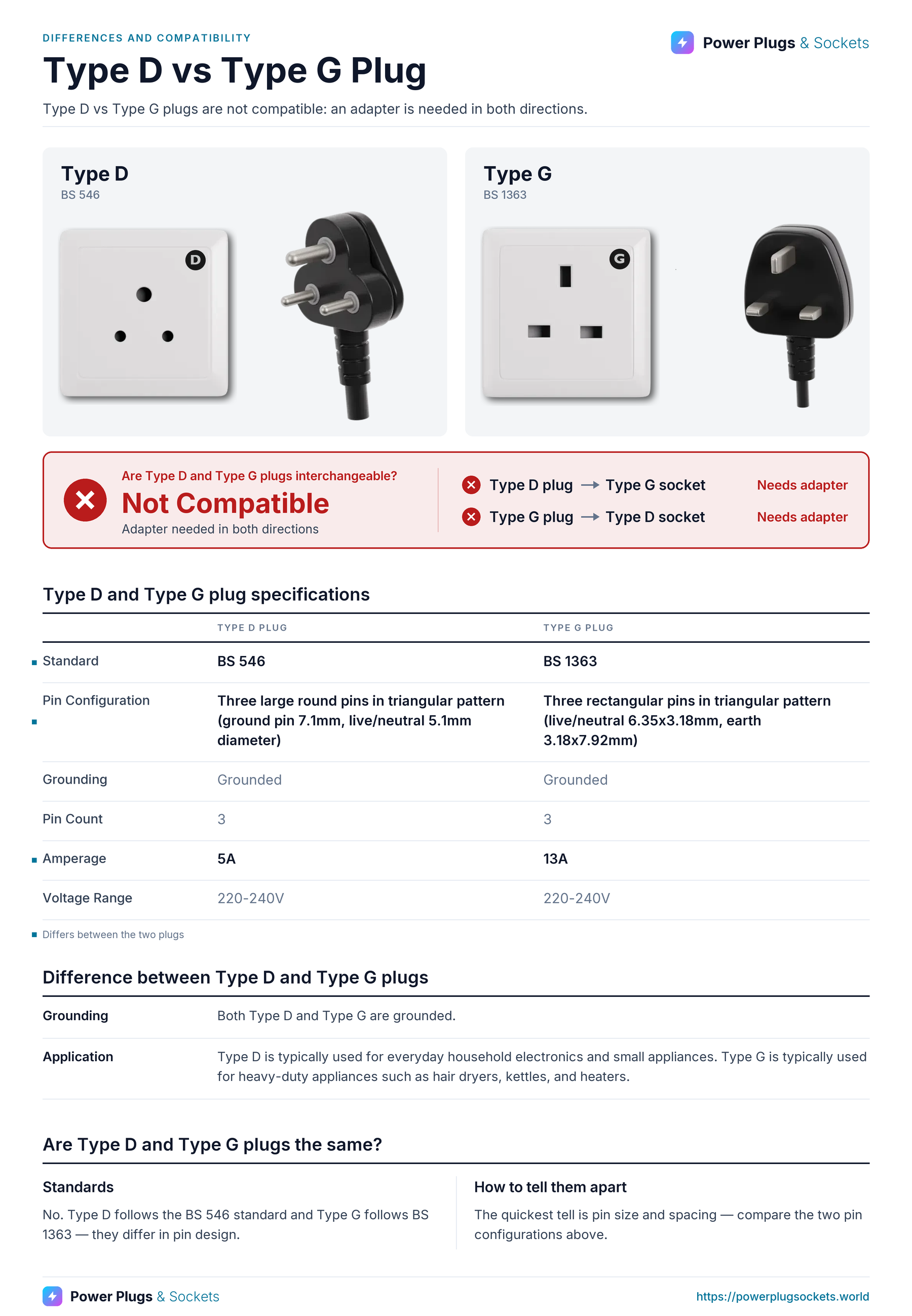
Type D vs Type G plugs are not compatible: an adapter is needed in both directions. Type D is a 3-pin, grounded plug rated 5A at 220-240V, while Type G is a 3-pin, grounded plug rated 13A at 220-240V. The two differ mainly in amperage and pin design, which is what decides compatibility — whether a Type D plug fits a Type G socket, and vice versa. Next, check comparing type I and type L plugs for international travel.
Swipe to compare
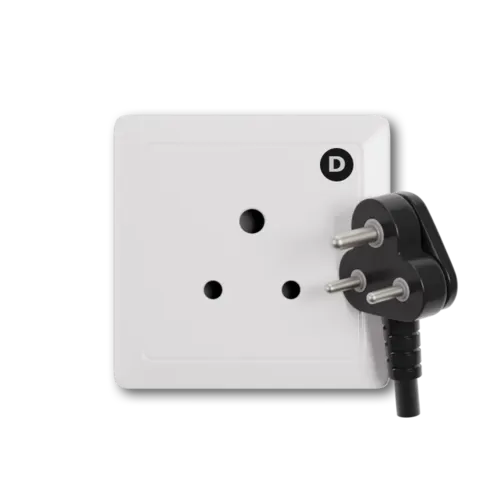
Type D
|
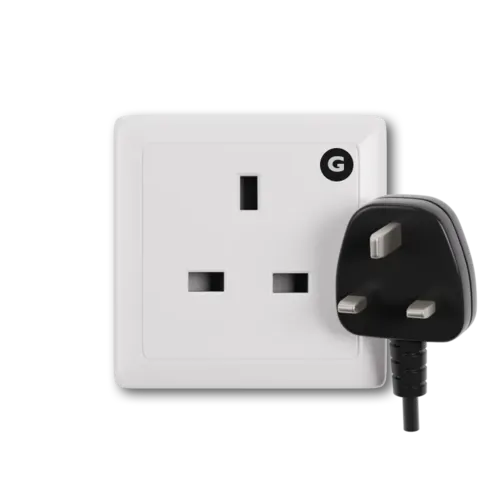
Type G
|
|
|---|---|---|
| Standard | BS 546 | BS 1363 |
| Pin Configuration | Three large round pins in triangular pattern (ground pin 7.1mm, live/neutral 5.1mm diameter) | Three rectangular pins in triangular pattern (live/neutral 6.35x3.18mm, earth 3.18x7.92mm) |
| Grounding | Grounded | Grounded |
| Pin Count | 3 | 3 |
| Amperage | 5A | 13A |
| Voltage Range | 220-240V | 220-240V |
Key Differences Between Type D and Type G
Here's how Type D and Type G compare, point by point. For a related pairing, see how the pin configuration of a type A plug differs from a type E plug.
- Grounding: Both Type D and Type G are grounded.
- Pin Size and Shape: Type D: Three large round pins in triangular pattern (ground pin 7.1mm, live/neutral 5.1mm diameter). Type G: Three rectangular pins in triangular pattern (live/neutral 6.35x3.18mm, earth 3.18x7.92mm).
- Application: Type D is typically used for everyday household electronics and small appliances. Type G is typically used for heavy-duty appliances such as hair dryers, kettles, and heaters.
Type D and Type G Compatibility
Type D in Type G Sockets: Generally no. A Type D plug (Three large round pins in triangular pattern (ground pin 7.1mm, live/neutral 5.1mm diameter)) does not fit a Type G socket (Three rectangular pins in triangular pattern (live/neutral 6.35x3.18mm, earth 3.18x7.92mm)) without a travel adapter.
Type G in Type D Sockets: Generally no. A Type G plug (Three rectangular pins in triangular pattern (live/neutral 6.35x3.18mm, earth 3.18x7.92mm)) does not fit a Type D socket (Three large round pins in triangular pattern (ground pin 7.1mm, live/neutral 5.1mm diameter)) without a travel adapter.
If you're planning a trip, tell us which country you're visiting and we can confirm whether you need a Type D or Type G travel adapter.
Does a Type D plug fit into a Type G socket?
Generally no. A Type D plug (Three large round pins in triangular pattern (ground pin 7.1mm, live/neutral 5.1mm diameter)) does not fit a Type G socket (Three rectangular pins in triangular pattern (live/neutral 6.35x3.18mm, earth 3.18x7.92mm)) without a travel adapter. You might also want will a type C plug work in a type N socket without an adapter.
Are Type D and Type G plugs the same?
No. Type D follows the BS 546 standard and Type G follows BS 1363 — they differ in pin design.
Which countries use Type D and Type G plugs?
Type D plugs are used in 31 countries, including India, Maldives, Nepal, Tanzania, Jordan. Type G plugs are used in 66 countries, including United Kingdom, Singapore, Ireland, Hong Kong, Dubai. 19 countries use both, including Maldives, Tanzania, Jordan, Zimbabwe, Botswana. Compare this with how does the amperage rating of a type C plug compare to a type F plug.
How can you tell a Type D plug from a Type G plug?
A Type D plug has three large round pins in triangular pattern (ground pin 7.1mm, live/neutral 5.1mm diameter), and is grounded. A Type G plug has three rectangular pins in triangular pattern (live/neutral 6.35x3.18mm, earth 3.18x7.92mm), and is grounded. The quickest tell is pin size and spacing — compare the two pin configurations above.