Type A vs Type E Plugs: Differences & Compatibility
Type A vs Type E plugs are not compatible: an adapter is needed in both directions. Type A is a 2-pin, ungrounded plug rated 15A at 100-127V, while Type E is a 2-pin, grounded plug rated 16A at 220-240V. The two differ mainly in grounding, voltage, amperage and pin design, which is what decides compatibility — whether a Type A plug fits a Type E socket, and vice versa. For a related pairing, see should you choose type I or type O for an international travel adapter.
Swipe to compare
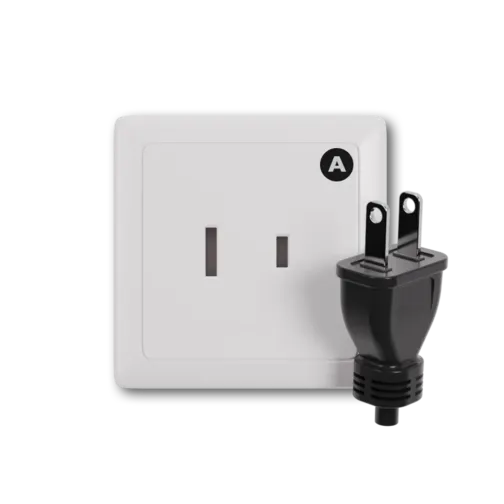
Type A
|
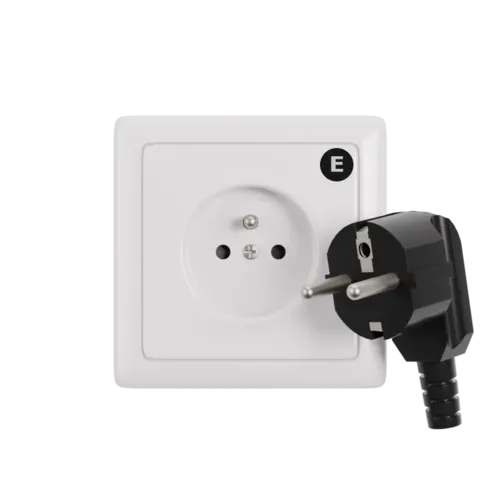
Type E
|
|
|---|---|---|
| Standard | NEMA 1-15 | CEE 7/5 |
| Pin Configuration | Two flat parallel pins (15.9mm apart, 15.9mm long, 6.3mm wide) | Two round pins (4.8mm diameter) plus hole for socket grounding pin |
| Grounding | Ungrounded | Grounded |
| Pin Count | 2 | 2 |
| Amperage | 15A | 16A |
| Voltage Range | 100-127V | 220-240V |
Packing for Paris with a laptop bought in Chicago? The type A vs type E plug question comes down to blade shape, the earth connection and the supply each was built for.
Both are household plugs and sockets in the same letter system, yet the power plugs on your devices must also cope with a different voltage and frequency of electricity abroad.
Type A vs Type E Plug at a Glance
The letters come from a guide first published by the US Department of Commerce and now maintained by the IEC (International Electrotechnical Commission); they are a naming convention, not a standard. Type A is the NEMA 1-15 connector of North America and Japan; Type E is the CEE 7/5 socket and its CEE 7/6 plug, used in France and Belgium. For a related pairing, see packing an adapter for a trip that has both type A and type B sockets.
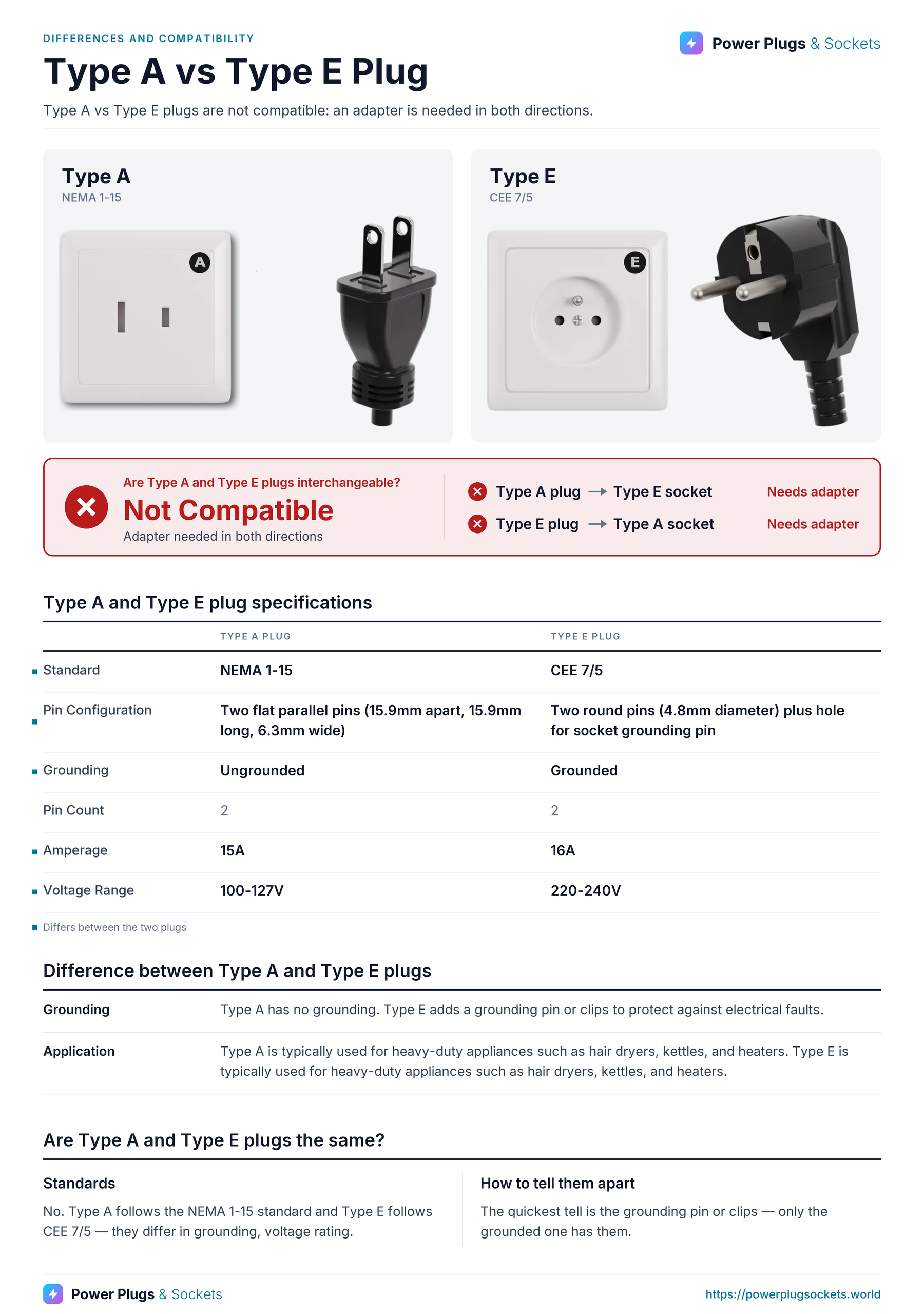
The voltage rating (125 V against 250 V) and current rating matter more than shape. Think of them as plugs and outlets, or AC power plugs, for travellers and travelers alike.
| Feature | Type A | Type E |
|---|---|---|
| Governing standard | NEMA 1-15 (US and Canada), JIS C 8303 Class II (Japan) | CEE 7/5 socket and CEE 7/6 plug (NF C 61-314, NBN C 61-112) |
| Contacts | Two flat parallel blades | Two round pins plus an earth pin on the socket |
| Earth connection | None | Yes, through the socket's projecting pin |
| Rating | 15 A at 125 V | 16 A at 250 V |
| Typical supply | 100 – 127 V, 60 Hz (50 Hz in eastern Japan) | 220 – 240 V, 50 Hz |
| Polarity | Polarized by a wider neutral blade (most US plugs) | Partially fixed by the earth pin |
| Socket accepts | Type A only (a Type B receptacle also takes A) | Types C, E and the CEE 7/7 version of F |
A NEMA 1-15 outlet tops out near 1,875 W, a CEE 7/5 socket near 4,000 W. Only Type E adds a third conductor for safety.
Earth Pin and Pin Shape Side by Side
Type A has two thin flat blades and nothing else. Type E has two fat round pins and a hole between them, because the earth pin sits on the socket and enters that hole before the live pins connect.
How the Type A Plug Is Built: NEMA 1-15
NEMA names connectors in the pattern NEMA n-mmX: pin layout, maximum current, then P or R for plug or receptacle. NEMA 1-15P is the two flat blades plug on half-inch (12.7 mm) centres, a two-pin plug (plug type A in product listings) found on phone chargers and lamps; on most US versions one blade is wider.
Polarized and Unpolarized Versions
Early Type A plugs had equal blades; the polarized version, with a wider neutral that fits one way only, became common in the 1950s. A polarized outlet still accepts the older plug, and small AC adapters often skip polarization.
Why Type A Is Not Grounded and How Type B Differs
Type A is not grounded. Type B, the NEMA 5-15, adds a round ground pin below the same two blades, and its receptacle also takes a Type A plug.
Both are rated 15 A at 125 V, and Japan's parallel blades and China's 10 A, 250 V GB 1002 version prove the letter never tells you the voltage.
How Type E Plugs and the CEE 7/5 Socket Work
Type E most likely began in Belgium in the 1930s. It is the main socket in France, Belgium, Poland, Slovakia and Czechia (the Czech Republic), and is also found in Tunisia and Morocco, rated 16 A and 250 V.
Two Round Pins Spaced 19 mm Apart
A Type E connector uses two round pins, each 4.8 mm across, on 19 mm centres. The socket, a wall socket across Europe, has a circular recess so fingers cannot reach live pins.
Partial Polarity in French Sockets
Because the grounding pin sits off-centre, a Type E plug fits only one way, so it is partially polarized by shape. Nothing says which hole is live, so never rely on it when wiring a lamp.
Which Plug Types Fit Type E Outlets
Type E outlets are backward-friendly. The Europlug (CEE 7/16), a thin unearthed type C plug rated 2.5 A, fits, as does the CEE 7/17 contour plug. Compare this with is it safe to use a type C device on a type F socket.
Schuko (CEE 7/4, type F) is blocked by the socket pin, but the CEE 7/7 hybrid carries side clips and a centre hole, earthing clips plus a hole make it a hybrid plug, so one plug gives a ground connection in both Type E and Type F sockets.
Why a Type A Plug Never Fits a French Socket
Type A plugs have flat blades on 12.7 mm centres; a French socket has round holes on 19 mm centres. Nothing lines up, and a 100 – 127 V device would meet a 230 V supply.
Using Power Plugs Abroad: Adapters and Converters
An adapter solves the physical fit but changes nothing about the supply. For a US device in France, use a travel adapter or power plug adapter with a hole for the earth pin, rated at least 10 A. Check the label before plugging into the electrical outlet in your hotel room.
Travel adaptors vary, and a US power strip, extension cords or multisocket adaptors rated 125 V should stay out of French sockets.
When You Need a Voltage Converter
A voltage converter or step-down transformer is needed when an appliance is rated only for 100 – 127 V. A 1,200 W US hair straightener on 230 V would try to draw roughly 4,400 W and burn out, so heating appliances are best bought locally.
Dual Voltage Labels and 100–240 V Chargers
Most laptop, phone and camera chargers are dual voltage. If the label reads "Input: 100–240 V, 50/60 Hz," it needs only an adapter, whatever the mains electricity in countries you visit.
Safety Differences Between These Electrical Plugs
The two electrical plugs take different approaches to safety: Type A relies on lower voltage and appliance design, Type E adds an earth path and a deep recess. The risk of electric shock rises when you mix them with the wrong adapter.
Earthed and Unearthed Appliances: Class I and Class II
A Class I appliance has exposed metal that must be earthed, so it needs a grounded plug such as Type B or Type E. A Class II appliance uses double insulation, so an unearthed Type A or Europlug is acceptable.
Child-Resistant Shutters and Recessed Sockets
Many French sockets have child-resistant shutters that open only when both pins push in, and new US receptacles are tamper-resistant. The recessed Type E socket adds a guard that a flat Type A outlet lacks.
Where Each Plug and Socket Type Is Used
National governments set the plugs and sockets used in each country:
- Type A: USA, Canada, Mexico, Central America, Japan and parts of China, usually 100 – 127 V and 15 A
- Type E: France, Belgium, Poland, Slovakia, Czechia, Tunisia and Morocco, always 220 – 240 V and 16 A
- Also compatible with Type E sockets: Type C Europlugs and CEE 7/7 hybrids from Germany, Spain and the Netherlands
In this type A vs type E plug comparison, the plug shape decides what fits, but the label on your device decides whether it is safe to switch on.