Type H vs Type I Plugs: Differences & Compatibility
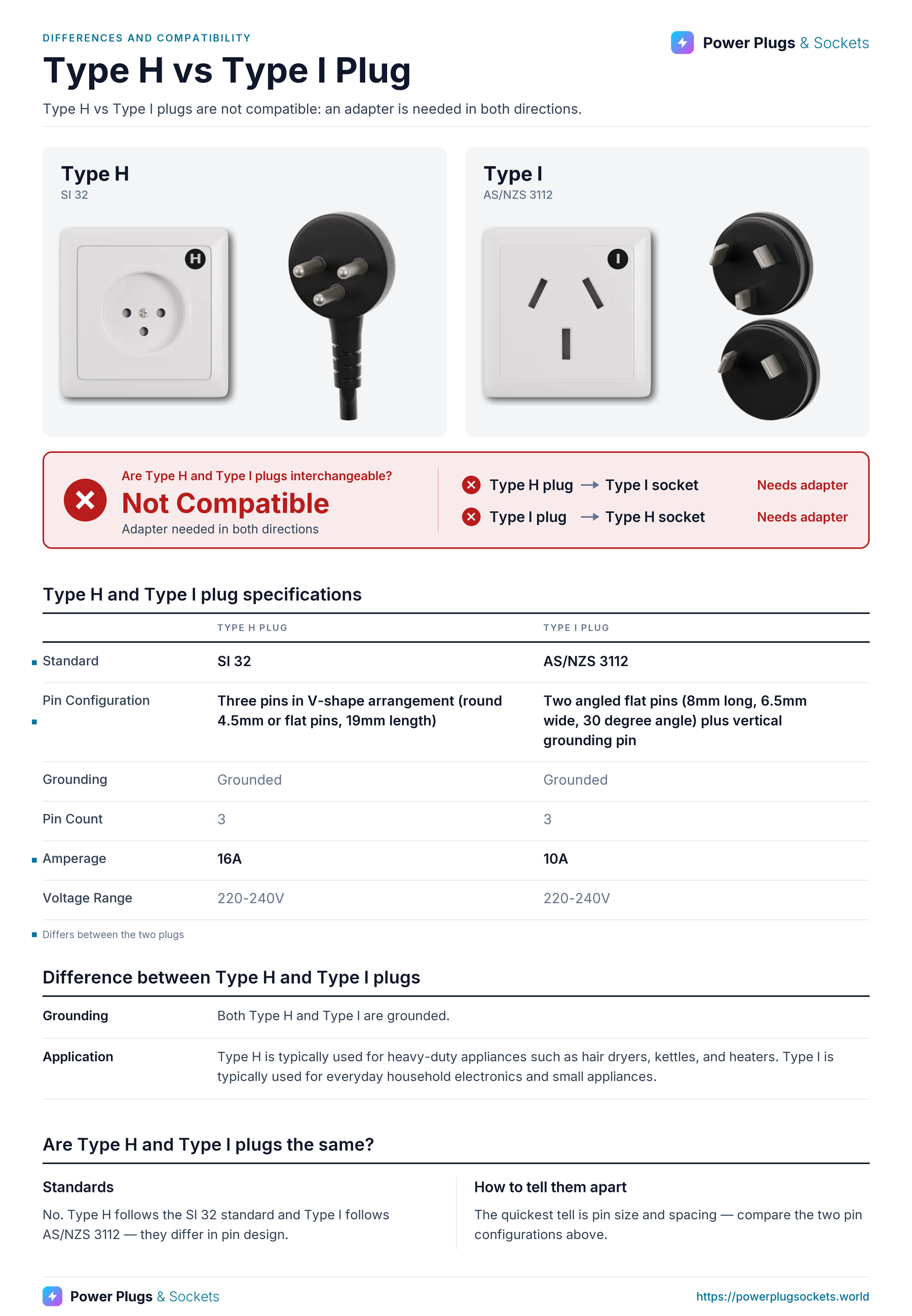
Type H vs Type I plugs are not compatible: an adapter is needed in both directions. Type H is a 3-pin, grounded plug rated 16A at 220-240V, while Type I is a 3-pin, grounded plug rated 10A at 220-240V. The two differ mainly in amperage and pin design, which is what decides compatibility — whether a Type H plug fits a Type I socket, and vice versa. Compare this with how the pin configuration of a type A plug differs from a type B plug.
Swipe to compare
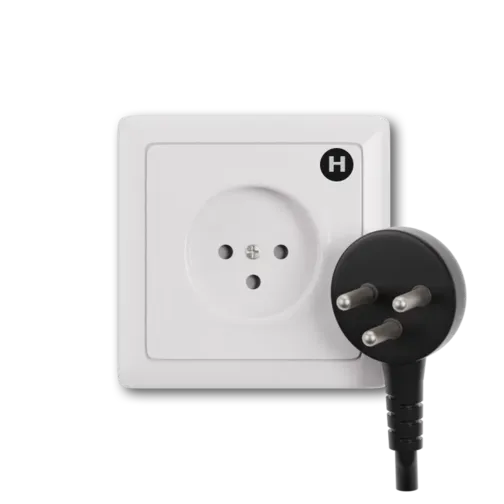
Type H
|
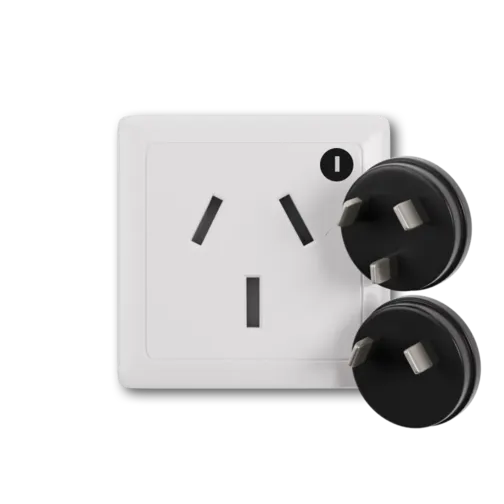
Type I
|
|
|---|---|---|
| Standard | SI 32 | AS/NZS 3112 |
| Pin Configuration | Three pins in V-shape arrangement (round 4.5mm or flat pins, 19mm length) | Two angled flat pins (8mm long, 6.5mm wide, 30 degree angle) plus vertical grounding pin |
| Grounding | Grounded | Grounded |
| Pin Count | 3 | 3 |
| Amperage | 16A | 10A |
| Voltage Range | 220-240V | 220-240V |
Packing for a trip between Israel and Australia means the type H vs type I plug question decides whether your device works. The two plugs never fit each other's sockets, so you need a plug adapter, but both regions run 220 – 240 V mains electricity, so you rarely need a voltage converter.
Type H vs Type I Plug at a Glance
The letters come from the IEC (International Electrotechnical Commission) IEC World Plugs guide, a label for travellers rather than a standard. Letter H maps to one national standard, while letter I covers at least three.
Neither letter appears on the other's compatibility list, and the electrical standards behind them differ. Travel guides call them power outlet type H and power outlet type I.
| Feature | Letter H | Letter I |
|---|---|---|
| Pins | Three round pins in a triangle | Two flat pins in an inverted V plus a flat vertical earth pin |
| Standard rating | 16 A, 250 V | 10 A, 250 V (15 A and 20 A versions exist) |
| Earthed | Yes | Yes (an unearthed two-pin version also exists) |
| Polarized | Yes | Yes |
| Fused | No | No |
| Insulated pins | No | Required in Australia and New Zealand, optional in China and Argentina |
| Recessed socket | No | Optional in Australia, no elsewhere |
| Socket accepts Europlug | Yes | No |
| Mains supply | 230 V, 50 Hz | 220 V or 230 V, 50 Hz |
| Main countries | Israel, West Bank, Gaza Strip | Australia, New Zealand, China, Argentina, Papua New Guinea, Fiji |
The designs agree on voltage, frequency and earthing and disagree on mechanics. Pin dimensions differ: the type H plug has round pins 4.5 mm across and 19 mm long; type I plugs have flat-bladed pins about 1.55 mm thick.
Both are rated at 250 V, but the Israeli plug has a 16 amp current rating (16 A) and the Australasian 10 A, so high-power appliances such as air conditioners suit the bigger plug. A 3,000 W heater draws about 13 amps at 230 V, fine on a 16 A socket and too much for a 10 A one, so check the watts on the label.
How the Israeli Plug Is Built
The power plug defined in SI 32, the Israeli standard, is used almost nowhere else, and type H plugs and the socket type H follow it. The 1989 revision replaced the old flat blades with three round pins and sockets that also accept the two-pin Europlug.
The design is earthed with a ground pin and polarized (polarity is fixed): neutral on the left, live on the right, earth below.
The Pre-1989 Flat Pins and V-Shaped Layout
Before 1989 the Israeli plug used flat-bladed pins with a V-shaped pair above the earth. It is now obsolete, and its resemblance to the Australasian design is superficial; it never fit an Australian socket.
Type H Sockets in Israel, the West Bank and Gaza Strip
Type H outlets are the national socket type in Israel and Palestine, covering the West Bank and the Gaza Strip, so that is what your adapter needs to match.
The Australasian Plug Family: AS/NZS 3112, GB 1002 and IRAM 2073
AS/NZS 3112 covers Australia and New Zealand, GB 1002 China and IRAM 2073 (with IRAM 2071 for sockets) Argentina. A type I plug from Sydney, Shenzhen or Buenos Aires fits a 10 A socket in the other two, so these plugs & outlets form one family; the Argentine plug is the same family, though Argentine plugs wire live and neutral oppositely.
Type I plugs are also used across Oceania and the South Pacific, including Tonga, Papua New Guinea and Fiji, and in Uruguay.
Flat Prongs in an Inverted V-Shape With a Vertical Grounding Pin
Two flat power pins are angled in an inverted V-shape, with a flat vertical grounding pin below. The earthing pin is longer, so it makes contact before the live pin and breaks after it.
Heavier versions exist: 15 A and 20 A in Australia, a 16 A socket in China and a 20 A version in Argentina, so the 10 A and 20 A Argentine plugs are mutually incompatible, and a 10 A travel adaptor will not take them; the same 20 A shape is found in Brazil.
Argentina's Reversed Live and Neutral Wiring
With the earth contact at the bottom, Argentina puts live on the right of the socket, while Australia, New Zealand and China put it on the left. The domestic plugs interchange, but an older appliance can leave the socket shell live when switched off.
The Unearthed Version for Class II Appliances
Each standard allows an unearthed version, the ungrounded version with two pins, for Class II devices that use double insulation, such as phone chargers. Class I devices need the three-pin plug with its earth receptacle, and a grounded plug won't fit a two-pin outlet.
Do Israeli Plugs Fit Australian, Chinese or Argentine Sockets?
No. Israeli plugs aren't compatible with any socket in the other family, and the reverse is equally true. Your devices are electrically compatible, but the plugs are incompatible with the other family's sockets, so you need an adaptor. Next, check can i use a type A adapter with a type H socket.
A Europlug fits an Israeli socket but not an Australasian one.
Why Round Prongs and Flat Blades Never Mate
Round prongs need round holes and flat blades need slots. Hybrid universal sockets and dual sockets (which accept several plugs and sockets) exist in older Chinese buildings but are not covered by any official standard.
Type E or type F plugs (the Schuko designs), type G, type M, type N, type O and type J plugs also fit neither, so each needs its own adaptors.
Europlug and Type C Plugs: Accepted by One Side Only
The Europlug (CEE 7/16, type C) has two round 4 mm pins rated 2.5 A, and fits a post-1989 Israeli socket. It does not fit Australasian sockets, whose contacts are flat slots, so travelers going to Australia, New Zealand, China or Argentina need an adapter in every case.
Because the supply is 220 – 240 V, they need a travel adapter, not a converter; a converter is for 100-127 V appliances. Choose a plug adapter that passes the earth through, and don't stack travel adaptors into extension cords, plug strip or power strip, since extra contact points can overheat the power plug.
A 10 A adapter cannot carry appliances above about 2,300 W, so look for a local safety mark.
Safety Compared: Bare SI 32 Pins vs Insulated Pins and Recessed Sockets
Both designs are earthed and polarized, but they handle a partly removed plug differently, and neither uses a fuse in the plug. For a related pairing, see type B vs type J socket.
Insulating Sleeves and Partially Inserted Plugs
Israeli pins are bare metal, so a plug pulled halfway out leaves live pins exposed, with a risk of electric shock or even electrocution. Australian and New Zealand plugs must have insulating sleeves on the power pins; in China and Argentina they are optional.
Switched, Fused and Recessed Outlets
Overcurrent protection sits in the home's circuit breakers; the domestic wiring provides the ground, and the appliance must match its current. Most Australian and New Zealand outlets carry a switch, while Israeli sockets are not recessed and have none, so pull the plug fully out.
Newer sockets, especially in China, add shutters for child protection.