Type H vs Type O Plugs: Differences & Compatibility
Type H vs Type O plugs are not compatible: an adapter is needed in both directions. Type H is a 3-pin, grounded plug rated 16A at 220-240V, while Type O is a 3-pin, grounded plug rated 16A at 220-240V. The two differ mainly in pin design, which is what decides compatibility — whether a Type H plug fits a Type O socket, and vice versa. Next, check is a type C plug compatible with a type N socket.
Swipe to compare
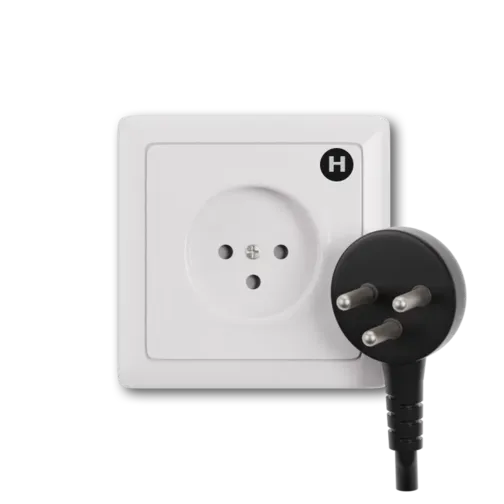
Type H
|
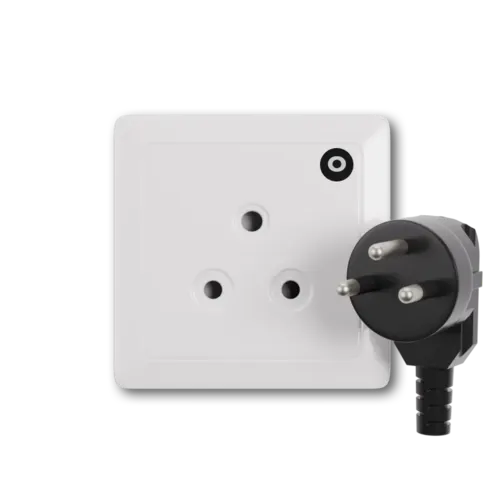
Type O
|
|
|---|---|---|
| Standard | SI 32 | TIS 166-2549 |
| Pin Configuration | Three pins in V-shape arrangement (round 4.5mm or flat pins, 19mm length) | Three round pins in triangular pattern (4.8mm diameter power pins, 4mm grounding pin) |
| Grounding | Grounded | Grounded |
| Pin Count | 3 | 3 |
| Amperage | 16A | 16A |
| Voltage Range | 220-240V | 220-240V |
Pack for a trip that takes in Tel Aviv and Bangkok and the type H vs type O plug question is less obvious than it looks: both are three-pin, earthed designs for domestic electricity at 230 V, rated for the same current, yet a power plug from one country will not seat in the other. Israel uses its own plug and socket system and Thailand another, and the differences come down to pin size, pin position and what each socket will safely accept for your appliances.
Type H vs Type O Plug at a Glance
The IEC lists household plugs and sockets in its World Plugs guide and gives each of the 15 plug types a letter, which describes rough mechanical fit, not a technical standard. Behind letter H sits the Israeli standard SI 32; behind letter O a Thai national standard. You might also want does a type A plug fit into a type K socket.
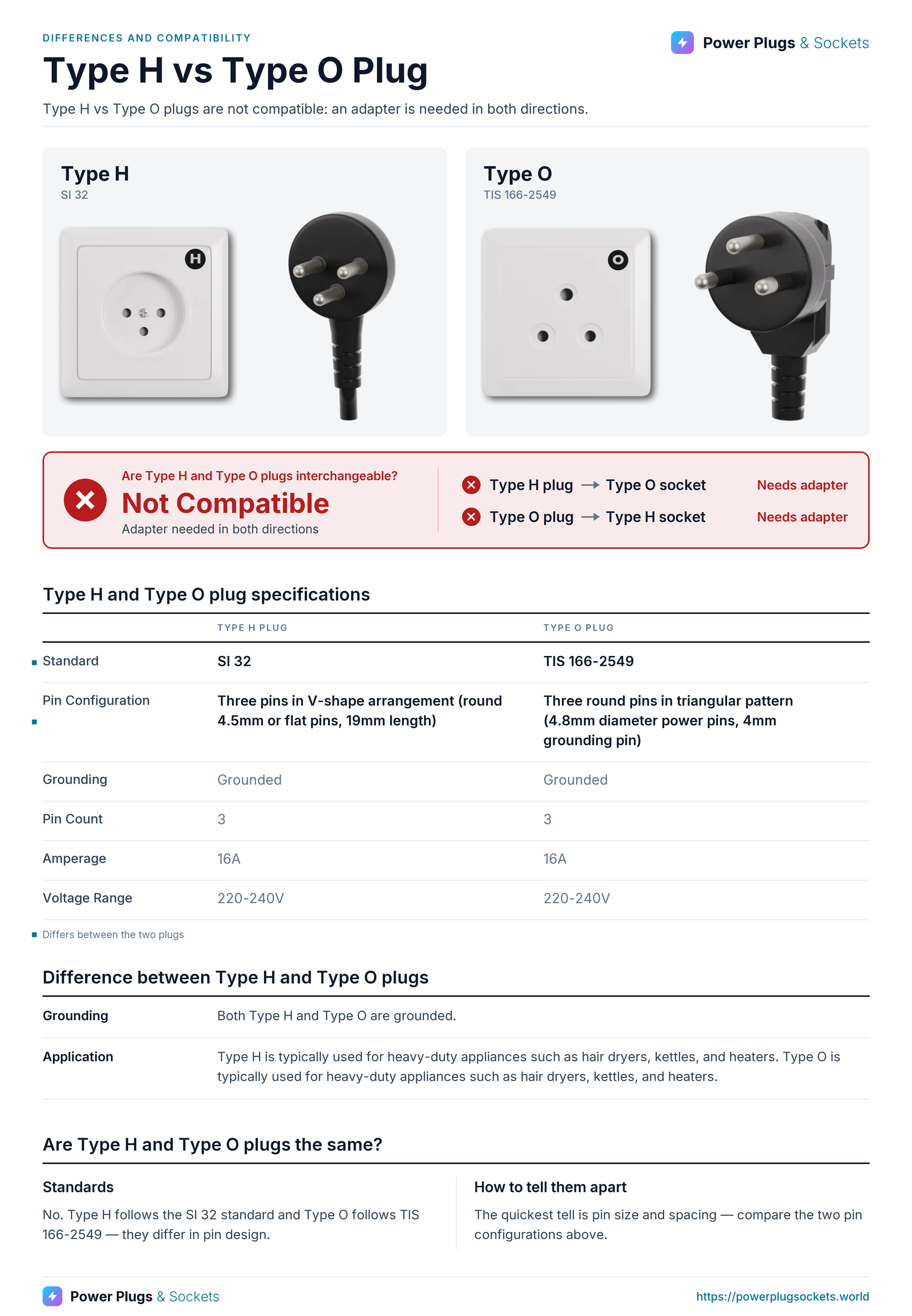
Type H plugs and type O outlets belong to different electrical standards, and each type H plug or Thai plug works with plugs and outlets of its own country only; type H outlets and the Thai electrical network use the same 230 V electrical system.
| Feature | Letter H (Israeli) | Letter O (Thai) |
|---|---|---|
| Governing standard | SI32 (IEC letter H) | TIS 166-2549 (IEC letter O) |
| Where it is used | Israel, the Gaza Strip and the West Bank (Palestine) | Thailand only |
| Current rating | 16 A | 16 A |
| Voltage rating | 250 V | 250 V |
| Pin shape | Round pins since 1989 (flat pins before) | Round pins |
| Power pin diameter | 4.5 mm | 4.8 mm |
| Insulated pins | No | Yes, 10 mm sleeves on the power pins |
| Polarized socket | Yes | Yes |
| Recessed socket | No | No |
| Socket accepts Europlug | Yes | Yes |
The electrical ratings are identical, while every mechanical detail differs, which is why a Thai plug and an Israeli receptacle refuse to mate.
Pin Layout, Pin Diameter and Spacing
Both designs use two power pins plus an earth pin in a triangle, with centres 19 mm apart. Thai round pins are 4.8 mm thick and 19 mm long; since 1989 the Israeli pin diameter is a slimmer 4.5 mm, and the earth pin is placed differently, so the two do not line up.
Current Rating: 16 A at 250 V
Each plug and socket pair is rated at 16 A and 250 V, and both countries supply 230 V at 50 Hz, roughly 3.7 kW at 16 amps. An adaptor is only as strong as its weakest part, so a cheap 10 A adapter downgrades both systems; its amperage limit is the one your appliance must respect.
SI 32: How the Israeli Outlet Is Built
The Israeli outlet is used in Israel and Palestine, across the Gaza Strip and the West Bank. Looking from the front, neutral sits on the left, ground at the bottom and live on the right, so live and neutral are never swapped and the socket is polarized; polarity keeps a switched side on live. For a related pairing, see do you need a type F to type O plug adapter.
It also takes the unearthed CEE 7/16 Europlug, so a type C charger fits without an adaptor, and sockets that accept only old flat pins in a Y-shape from before 1989 (the pre-1989 plug, with V-shaped pins angled toward each other) are now rare.
Round Pins After the 1989 Revision
The 1989 revision replaced the flat blades with slimmer round pins in the same three positions, so a current socket takes both the older and the new plug. New Israeli appliances carry the round-pin version or a two-pin Europlug.
The Thai Plug Defined in TIS 166-2549
TIS 166-2549, published in 2006 (2549 is the Buddhist year), replaced earlier rules based on American NEMA designs. Type O plugs are used only in Thailand.
Earth Pin Offset and Insulated Sleeves
The Thai design adds insulated sleeves 10 mm long at the base of each power pin. The longer 21.4 mm grounding pin connects first and leaves last, and sits 11.9 mm from the line joining the power pins, the offset of the American type B plug (NEMA 5-15).
Grounded and Ungrounded Variants
The standard defines a grounded three-pin plug and an ungrounded two-pin plug; unlike the 2.5 A Europlug, both are rated 16 A.
Why NEMA Compatibility Is Being Phased Out
Most Thai sockets today are the Thai dual socket, one of the hybrid sockets that take Thai three-pin plugs, type C, and American type A (NEMA 1-15) and type B plugs. The hybrid socket is not a universal socket, and it lets a 120 V-only device meet 230 V, so it is being phased out for a plain three-round-pin socket.
Plugs and Sockets Compatibility Between the Two Standards
Compatibility for any plug type comes down to three cases: a two-pin type C plug works in both countries, an Israeli three-pin plug does not fit a Thai socket and the reverse, and some third-country plugs fit physically but should not be used. A type A or type B plug fits a Thai hybrid outlet, but check the device accepts 230 V.
Why They Are Not Interchangeable
The plug types are near twins, with three round pins in a triangle at 19 mm spacing, but pin diameter and earth pin position differ. On the Thai design the earth pin is longer and set 11.9 mm off the centre line; the Israeli earth pin sits where the old Y-shaped layout put it.
Even the Danish type K plug, with a D-shaped earth pin, is another lookalike: IEC letters group lookalikes, not matching parts.
Schuko and French Plugs: The Unsafe Fit
A Schuko plug (CEE 7/4, type F) or the CEE 7/7 hybrid, also used with type E, can be pushed into a Thai socket, but there is no earth connection, and a partially inserted plug leaves live pins exposed, a risk of electric shock. Thailand banned the sale of appliances with Schuko plugs in 2008, so treat them as needing an adapter in both countries.
Choosing a Power Plug Adapter for Israel and Thailand
Travellers need one plug adapter per destination, or a multi-region adapter listing letters H and O. An adaptor changes only the shape; most plug standards do not cover it, so buy one that states its rating and keeps the earth path for grounded appliances.
Both countries use 230 V mains electricity at the same frequency of 50 Hz, so only the plug shape matters. Most chargers say 100-240 V, 50/60 Hz and need an adapter alone; a device listing only 110-120 V needs a voltage converter.
Travel Adapter Checklist for Both Sockets
- Two-pin type C plugs need nothing in either country.
- For grounded plugs, pick a travel adapter with an earth contact.
- Confirm 16 A at 250 V for heaters or hair tools.
- Read the input voltage on every charger.
- Never force a Schuko or CEE 7/7 plug into the wrong socket.
Power Outlet Safety: Israeli and Thai Sockets Compared
On safety the Thai design protects you with sleeved pins and the Israeli one with a snug, polarized fit. Neither is a recessed socket like type F (Schuko), type E or Swiss designs, so grip the plug body, not the cord.
Neither requires shutters, so child protection depends on the model. Class II devices with double insulation use an unearthed Europlug that fits both; Class I devices with exposed metal need the earthing pin and earth connection made through earthed plugs and sockets or an adapter that carries the earth.