Type K vs Type L Plugs: Differences & Compatibility
Type K vs Type L plugs are not compatible: an adapter is needed in both directions. Type K is a 3-pin, grounded plug rated 16A at 220-240V, while Type L is a 3-pin, grounded plug rated 10A/16A at 220-240V. The two differ mainly in amperage and pin design, which is what decides compatibility — whether a Type K plug fits a Type L socket, and vice versa. Next, check type A plugs run on 100-127V while type J plugs run on 220-240V.
Swipe to compare
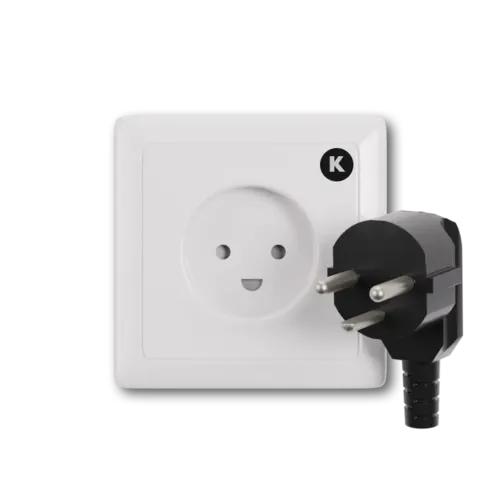
Type K
|
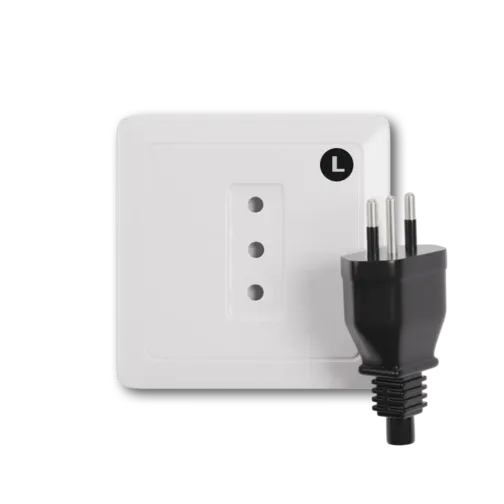
Type L
|
|
|---|---|---|
| Standard | DS 60884-2-D1 | CEI 23-50 |
| Pin Configuration | Two round pins (4.8mm diameter) plus grounding pin (similar to Type F with additional ground pin) | Three round pins in a row (10A: 4mm pins 5.5mm apart / 16A: 5mm pins 8mm apart) |
| Grounding | Grounded | Grounded |
| Pin Count | 3 | 3 |
| Amperage | 16A | 10A/16A |
| Voltage Range | 220-240V | 220-240V |
Packing a Danish laptop charger for Milan, or carrying an Italian hair dryer into a Copenhagen flat? The type K vs type L plug question comes down to one visible difference: the Danish design puts a flat-sided third pin for earth below two round pins, while the Italian design lines up three pins in a straight line.
Both run on the same 230 V mains, so between these two power plugs you are mostly solving a shape problem, and the right adapter usually fixes it.
Type K vs Type L Plug at a Glance
Both systems serve 220 – 240 V grids and both are grounded in modern installations, yet their power sockets and socket types share almost nothing in pin geometry, beyond the common European electrical standards.
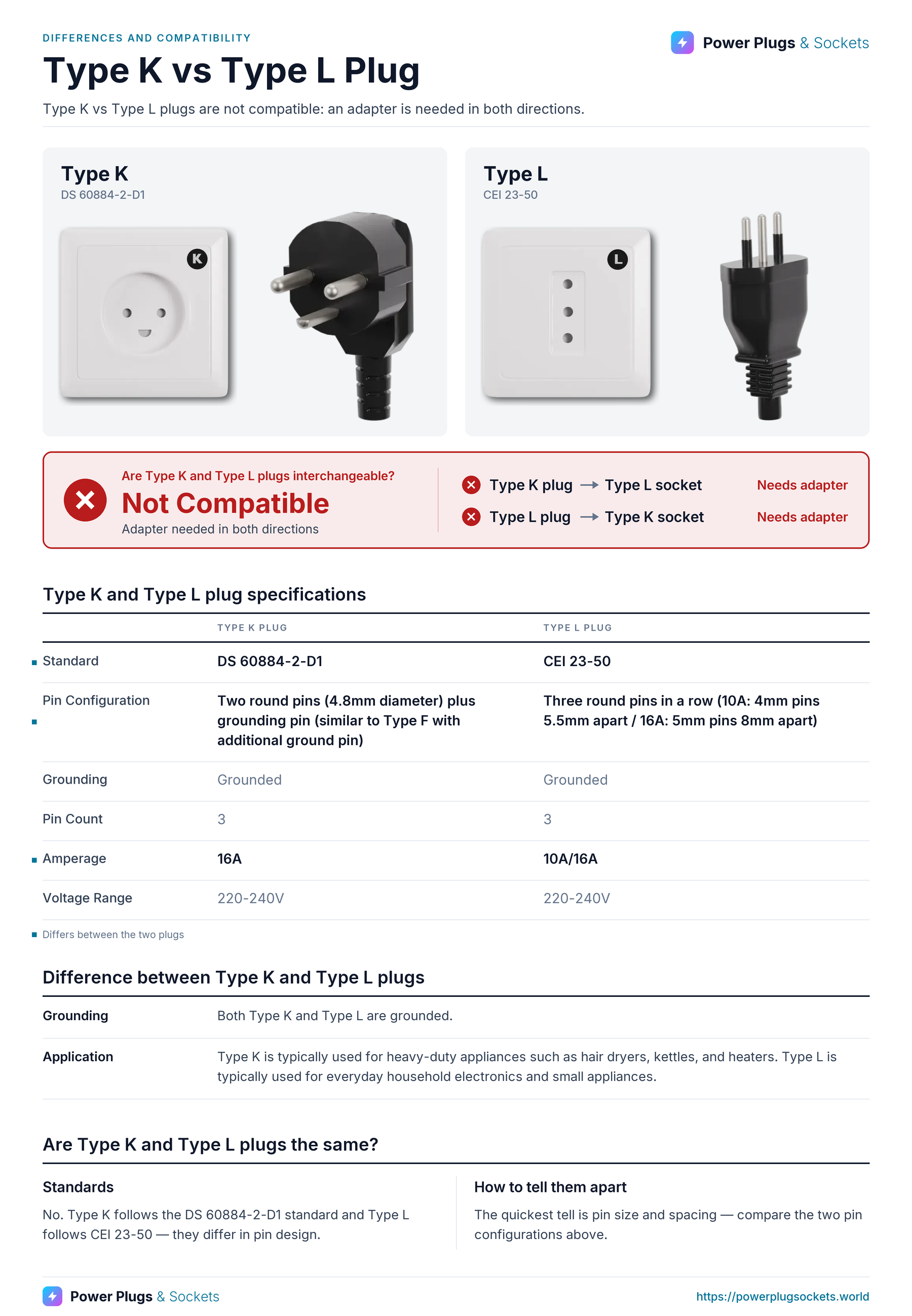
| Feature | Type K (Danish) | Type L (Italian) |
|---|---|---|
| Standard | Danish 107-2-D1 standard sheet | CEI 23-50 |
| Pins | Two round pins plus a D-shaped earth pin | Three round pins, earth in the centre |
| Earth contact | Pin on the plug, earth hole in the socket | Centre pin on the plug |
| Current rating | 16 A | 10 A or 16 A (two sizes) |
| Voltage | 230 V | 230 V |
| Polarized | Yes, live on the left with earth at the bottom | No, fits either way round |
| Shutters | Optional | Not required |
| Accepts a Europlug | Yes | Yes, in the 10 A socket |
| Main countries | Denmark, Greenland, Faroe Islands | Italy, Chile, Uruguay |
The Type K difference is all about where the earth sits, and the Type L difference is all about which size you have. Neither standard includes a fuse in the plug, so overcurrent protection comes from the breaker panel.
How the Danish Plug Is Built
The Danish plug, or Danish standard plug, belongs to the same 19 mm family as most continental connectors, and is also used in Greenland and the Faroe Islands. A type K electrical plug carries two power pins 4.8 mm in diameter and 19 mm long, and below them a D-shaped earth pin, or spade grounding pin, 4 mm thick, 6.5 mm across and 14 mm long, offset 13 mm from the power pins.
The socket simply offers a matching hole, the reverse of the French system. Danish sockets are polarized, with live on the left when the earth hole is at the bottom, and the standard provides for child-resistant shutters that open only when both power pins push in together.
Danish offices sometimes have a special DK 2-5a computer socket on a surge protected circuit, whose tilted pins and semi-circle earth profile keep ordinary plugs out; the earthing contact stays on the plug.
How Italian Plugs Under CEI 23-50 Are Built
Until the second half of the 20th century, many Italian homes received electricity through two separate supplies, one for lighting and one for everything else, each with its own connector size; the pair survived as today's 10 A and 16 A Type L gauges.
10 A and 16 A Versions of Plug Type L
Plug type L comes in two gauges differing in pin diameter and spacing. The 10 A version, labelled S11, has 4 mm pins with centres 19 mm apart; the 16 A version, labelled S17, has 5 mm pins with centres 26 mm apart.
A 16 A plug will not go into a 10 A-only socket, and both are rated at 250 V.
Three Prongs in a Row and Symmetrical Pins
A Type L plug has its three prongs in a row: live, earth in the middle, neutral. The layout is symmetrical, so you can insert it either way up, and it is not polarized; the live and neutral sides can swap.
A Europlug (Type C) fits the narrow 10 A socket because its pin spacing matches. The common bipasso (twin-gauge) socket takes both sizes plus a Europlug, and a larger hybrid socket with a Schuko recess also accepts the earthed CEE 7/4 and CEE 7/7 plugs and the unearthed CEE 7/17.
Type K Socket and Type L Socket Compatibility
Most cross-border questions are about which foreign plug a type K socket or an Italian socket will take. Type C, Type E and Type F plugs share the 4.8 mm, 19 mm pin pattern, so they enter both systems more often than you might expect, but not always safely.
Which Plug Types Fit Each Socket
- Europlug (CEE 7/16), unearthed and rated 2.5 A: fits a Type K outlet and a 10 A Type L or twin-gauge socket safely.
- CEE 7/17 contour plug: fits a Danish socket safely; fits only the large Italian hybrid socket.
- Schuko CEE 7/4, French CEE 7/6 and hybrid CEE 7/7, grounded 16 A: physically enter a Danish socket with no earth, an unsafe compatibility.
- Type K plug: does not fit any Type L socket without an adapter; a Type L plug does not fit a Danish socket at all.
Why Earthed Plugs Lose the Earth Connection in Danish Sockets
A Schuko or French plug slides into a Danish socket because the power pins line up, but the Danish socket offers neither a clip nor a projecting pin, so the appliance runs with no earth connection. On a metal-cased kettle with an insulation fault, that can give electric shocks.
Check which socket you have before plugging in an earthed appliance.
Voltage and Frequency Behind the Type K Electrical Outlet
A type K electrical outlet and an Italian outlet both deliver a nominal 230 V at 50 Hz, the frequency in hertz used across continental Europe. Moving a device between them never requires a transformer: phone chargers, laptops and cameras labelled 100–240 V work in both places, as do most electronics and domestic appliances.
A device built only for 60 Hz may run hot, and no adapter can change the frequency.
Safety Rules for the Type K Receptacle and Italian Sockets
The type K receptacle comes with rules that affect how safely a foreign plug behaves in it. Next, check is a type B plug compatible with a type L socket.
Earth-Fault Interrupters in Danish Installations
Earthed sockets have been required in new Danish wiring since the early 1990s, and since 1 July 2008 every circuit has needed earth-fault interrupters, an RCD, known in Danish as HFI. It cuts the supply when current leaks away, but does not make an unearthed metal appliance correct.
Recessed Sockets and Live Pins
Danish sockets without a switch must be recessed so fingers cannot reach live pins, and newer Italian plugs have partly sleeved pins.
Choosing a Type K Adapter Plug or Travel Adapter
For Italian gear in Denmark, you want a type K adapter plug that accepts the Italian socket shape and presents Danish pins; going the other way, a Type K plug adaptor presents a Type L face. A generic travel adapter works if it lists both plug types.
Hotels increasingly fit universal sockets, but a universal face rarely guarantees the earth path, so choose a dedicated plug adapter that keeps the earth connected and is rated 16 A for a heater.
When You Need a Voltage Converter
Almost never for this trip; a traveler moving between homes needs only a plug. A voltage converter is needed only when a device is rated for 110–127 V and your destination supplies 230 V, such as a North American hair dryer.
Countries Using the Type K Electric Plug and Type L
The type K electric plug is the most narrowly Danish: you will find it in Denmark and its autonomous territories. Of the 15 outlet types in use worldwide, Type L is centred on Italy, including San Marino and Vatican City, and is also used in Chile and Uruguay, with pockets in North Africa. Compare this with type C plugs run on 220-240V while type J plugs run on 220-240V.
A type L electrical outlet in Santiago looks like one in Rome.