Type L vs Type M Plugs: Differences & Compatibility
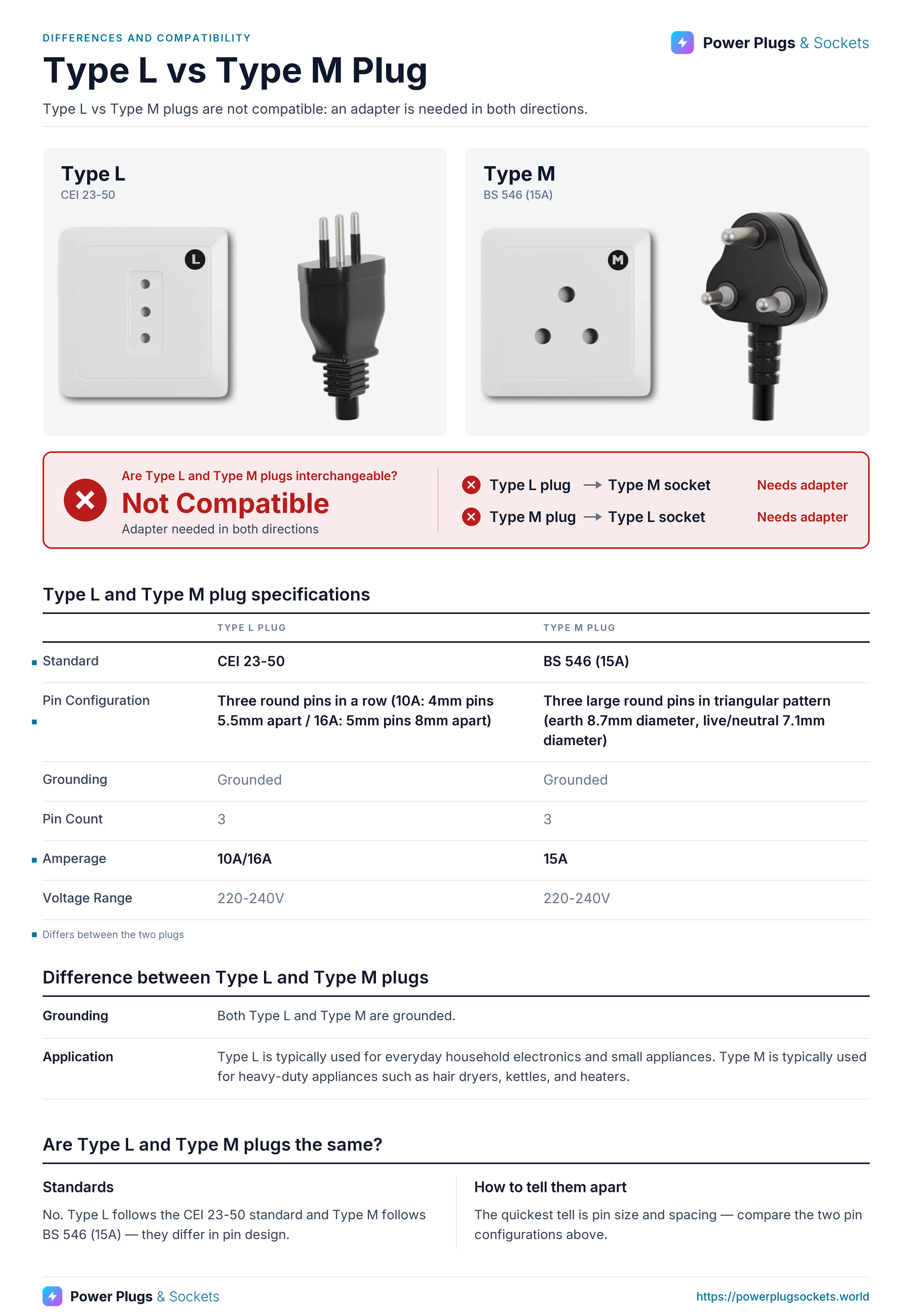
Type L vs Type M plugs are not compatible: an adapter is needed in both directions. Type L is a 3-pin, grounded plug rated 10A/16A at 220-240V, while Type M is a 3-pin, grounded plug rated 15A at 220-240V. The two differ mainly in amperage and pin design, which is what decides compatibility — whether a Type L plug fits a Type M socket, and vice versa. For a related pairing, see how the CEE 7/16 (Europlug) standard for type C compares to IEC 60906-1 for type N.
Swipe to compare
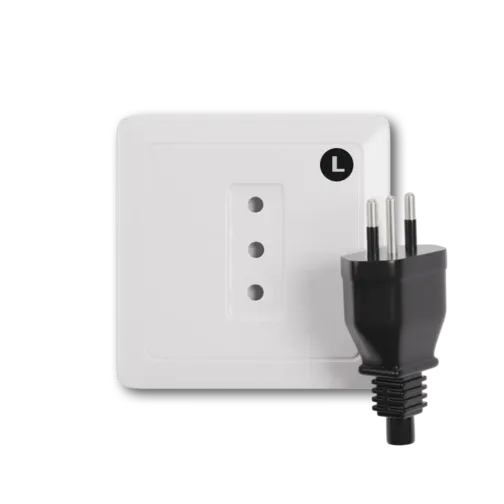
Type L
|
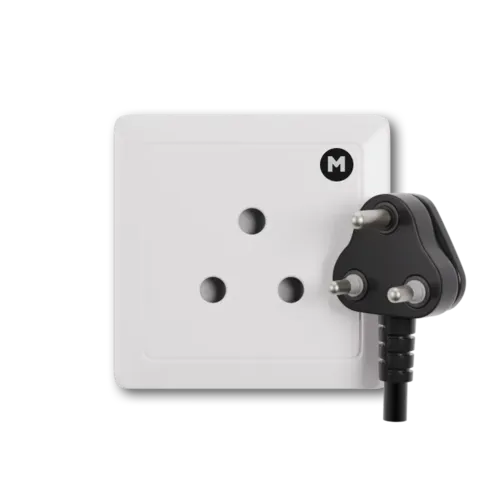
Type M
|
|
|---|---|---|
| Standard | CEI 23-50 | BS 546 (15A) |
| Pin Configuration | Three round pins in a row (10A: 4mm pins 5.5mm apart / 16A: 5mm pins 8mm apart) | Three large round pins in triangular pattern (earth 8.7mm diameter, live/neutral 7.1mm diameter) |
| Grounding | Grounded | Grounded |
| Pin Count | 3 | 3 |
| Amperage | 10A/16A | 15A |
| Voltage Range | 220-240V | 220-240V |
Both plugs have three round pins, so they seem like cousins. In the type L vs type M plug comparison they are almost opposites: the Italian plug sets two round pins plus an earth pin in a straight line in two sizes, while the South African one sets thick pins in a triangle in one heavy-duty size.
This guide shows which socket each fits, what voltage and frequency you'll find, and which plug adapter your devices need.
Type L vs Type M Plug at a Glance
The table sets the Italian design (CEI 23-50) against the South African design (SANS 164-1, derived from the British BS 546). Both are earthed, three-pin systems for 220 – 240 V mains, but they share no dimension.
| Feature | Type L (Italy) | Type M (South Africa, SANS 164-1 / BS 546) |
|---|---|---|
| Pin layout | Three round pins in a line, earth in the centre | Three round pins in a triangle, earth at the top |
| Ratings | 10 A and 16 A, two different sizes | 15 A (16 A under SANS 164-1), one size |
| Live and neutral pins | 4 mm (10 A) or 5 mm (16 A) diameter | About 7 mm diameter, earth pin about 8.7 mm |
| Grounding pin | Same size as the others, in the middle | Longest and thickest, makes contact first |
| Polarity | Symmetrical, fits either way round | Polarized, fits one way only |
| Mains voltage | 230 V, 50 Hz | 230 V, 50 Hz |
| Main countries | Italy, Chile, Uruguay | South Africa, Lesotho, Eswatini, Namibia |
A type L electrical plug will never enter a South African wall outlet, because a type L electrical outlet and a type M electrical outlet differ in socket types and in the pin geometry of plug type L. A Europlug (plug C) is not grounded and fits Italy only. The large South African plug never enters an Italian outlet, but a type L electric plug and a Europlug can share one Italian socket, so the type L electric outlet suits both.
The current rating differs too, so check the current ratings on your devices. Italy has a 10 A size for small loads and a 16 A size for larger appliances, the one heavy appliances such as heaters need; South Africa has one plug rated 15 A under the British rule and 16 A under SANS 164-1.
A 3,000 W appliance draws about 13 amps on one circuit, a 13 amp load that is too much for the 10 A Italian plug.
Three Round Pins in a Line or in a Triangular Pattern
The Italian plug puts its three round pins in a row; the South African plug arranges three round pins in a triangular pattern with one fat earth pin on top, so no force makes one enter the other's socket.
How the Type L Plug Is Built Under CEI 23-50
The type L plug is of Italian origin, defined by CEI 23-50 (older guides say CEI 23-16/VII). Type L plugs are a family of two with the same in-line layout.
The plug is symmetrical and never needed polarity; its central earthing pin turns a CEE 7/16 Europlug layout into an earthed plug.
Pin Diameter and Pin Spacing on Italian Plugs
- The 10 A version has 4 mm pins, centres 19 mm apart, so its socket also accepts a Europlug.
- The 16 A version has 5 mm pins, centres 26 mm apart; its larger contact diameter suits more current, and it is sometimes called "industriale" wrongly.
The two sizes are non-interchangeable in an old single-size type L socket.
Type L Sockets in Modern Homes: Bipasso and Schuko Hybrids
Older buildings may have a type L socket for one size only, while modern ones in Italy, Chile and Uruguay use sockets that accept several plug types. A hybrid socket may be socket compatible with a Europlug and both Italian sizes; the P40 also takes Schuko, CEE 7/7 hybrid and CEE 7/17 plugs.
The Presa Bipasso (P17/11)
The presa bipasso, CEI 23-50 P17/11, is a twin-gauge socket with a central round hole flanked by two figure-8 holes, taking both Italian plugs and a Type C Europlug but not Schuko. The P40 is the closest thing to a universal socket.
How the South African Power Plug Is Built: SANS 164-1 and BS 546
South Africa's Type M plug comes from the British BS 546 family, like India's 5 A Type D; the 15 A size is now SANS 164-1. One plug size serves lamps, geysers and ovens.
Larger Pins Than Plug D
Plug M looks like plug D but has much larger pins: live and neutral about 7 mm, centres 25.4 mm apart, earth about 8.7 mm. A Type D plug is too small to contact it safely.
Grounding Pin Length and Polarity
The longer top pin makes contact first, breaks last and opens the shutters, so the plug goes in one way for proper earthing.
The Shift From SANS 164-1 to Type N
The newer SANS 164-2, based on IEC 60906-1 and grouped under type N like Brazil's, is compact and grounded; old 15 A outlets remain in nearly every building.
Countries Where Each Power Outlet Is Used
The two plug types barely overlap, and most of these countries run on 50 Hz mains.
Italy, Chile and the Rest of the Type L Map
Italy has power outlet type L everywhere, often a bipasso or P40; Chile and Uruguay have Italian plugs and sockets with Type C plugs common. Ethiopia, Libya, Tunisia, Syria, Cuba, the Maldives and El Salvador have it beside other plug types.
Where You Will Meet the South African Socket
South Africa, Lesotho and Eswatini (formerly Swaziland) use power outlet type M as the standard; Namibia and India add it beside Type D. Israel's Type H takes a Europlug but no plug type M.
What Fits a Type L Receptacle, and What Does Not
A type L receptacle is friendly to European plugs, unlike South Africa, which takes a type C plug only in a newer Type N socket.
Europlug and Type C in Both Systems
The ungrounded Europlug, rated 2.5 A, fits the Italian 10 A socket, bipasso and P40, which suits small electronics.
Schuko, Type E and Type F Plugs
A German Schuko (CEE 7/4, type F) with earth clips, or a French type E plug, fits neither a bipasso nor a single-size socket. A P40 earths them properly; elsewhere earthing is missing.
Type L Travel Adapter and Voltage Converter Advice
The right type L travel adapter is useless in Johannesburg and the South African one is useless in Rome. A type L adapter plug with both Italian sizes covers Italy; South Africa needs big triangle pins. You might also want will a type M plug work in a type N socket without an adapter.
Travelers should check that a multi-country travel adaptor or any multisocket adaptors include the right pins.
Why Worldwide Travel Adapters Often Leave Out the Big South African Pins
The large pins are too big to fold into a compact body; a universal travel adapter that includes plug M is labelled "South Africa" or "SA".
Voltage and Frequency in Both Plug Regions
Italy and South Africa both supply 230 V electricity at 50 hertz (50 cycles per second). From North America or Japan, the real question is the voltage behind the socket.
Dual Voltage Chargers Versus a Plug Converter
Most laptop and phone AC adapters read 100–240 V, 50/60 Hz and need only a plug converter. A 120 V hairdryer needs a voltage converter or electrical transformer rated above its wattage.
Safety Differences Between Italian and South African Plugs and Sockets
Under IEC 60884-1, modern Italian plugs have insulated sleeves, and South African sockets use a shutter opened by the earth pin; old unsleeved plugs carry higher electrocution risk. Neither plug has a fuse; a 16 A heater on a 10 A Italian adapter will overheat it first. Compare this with how do i tell a type E plug apart from a type H plug.