Type A vs Type L Plugs: Differences & Compatibility
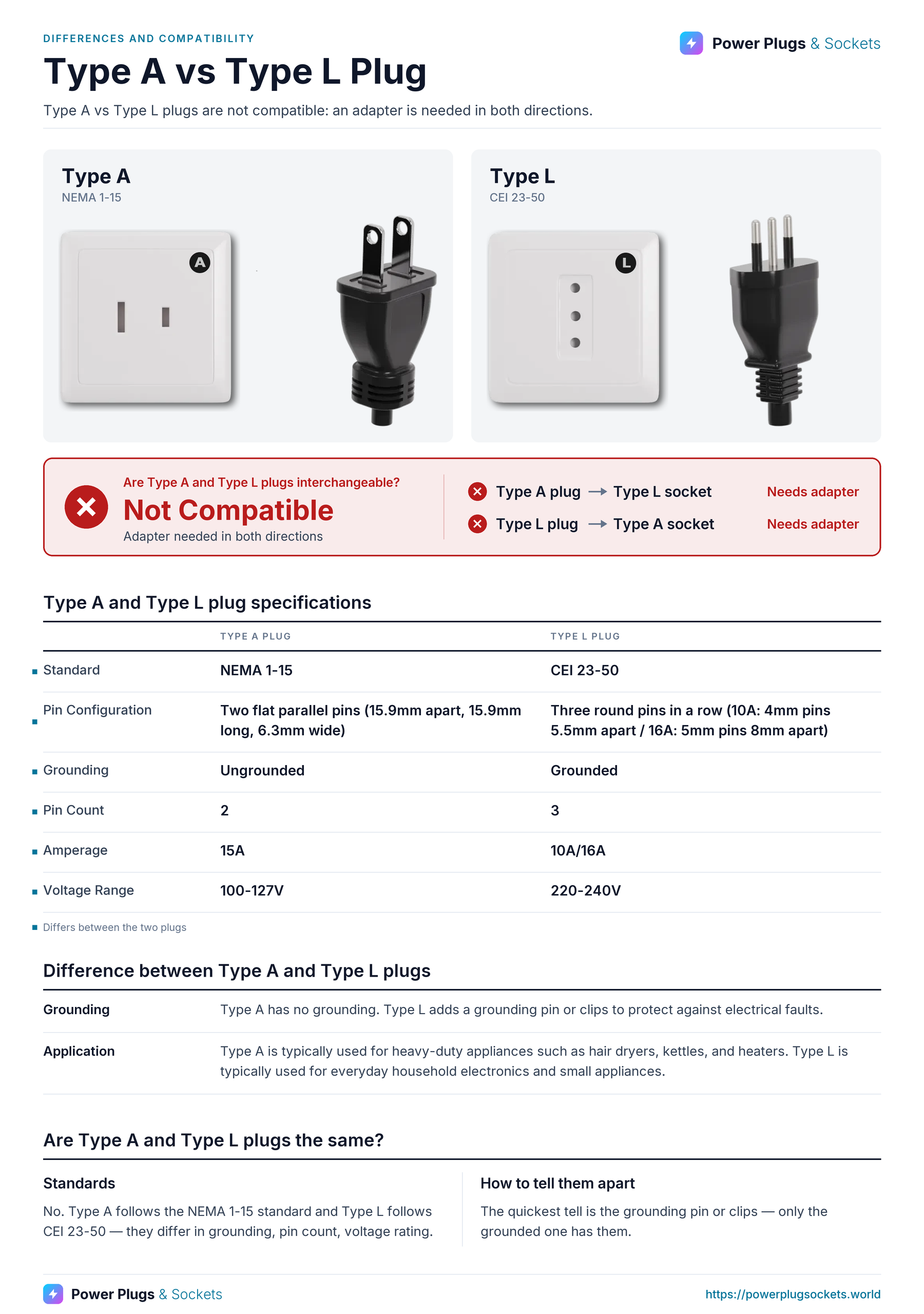
Type A vs Type L plugs are not compatible: an adapter is needed in both directions. Type A is a 2-pin, ungrounded plug rated 15A at 100-127V, while Type L is a 3-pin, grounded plug rated 10A/16A at 220-240V. The two differ mainly in grounding, voltage, amperage and pin design, which is what decides compatibility — whether a Type A plug fits a Type L socket, and vice versa. Compare this with how the NEMA 5-15 standard for type B compares to IEC 60906-1 for type N.
Swipe to compare
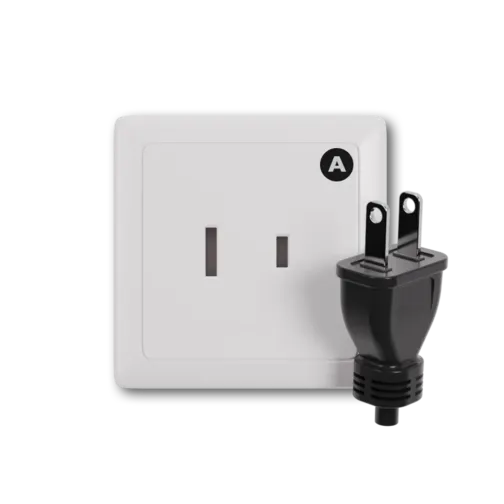
Type A
|
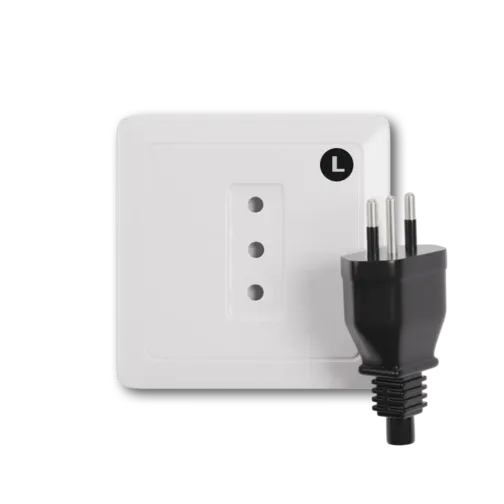
Type L
|
|
|---|---|---|
| Standard | NEMA 1-15 | CEI 23-50 |
| Pin Configuration | Two flat parallel pins (15.9mm apart, 15.9mm long, 6.3mm wide) | Three round pins in a row (10A: 4mm pins 5.5mm apart / 16A: 5mm pins 8mm apart) |
| Grounding | Ungrounded | Grounded |
| Pin Count | 2 | 3 |
| Amperage | 15A | 10A/16A |
| Voltage Range | 100-127V | 220-240V |
Packing for a trip from Toronto to Rome? The Type A vs Type L plug question comes down to the flat-bladed NEMA 1-15 used across North America and the Italian CEI 23-16/VII plug with three round pins in a line.
You will see why they never fit and which adapter or converter you need for devices when traveling.
Type A vs Type L Plug at a Glance
The American plug has two flat contacts, no earth contact and roughly 120 volts at 60 cycles; the Italian plug has three round contacts, the middle one for earthing, on 230 V at 50 cycles. The IEC letters each national standard: A for NEMA, L for CEI.
| Feature | Type A (NEMA 1-15) | Type L (CEI 23-50) |
|---|---|---|
| Contacts | Two flat blade contacts, two-pin | Three round pins, three-pin |
| Rated current | 15 A | 10 A or 16 A version |
| Plug voltage rating | 125 V | 250 V |
| Typical mains supply | 100-127 V, 50 or 60 Hz | 220-230 V, 50 Hz |
| Earth contact | None (ungrounded) | Central earth pin |
| Polarized | Usually, via a wider neutral blade | No, fits in either direction |
| Insulated pins | No | Yes |
| Accepts a Europlug | No | The 10 A socket does |
Key Differences in Shape, Rating and Grounding
Put a Type A plug and Type L plugs side by side: flat blades against cylindrical pins, 15 A at 125 volts against 10 A or 16 A at 250 volts. The Italian central earthing pin gives grounding; Type A has none.
How the NEMA 1-15 American Plug Is Built
The Type A design is a standard of the National Electrical Manufacturers Association, with a parallel blade shape: in NEMA 1-15 the first number is the layout and the second the maximum current, 15 A. Types A & B are standard in the US, Canada, Mexico, Central America and Japan (100 V). Harvey Hubbell patented the polarized version; ungrounded outlets are barred in new construction since 1965 but remain in older buildings, often as a duplex socket. Next, check type C versus type D plug shape and socket design compared.
Flat Parallel Prongs and Pin Spacing
The two flat parallel prongs are 1.5 mm thick and 15.9 to 18.3 mm long, with 12.7 mm pin spacing. Any NEMA 1-15 plug fits any matching outlet, including NEMA 5-15.
Why Type A Prongs Often Have Holes
Many blades have an optional hole near the tip, mainly for manufacturing purposes; contact wipers can click into it. Type L pins are round and sleeved with no holes.
Ungrounded Class II Design and the Type B Upgrade
Most Type A plugs are polarized: the 7.9 mm neutral blade is wider than the 6.3 mm hot blade, so the plug is inserted one way. With no third pin, Type A suits Class II equipment with double insulation.
The Type B plug adds a longer grounding pin; Class I equipment needs a grounding wire.
How the Italian Type L Electrical Plug Is Built
The Italian design was first published as CEI 23-16-VII and is now covered by CEI 23-50. It is sometimes called the Italian 3-pin plug.
The Smaller Italian Plug and the Europlug
The 10 A version has 4 mm pins, the outer pins 19 mm apart with a 5.5 mm gap between neighbours, exactly where a Europlug (CEE 7/16) puts its pins, so it also accepts that two-pin plug.
The Larger Version: Thicker Pins, Wider Spacing
In the 16 A version the pins are thicker, 5 mm, with the outer pins 26 mm apart and an 8 mm gap. The bigger contact diameter carries more current, and a 16 A plug will not go into a 10 A-only socket.
Earth Pin and Unpolarised Live and Neutral Contacts
The earthing pin always sits in the middle, so the plug is not polarised and fits in either direction; Italian switches and fuses disconnect both poles.
Type L Socket Variants: Bipasso and Schuko-Style Outlets
A plain Type L receptacle is now rare. The multi-standard P40 universal socket takes a Type C plug, Type E, Type F, CEE 7/7 and CEE 7/17 plugs and both Type L sizes, but has no flat slots for Type A.
The Presa Bipasso (P17/11)
The common compact outlet, the presa bipasso P17/11, has a round centre hole and a figure-8 hole each side for 10 A and 16 A pins, plus a Europlug. It is a small hybrid socket found in many hotels.
Countries Using the Type L Electrical Outlet vs Type A
The Type L electrical outlet usually sits next to Type C, F or E sockets. Type L also appears in San Marino, Uruguay, Ethiopia, Eritrea, Libya, Syria and Tunisia; Type A in the United States.
| Country | Plug types in use | Voltage (V) | Frequency (Hz) |
|---|---|---|---|
| Italy | C, F, L | 230 | 50 |
| Chile | C, L | 220 | 50 |
| Canada | A, B | 120 | 60 |
| Japan | A, B | 100 | 50 / 60 |
Destinations Where You Find Both Plug Types
Cuba has Type A and B outlets alongside Type C and Type L, with some circuits at 110 V and others at 220 V, so check each outlet's voltage; the Maldives mixes sockets too.
Voltage and Frequency Behind a Type L Electric Plug
Behind every type L electric plug is a 230 V or 220 V supply, about twice North American electricity. For travellers the voltage difference decides whether a device works, not just whether it fits.
Why a Plug Adapter Is Not a Voltage Converter
Adapters and converters do different jobs. A plug adapter, or plug converter, only changes shape; a voltage converter (step-down electrical transformer) reduces 230 V to around 120 V.
Dual Voltage Chargers vs Single-Voltage Appliances
Phone chargers, smartphones, laptops and camera chargers marked 100-240 V (also printed 100–240V or 100 to 240 V) have dual voltage capability, so an adapter is enough. A 1,600-watt, 120 V-only iron would draw about 25.6 amps on 230 V and burn out, as hair dryers do.
| Device on Italian outlets | What you need |
|---|---|
| Charger marked 100-240 V | Adapter only |
| 120 V-only electronics under about 100 W | Adapter plus a small step-down converter |
50 Hz vs 60 Hz Equipment
Frequency is measured in hertz, cycles per second. North America uses 60 Hz and Type L countries 50 Hz; a 60 Hz motor on 50 Hz runs about 17% slower.
Choosing a Type L Adapter for American Devices
A type L adapter taking type A plugs on one side and round pins on the other is all most trips need.
Travel Adapter Features to Check
- Pick a travel adapter with a 10 A Italian three-pin or Europlug end; it suits almost everything up to about 2,300 watts.
- For grounded NEMA 5-15 plugs, choose a type L plug adaptor with an earth pin.
- Keep the total load below its maximum rating; a power strip from home beats a chain of adapters.
Safety Differences Between Type A Sockets and Type L Sockets
Italian outlets add safety layers the older American design lacks. For a related pairing, see what adapter converts a type K plug to a type N socket.
Exposed Blades on Ungrounded Outlets
A Type A wall socket is not recessed and its blades have no sleeve, so a plug pulled halfway out or partially inserted can expose live contacts, a real electric shock risk.
Insulated Pins and Shutters on Italian Sockets
Italian plugs have sleeved pin shanks, and outlets add shutters; newer American homes need tamper-resistant outlets. Overload from stacked adapters or a thin extension cord is a safety hazard and can cause a fire.
Why the Italian Earthed Plug Differs From Its American Rival
America's first grids supplied around 110 volts, and the flat plug spread before earthing. Italy had separate supplies, such as 127 V and 220 V, so two plug sizes kept each appliance on the right one; single-voltage devices still need a converter.