Type G vs Type M Plugs: Differences & Compatibility
Type G vs Type M plugs are not compatible: an adapter is needed in both directions. Type G is a 3-pin, grounded plug rated 13A at 220-240V, while Type M is a 3-pin, grounded plug rated 15A at 220-240V. The two differ mainly in amperage and pin design, which is what decides compatibility — whether a Type G plug fits a Type M socket, and vice versa. Compare this with how the pin configuration of a type I plug differs from a type O plug.
Swipe to compare
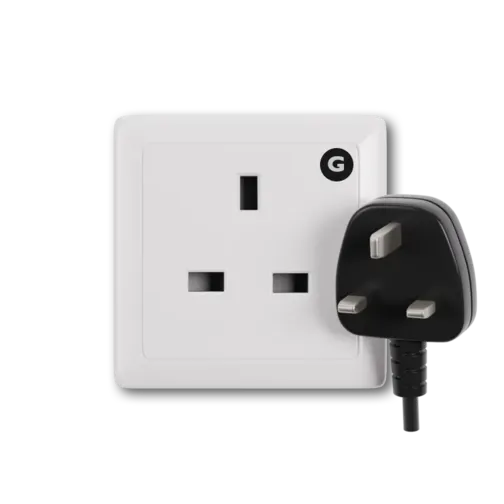
Type G
|
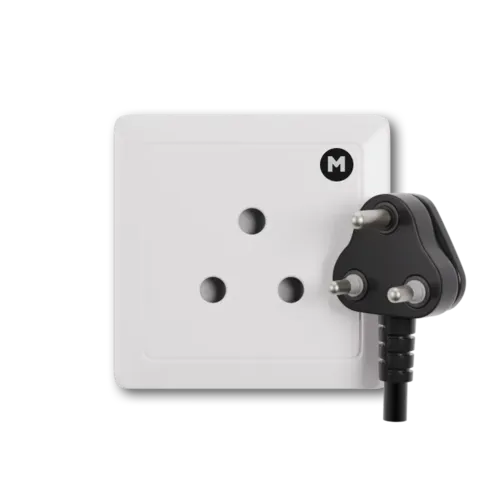
Type M
|
|
|---|---|---|
| Standard | BS 1363 | BS 546 (15A) |
| Pin Configuration | Three rectangular pins in triangular pattern (live/neutral 6.35x3.18mm, earth 3.18x7.92mm) | Three large round pins in triangular pattern (earth 8.7mm diameter, live/neutral 7.1mm diameter) |
| Grounding | Grounded | Grounded |
| Pin Count | 3 | 3 |
| Amperage | 13A | 15A |
| Voltage Range | 220-240V | 220-240V |
Packing for a trip between London and Johannesburg? The type G vs type M plug question decides whether your charger works on arrival.
Both are three-pin earthed designs for 230-volt electricity, yet no G plug fits an M socket and no M plug fits a G socket, so travellers need the right adapter.
Type G vs Type M Plug: The Key Differences
The IEC (International Electrotechnical Commission) groups plug and socket designs by rough mechanical compatibility. Plug type G is the British 13-amp system; M is the older British 15-amp round-pin system still used in South Africa and India. Compare this with is it safe to use a type A device on a type E socket.
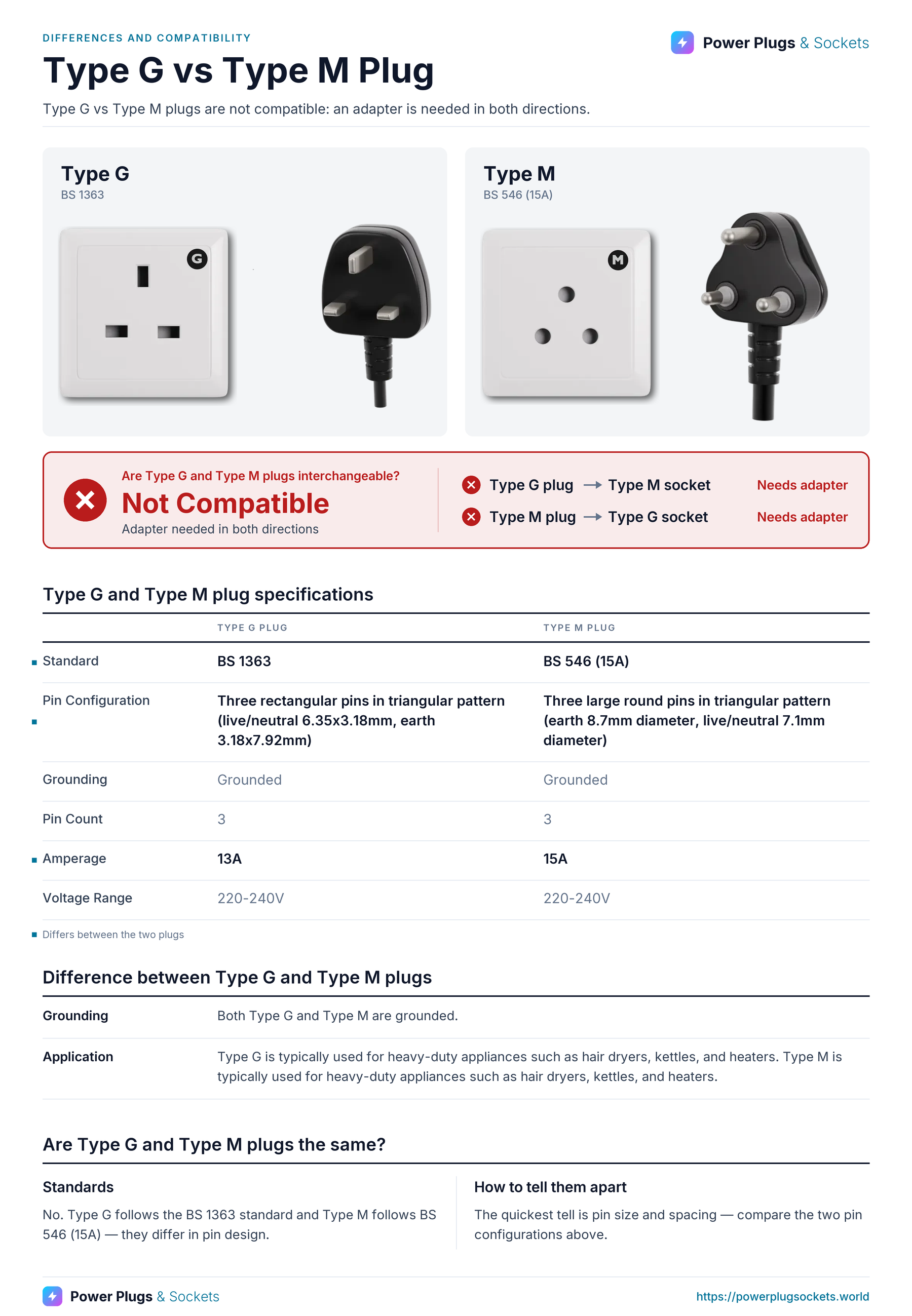
| Feature | Type G | Type M |
|---|---|---|
| Main standard | BS 1363 (UK), IS 401/411, MS 589, SS 145 | British 15-amp round-pin standard, plus the South African and Indian 16 A versions |
| Pins | 3 flat, rectangular | 3 large, round |
| Current rating | 13A (fused) | 15 A (UK) or 16 A (South African and Indian) |
| Maximum load at 230 V | 2,990 W | 3,450 W to 3,680 W |
| Fused plug | Yes, 3A to 13A | No |
| Grounded / polarized | Yes / yes | Yes / yes |
| Sleeved line and neutral pins | Yes, since 1984 | Optional |
| Shuttered socket | Yes | Usually, on newer sockets |
| Socket compatible with | G plugs only | M plugs (and D plugs on combined units) |
| Recessed socket | No | No |
Three Rectangular Pins vs Round Pins
A G plug has three rectangular pins, or rectangular prongs: two flat blades about 4 mm thick and a taller earth blade on top. These domestic power sockets are rated for the electrical outlet's whole circuit.
An M plug has three round pins about 7 mm across, the earth pin fatter. The plug shapes cannot be confused, and neither fits the other's socket.
The British plug, or 13 A plug, is limited to 13A, so type G plugs rarely matter for current; the the M plug to 15 amps in Britain and 16 A in South Africa and India, roughly 3 kW against 3.45 to 3.68 kW at 230 V; this matters for fan heaters and air conditioners. Both systems are grounded and polarized by shape alone, and the earth pin is longer so earthing connects first and grounding disconnects last.
How the BS 1363 Plug Is Built
BS 1363 is published by the British Standards Institution (British Standards Institute) and listed in BS 7671, and it is used in more than 50 countries. It has a reputation as the safest in the world for electrical safety, though travellers find the type G plug hulking and cumbersome next to a Europlug. You might also want what is the difference between type D and type F electrical sockets.
The three blades form an isosceles triangle in a triangular pattern. The top earth pin, the circuit protective conductor, is about 22.7 mm against 17.7 mm for the line and neutral, and it opens the shutters over the live and neutral contacts, keeping foreign objects out.
Since 1984 the line and neutral blades have insulated pins, giving protection from accidental contact and removing electrocution risk. In UK homes the socket-outlet sits on a ring circuit on the power supply side protected at 32 A, far more than a thin cord can carry.
Every G plug has an integrated fuse, the design's overcurrent protection: a 3A fuse for smaller appliances such as lamps and chargers, a 13A fuse for larger appliances such as kettles and heaters. It protects the flexible cord from current overload and fire risk; on non-rewirable plugs the cord set maker chooses a fuse rating, so appliances arrive with the right one pre-installed.
Countries That Use Power Outlet Type G
You will find power outlet type G sockets across the United Kingdom, Ireland, Malta, Cyprus, Malaysia, Singapore and Hong Kong, the Arabian Peninsula (Saudi Arabia, the United Arab Emirates, Qatar), and Kenya, Nigeria and Ghana. Voltage is 230 to 240 V at 50 Hz, with Hong Kong at 220 V and Saudi Arabia at 60 Hz.
How the BS 546 15 A Plug Is Built
BS 546 was introduced in 1934 and defines round-pin plugs at 2, 5, 15 and 30 amps. The 5-amp size is type D and the 15-amp size is the M plug.
The UK replaced it with BS 1363, but it spread across the former Empire and the IEC counts about 40 countries using D and around 15 using M.
Larger Pins Than Plug Type D
The M plug has larger pins of about 7.1 mm for line and neutral and 8.7 mm for earth, against 5.1 mm and 7.1 mm on a plug type D. Many Indian sockets are combined 6/16 A units that accept either size, but a type D plug does not fit a plain M socket.
Unfused and Rated for Heavy Appliances
The M plug is unfused; protection comes from the breaker, which suits heavy appliances such as geysers, stoves and air conditioners, and in South Africa an electric vehicle charging cable. That breaker is rated for the wiring in the wall, not the cord.
SANS 164-1, IS 1293 and the Move to SANS 164-2
South Africa's standard is SANS 164-1 and Indian sockets follow IS 1293, both rated 16 A. In 2013 SANS 164-2, its version of the IEC type N, became the preferred standard, though most homes still have the big round-pin socket-outlets.
Countries That Use Power Outlet Type M
The 15/16 A round-pin socket is used in South Africa, Eswatini (formerly Swaziland), Botswana, Lesotho, Namibia, India, Sri Lanka, Nepal, Pakistan, Bhutan and Macau, plus Israel for heavy loads. Mains supply falls in the 220 – 240 V band, so plug type M is about socket shape, not voltage; Sri Lanka, Botswana, Pakistan and Macau may have both a G and an M socket in one building.
Can a UK Electrical Socket Take the South African Plug? Adapters and Voltage
No. A UK electrical socket only accepts G plugs, and an M socket is only socket compatible with M plugs. Neither is a recessed socket, and no IEC standard defines a plug and socket that takes both, so you need an adapter.
Choosing a Travel Adapter or Plug Adapter
Buy a single-destination travel adapter with a G socket on the front and three large M-size pins on the back; a simple plug adapter like this is rated for the full current. Most universal worldwide travel adapters leave out the M plug because its pins are too large, so read the pin list.
Voltage Converter and Dual Voltage Chargers
Voltage is not a problem: both sit in the 220 – 240 V range, Britain at 230V and 50Hz and South Africa at 230 V and 50Hz, so voltage and frequency match. You need a voltage converter only for 110–120 V equipment from North America or Japan.
Most phone and laptop chargers are dual voltage (100–240 V), but hair dryers and straighteners are the usual exception.
Some exceptions catch people out. UK bathrooms have a BS 4573 shaver socket limited to low loads, and older hotels may have 2 A and 5 A round-pin sockets that won't take a South African plug.
Cheap travel adaptors with a universal front often lack earthing, so use an earthed G-to-M adapter for anything with a metal case.