Type H vs Type N Plugs: Differences & Compatibility
Type H vs Type N plugs are not compatible: an adapter is needed in both directions. Type H is a 3-pin, grounded plug rated 16A at 220-240V, while Type N is a 3-pin, grounded plug rated 10A/20A at 100-240V. The two differ mainly in voltage, amperage and pin design, which is what decides compatibility — whether a Type H plug fits a Type N socket, and vice versa. You might also want comparing type B and type O plugs for international travel.
Swipe to compare
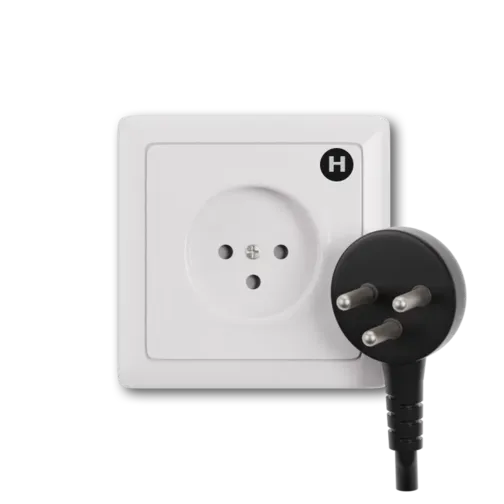
Type H
|
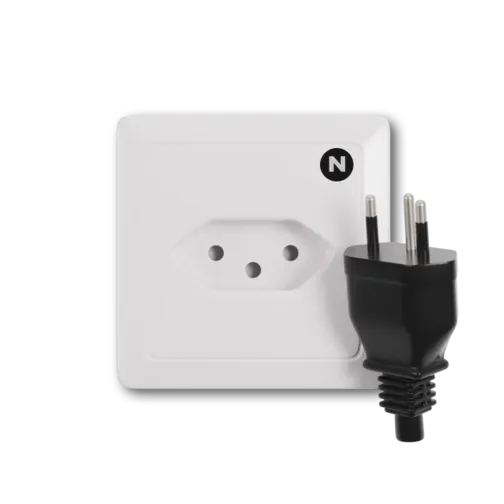
Type N
|
|
|---|---|---|
| Standard | SI 32 | IEC 60906-1 |
| Pin Configuration | Three pins in V-shape arrangement (round 4.5mm or flat pins, 19mm length) | Three round pins in triangular pattern (4mm pins for 10A, 4.8mm pins for 20A) |
| Grounding | Grounded | Grounded |
| Pin Count | 3 | 3 |
| Amperage | 16A | 10A/20A |
| Voltage Range | 220-240V | 100-240V |
Travellers moving between Israel and Brazil or South Africa, note the type H vs type N plug question. Both are grounded three-pin systems, yet neither plug fits the other's socket, and only the Europlug works in both.
Mains electricity is similar in each, on a protected circuit.
Type H vs Type N Plug: The Key Differences
Each is a grounded plug and socket system accepting the unearthed Europlug. The differences are pin shape, plug pins, current rating and finger protection.
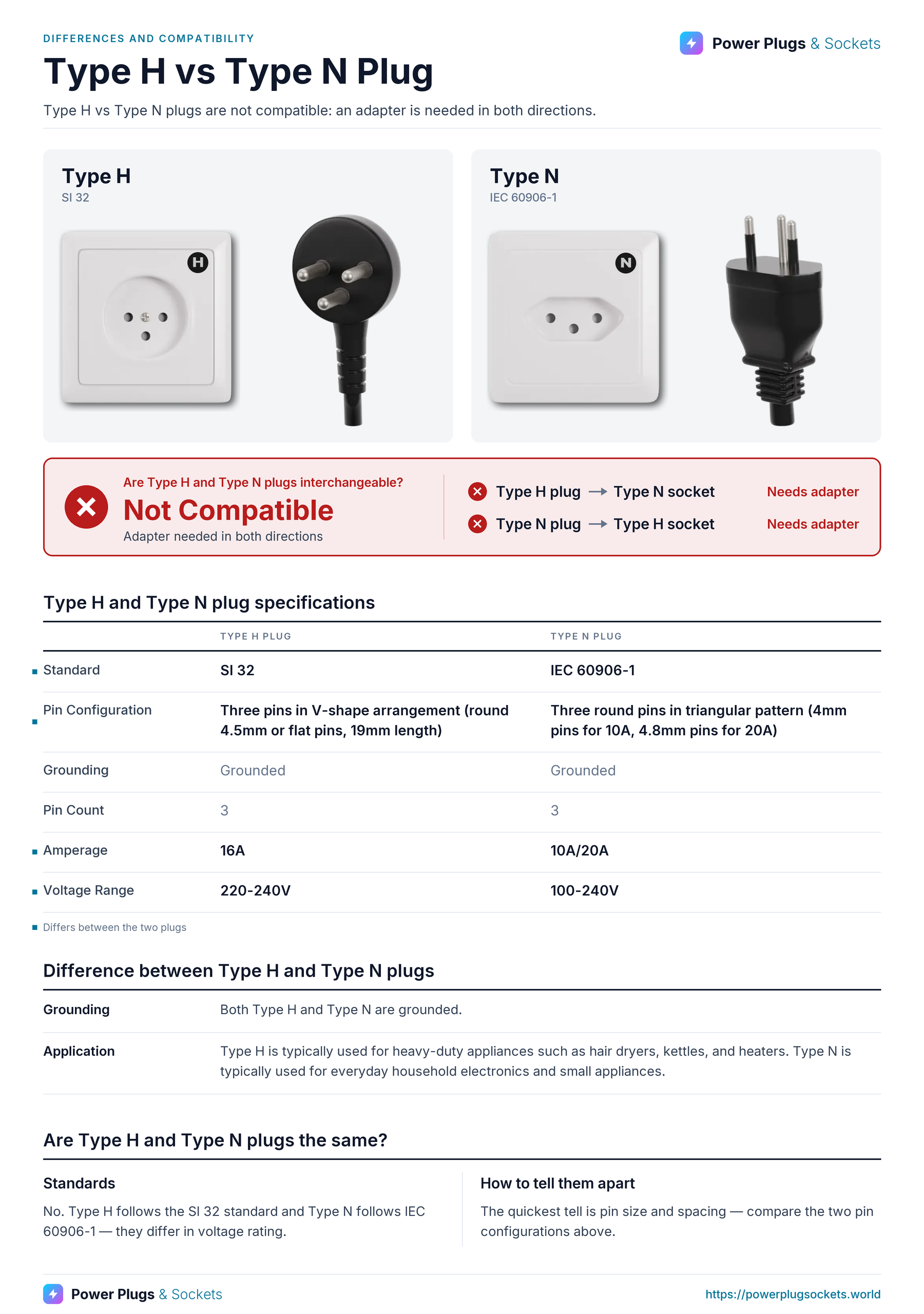
| Feature | Type H (Israel) | Type N (Brazil and South Africa) |
|---|---|---|
| Governing standard | SI 32 (Israel) | IEC 60906-1, SANS 164-2, NBR 14136 |
| Pins | 3, grounded | 2 or 3; three-pin version grounded |
| Pin layout | Y-shape, earth pin at the bottom | Compact layout, earth pin offset 3 mm |
| Pin diameter | 4.5 mm round (flat on pre-1989 plugs) | 4.5 mm (IEC), 4.0 mm or 4.8 mm (Brazil) |
| Live and neutral spacing | 19 mm | 19 mm |
| Current rating | 16 A | 16 A (IEC and South Africa), 10 A or 20 A (Brazil) |
| Voltage | 220 – 240 V, plug rated 250 V | 100 – 240 V in use, plug rated 250 V |
| Polarized | Yes | Yes |
| Insulated pins | No | Yes |
| Recessed socket | No | Yes |
| Socket accepts Europlug | Yes | Yes |
| Socket compatible with | Type C and Type H | Type C and Type N |
A Type H socket is socket compatible with plug types C and H, and a Type N socket with types C and N; the outlet compatible list ends there.
Both put the live and neutral pins 19 mm apart. On the Israeli plug the earth pin sits well below, forming a Y-shape; on the IEC 60906-1 design it is offset just 3.0 mm, giving a compact triangle with prongs close together.
Brazil uses 4.0 mm pins for 10 A and 4.8 mm for 20 A.
The Israeli plug has one amp rating, 16 A at 250 V, as does the IEC Type N; Brazil has 10 A and 20 A. On voltage, Israel and South Africa are about 230 V at 50 Hz, while Brazil is split between about 220 V and 127 V.
The International Electrotechnical Commission standard, for electrical safety, makes shutters mandatory, the socket recessed and the plug insulated pins. Israel's sockets have no recess, so a partly inserted plug risks electric shock.
Both are polarized, so polarity keeps a live pin on a known side.
The Israeli SI 32 Plug and Its Socket
The Type H plug is defined by SI 32 (also written SI32) and used in one region only, and older plugs had Bakelite bodies. Shops sell them as Type H plugs & outlets. Compare this with what is the difference between type E and type G electrical sockets.
From Flat Pins to Round Pins in 1989
The original design used three flat pins; in 1989 it moved to three round pins in the same positions. New sockets take both, plus the unearthed Europlug for devices under 2.5 A.
The V-Shaped Layout and Its Grounded Third Pin
Every Type H plug is grounded. The two V-shaped power pins angle towards the earth pin below, so a metal-cased appliance needs an earthed plug.
Where You Will Find It: Israel, the West Bank and Gaza Strip
Type H is used exclusively in Israel, the West Bank and the Gaza Strip (Palestine), where every wall socket follows it.
IEC 60906-1 and the Brazilian and South African Versions
In 1986 the IEC published IEC 60906-1, meant to replace national plugs in 230 V regions; three countries took it up as Type N plugs, listed as Type N plugs & outlets or a Type N plug & socket. It is rated 16 A at 250 V. For a related pairing, see is it safe to use a type C device on a type L socket.
South Africa adopted it as SANS 164-2 in 1992, covering a two-pin and a three-pin plug, and made it preferred in 2013. Paraguay also adopted the design.
Older round-pin Type M sockets still sit beside it.
Brazil's NBR 14136 (1998) has a 10 A plug with thinner pins and a 20 A plug with thicker ones, and requires no shutters. It became compulsory on 1 January 2010.
A 20 A plug does not fit a 10 A socket, but socket tolerances can let mismatched plugs overload a socket.
A Compact Triangle Behind Recessed Sockets
Every Type N socket outlet has a hexagonal recess, so the plug sits inside the receptacle before the pins touch live contacts, giving good retention.
Israeli and Brazilian Plug Compatibility in Practice
Physically the two systems are not compatible; the mechanical compatibility stops at the Europlug in Europe and elsewhere. A Type H socket accepts H and C plugs, a Type N socket accepts N and C plugs, and a Schuko or French plug is an unsafe partial fit in H and does not fit N. Hybrid and universal socket risks add to this: hotel universal or multi-standard sockets meet no official standard, may not connect the earth pin and can expose a live pin, so use them only for a small two-pin device; a certified adaptor beats a wall socket gamble.
The Europlug Fits Both Sockets
The Europlug (CEE 7/16, type C) is a two-pin, unearthed plug rated 2.5 A at 250 V for Class II appliances such as phone chargers, not heaters or kettles.
Partial and Unsafe Compatibility With Schuko Plugs
A Schuko plug (CEE 7/4, type F) or hybrid CEE 7/7 (also fitting type E) can be pushed into a Type H socket, but no earth contact is made. Treat it as partial and unsafe compatibility; Type N sockets are too deeply recessed to take them at all.
Taking Appliances Between H and N Sockets by Plug Type
An appliance moving between H and N sockets needs an H-to-N or N-to-H travel plug, which solves pin layout only; the voltage is a separate check. Flying earth tails and unearthed wiring matter in Brazil: few older homes have an earthed supply, and large appliances used a flying earth tail, a separate wire many owners never connected, so have grounding checked before plugging in a metal-cased appliance.
Travel adaptors change only plug shape, not voltage or frequency. A device not rated for the destination needs a voltage converter, and an adapter alone can burn it out; most phone and laptop chargers are rated 100 – 240 V.
Brazil's 127 V Regions and Dual Voltage Appliances
Many appliances sold in Brazil are dual voltage; set them to the higher setting in Israel. An appliance built only for the lower supply needs a step-down converter in Israel or South Africa.
Where These Plug Types Sit Among the 15 Domestic Plugs and Sockets
There are 15 lettered types of domestic plugs and sockets, A to O, kept by the IEC; the letters describe rough fit only, as Type N shows with its 10 A, 16 A and 20 A versions.
Close Relatives: Type C and Type J
Type C is the common ground for both systems. A Swiss plug (Type J), the closest relative of Type N, has a different pin layout and a 10 A rating, so it is not interchangeable.
Earthing, Class II and Double Insulation
A Class I appliance relies on earthing, so it needs a grounded Type H or Type N plug. A Class II appliance uses double insulation and can use an unearthed two-pin plug between both countries.