Type M vs Type O Plugs: Differences & Compatibility
Type M vs Type O plugs are not compatible: an adapter is needed in both directions. Type M is a 3-pin, grounded plug rated 15A at 220-240V, while Type O is a 3-pin, grounded plug rated 16A at 220-240V. The two differ mainly in amperage and pin design, which is what decides compatibility — whether a Type M plug fits a Type O socket, and vice versa. You might also want packing an adapter for a trip that has both type F and type L sockets.
Swipe to compare
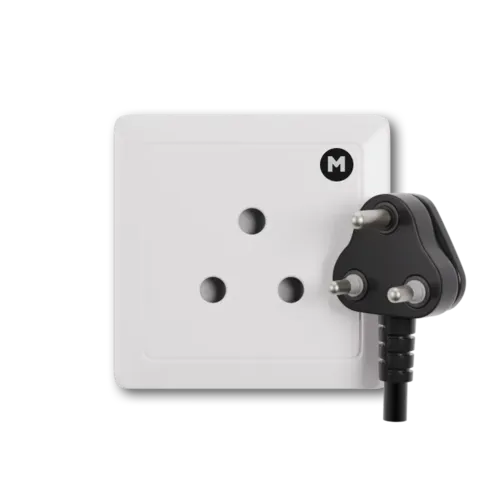
Type M
|
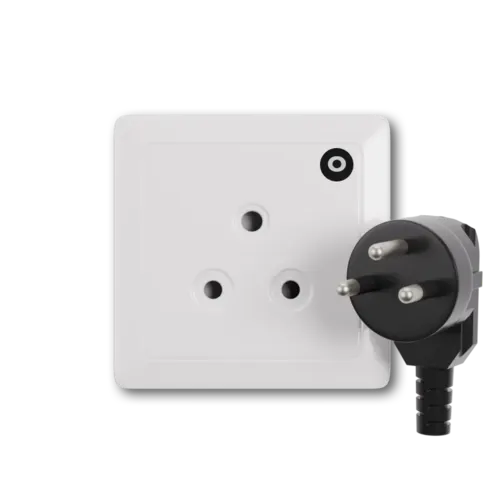
Type O
|
|
|---|---|---|
| Standard | BS 546 (15A) | TIS 166-2549 |
| Pin Configuration | Three large round pins in triangular pattern (earth 8.7mm diameter, live/neutral 7.1mm diameter) | Three round pins in triangular pattern (4.8mm diameter power pins, 4mm grounding pin) |
| Grounding | Grounded | Grounded |
| Pin Count | 3 | 3 |
| Amperage | 15A | 16A |
| Voltage Range | 220-240V | 220-240V |
Packing for Johannesburg and Bangkok on the same trip? The type M vs type O plug question matters because both designs use three cylindrical prongs, yet they share almost nothing else: the plug used in South Africa is a heavyweight built around thick prongs, while the one used in Thailand is slim and sized like a Europlug.
Below you get the dimensions, ratings, socket compatibility and adapter choices for both countries.
Type M vs Type O plug: the key differences at a glance
The letters come from the IEC World Plugs list; a letter is only a label for rough mechanical compatibility, and the real design lives in each national standard. The heavier plug descends from a British standard first published in 1934, while the slimmer one is defined by Thai Industrial Standard TIS 166-2549. For a related pairing, see what are the differences between a type I and a type M plug.
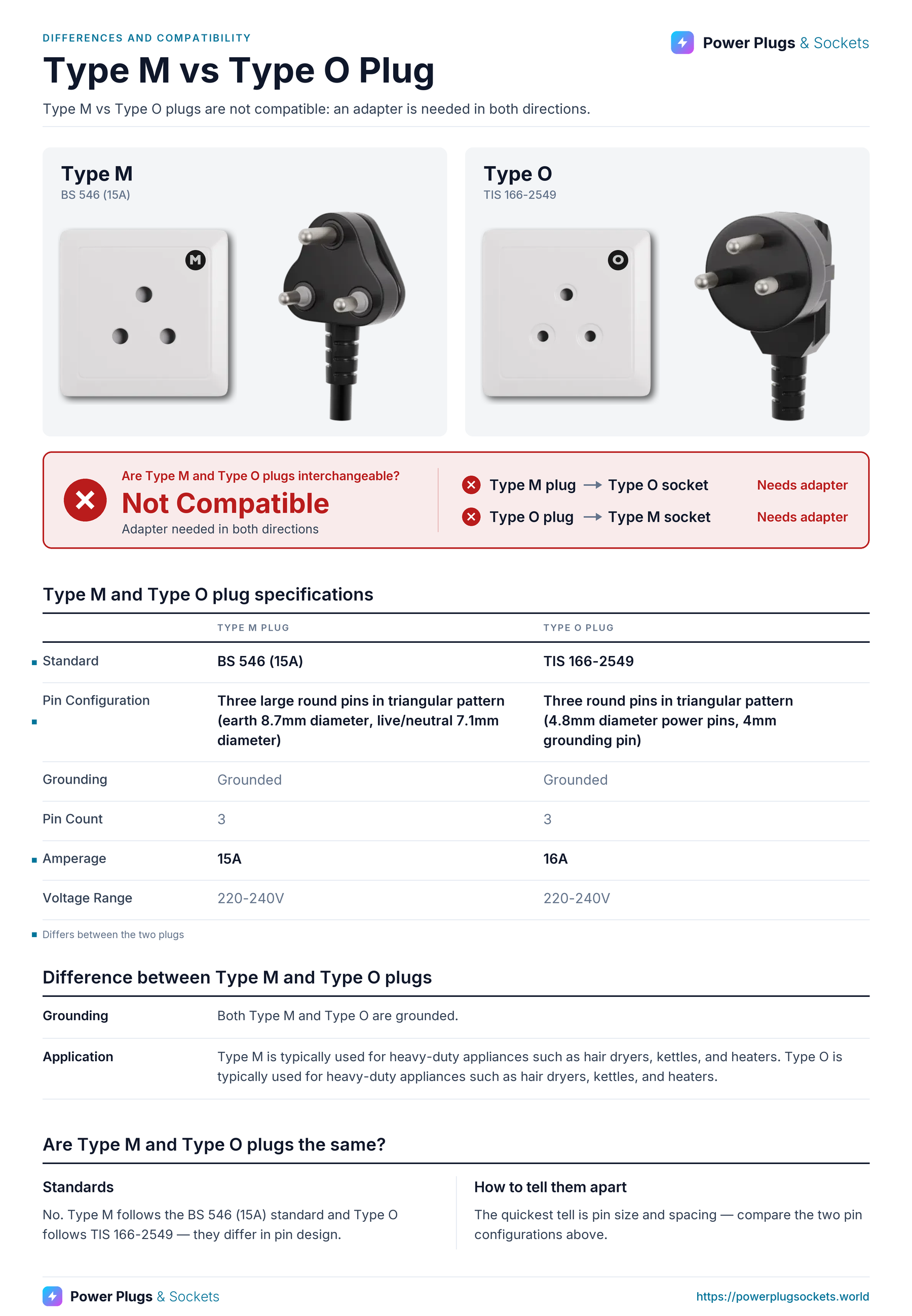
Each plug is grounded through an earth pin and polarized: the South African earth prong is the thickest and longest, so earthing makes contact first, while the Thai earth pin matches the others and sits off-centre. A fused plug is optional on the South African design and absent from the Thai one.
| Feature | South African design (IEC letter M) | Thai design (IEC letter O) |
|---|---|---|
| Pins | 3 pins in an upright triangle | 3 pins (an unearthed version with two also exists) |
| Rated current | 15 A in the British form, 16 A in the South African and Indian forms | 16 A |
| Rated voltage | 250 V | 250 V |
| Mains supply | 220 – 240 V (230 V nominal), 50 Hz | 220 – 240 V, 50 Hz |
| Live pins (size) | about 7.05 mm wide, 18.6 mm long | about 4.8 mm wide |
| Live-to-neutral centres | 25.4 mm | 19 mm |
| Earth pin | thicker (about 8.7 mm) and longer, at the top | same size as the others, offset to one side |
| Grounded | Yes | Yes (earthed version) |
| Polarized | Yes | Yes (earthed version) |
| Fuse in plug | Optional | No |
| Insulated sleeves on current-carrying pins | Optional | Yes |
| Socket accepts a Europlug | No | Yes |
| Main countries | South Africa, Lesotho, Eswatini, Namibia, India (large appliances) | Thai national grid only |
Voltage, frequency and current rating side by side
South African and Thai homes both receive electricity at a nominal 230 V and 50 Hz, so a device runs on the other's electrical system without a voltage converter. The current rating of the South African design is 15 A in the British standard and 16 A in the national versions; amperage times voltage gives the wattage ceiling, about 3,680 W at 16 A.
Inside the BS 546 and SANS 164-1 design
BS 546 defines four plug sizes, rated at 2 A, 5 A, 15 A and 30 A; the 15 A size became the type M plug. Britain moved to flat-pin BS 1363, but the IEC counts roughly 15 countries that still use plug type M. The South African version keeps the old geometry with a 16 A rating at 250 V.
Where South Africa and its neighbours use it
The big three-prong socket outlet is the default domestic socket in South Africa, as in Lesotho, Swaziland (now Eswatini), Namibia and much of Botswana. In India and Nepal the 16 A version serves air conditioners and water heaters.
Pin diameter and pin spacing of the round pins
The live and neutral pins measure about 7.05 mm across and 18.6 mm long, with 25.4 mm between centres; the earth pin is about 8.7 mm thick. The larger pins carry 16 A with little heating, so the big plug is kept for high-power appliances such as kettles and ovens.
Why it looks like Type D but will not fit
Type D uses the same triangle with 5.1 mm pins about 19.1 mm apart, so the smaller plug rattles loose in the larger socket, and type M plugs will not enter a 5 A socket at all.
SANS 164-2 and the move to Type N
South African regulators named SANS 164-2, the local version of IEC 60906-1, the preferred standard in 2013. That plug, listed as Type N, is a compact three-pin design whose socket also accepts the Europlug.
The transition may take until 2035, so both sockets will sit side by side on the same wall plate.
How the TIS 166-2549 Thai plug is built
The Thai standard replaced older rules based on the American NEMA 1-15 and NEMA 5-15 designs, which were unsafe on 230-volt mains. The type O plugs have 3 pins of 4.8 mm each, live and neutral 19 mm apart like a Europlug, plus an earth pin offset to one side, rated 16 A at 250 V. A two-pin unearthed version exists for double-insulated devices such as phone chargers.
Its live and neutral pins carry plastic sleeves, so insulated pins keep a half-withdrawn plug safe, and its earth pin position matches NEMA 5-15, giving each household a migration path. Neither standard requires a recessed socket.
Child protection shutters are common on newer South African outlets and optional on Thai ones.
The hybrid socket that also takes a Europlug
In a Thai hotel the common power outlet is a dual socket with a hybrid face with two holes shaped for flat American blades or round 4.8 mm pins, plus an earth hole, so it accepts NEMA 1-15 and NEMA 5-15 plugs, the Europlug and the local plug. The standard plans to phase it out, but older buildings will keep it.
Is a Thai socket compatible with South African round pins?
No. The South African prongs are nearly 50% thicker (7.05 mm against 4.8 mm) and sit 25.4 mm apart instead of 19 mm, and the Thai pins are too close together to reach both contacts of a South African socket. Every plug and socket pairing between the two needs an adapter in both directions.
Which plugs each socket is compatible with
- South African socket: only its own 15/16 A plug.
- Thai earthed outlet: the local plug and any Europlug; the hybrid outlet also takes American flat-blade plugs.
- French and German grounded plugs (types E and F): their 4.8 mm pins fit a Thai outlet, but their earth contacts touch nothing, a partial fit, not a safe one.
Why a forced fit is a safety risk
Forcing a plug creates a loose contact that arcs; at 16 A even 0.1 ohm turns about 25 W into heat at the contact, enough for overheating that melts the socket. Never force a plug; use a grounded adapter made for this pair, rated for the current the appliance draws.
Choosing a travel adapter for the 15 A plug and its Thai counterpart
Because both countries run 220 – 240 V at the same frequency, you only need to change the plug shape. The adapter must pass all three conductors through, the grounding conductor included. Next, check how the CEE 7/16 (Europlug) standard for type C compares to TIS 166-2549 for type O.
Picking a plug adapter for each of these countries
- South African kit going to Bangkok: buy a South African-to-Thai adapter with an earth pin in the offset position; most universal adapters have no input for these big prongs.
- Thai kit going to Cape Town: a two-pin Thai charger fits the two-prong outlet on most wall plates; an earthed plug needs an adapter ending in the large South African prongs.
- Kit from elsewhere: a travel plug adapter with a Europlug output covers low-power devices, but not earthed ones.
When you also need a voltage converter
Almost never: laptop and phone chargers labelled 100–240 V need only the plug shape. A hair dryer or kettle rated for 120 V only will burn out on 230-volt mains and needs a step-down transformer or a local replacement.