Type A vs Type C Plugs: Differences & Compatibility
Type A vs Type C plugs are not compatible: an adapter is needed in both directions. Type A is a 2-pin, ungrounded plug rated 15A at 100-127V, while Type C is a 2-pin, ungrounded plug rated 2.5A at 220-240V. The two differ mainly in voltage, amperage and pin design, which is what decides compatibility — whether a Type A plug fits a Type C socket, and vice versa. Next, check type E vs type F socket.
Swipe to compare
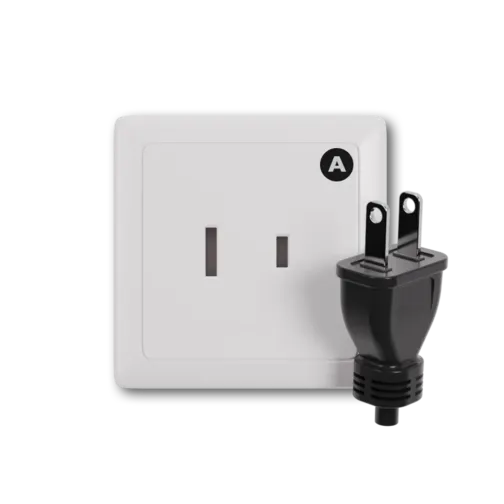
Type A
|
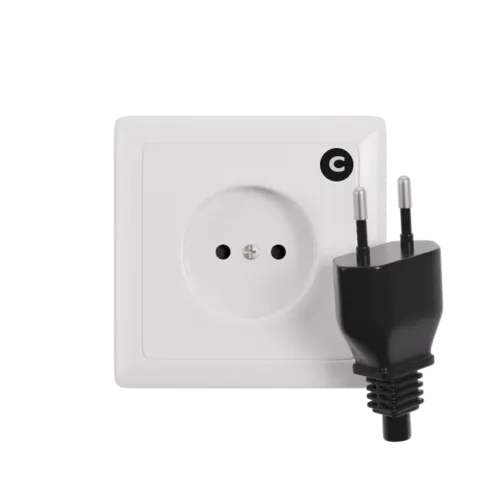
Type C
|
|
|---|---|---|
| Standard | NEMA 1-15 | CEE 7/16 (Europlug) |
| Pin Configuration | Two flat parallel pins (15.9mm apart, 15.9mm long, 6.3mm wide) | Two round pins (4mm diameter, 19mm long, 18.6mm apart) |
| Grounding | Ungrounded | Ungrounded |
| Pin Count | 2 | 2 |
| Amperage | 15A | 2.5A |
| Voltage Range | 100-127V | 220-240V |
Packing electronics for a trip to Europe? The type A vs type C plug question decides whether your devices reach the electricity.
A Type A plug has two flat blades for North American power sockets, Type C has two pins, and a simple adapter bridges the shape but never the voltage or frequency. Travellers will see below how each is built and which outlet accepts which.
Type A vs Type C Plug: The Differences at a Glance
Plug letters are a naming shortcut, not a technical standard. The International Trade Administration of the US Department of Commerce first gave a letter to every plug and socket design, and the IEC expanded that list in IEC TR 60083. You might also want can i use a type F adapter with a type L socket.
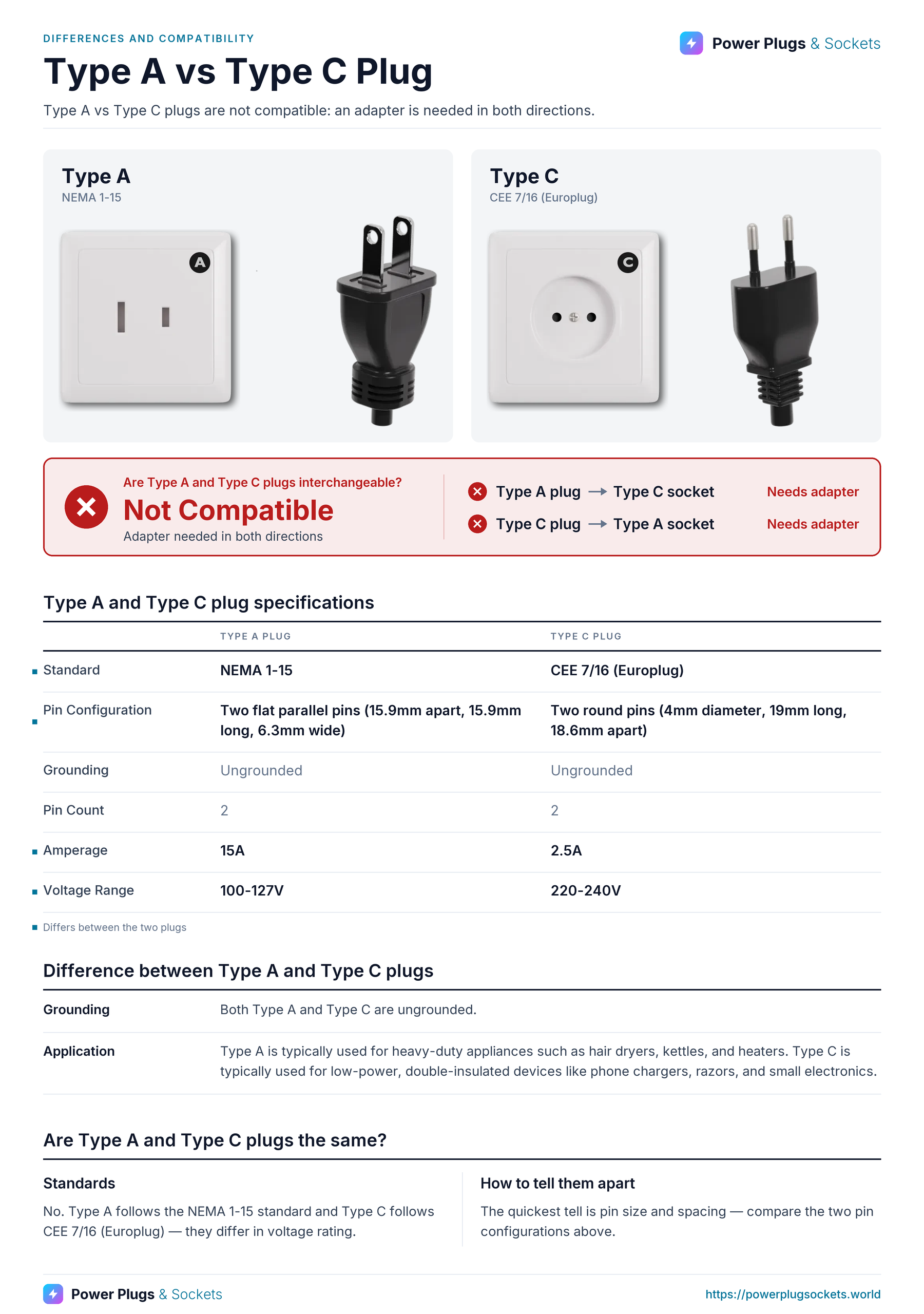
Both plugs have 2 pins yet cannot be swapped, and Type C plugs are far lower rated.
| Feature | Type A | Type C (Europlug) |
|---|---|---|
| Pins | Flat parallel blades | Two round pins, 4 mm thick |
| Main standard | NEMA 1-15 | CEE 7/16, EN 50075 |
| Earthed | No | No |
| Polarized | Optional (wider neutral blade) | No |
| Insulated pins | No | Yes |
| Recessed socket | No | Usually |
| Plug rating | 15 A, 125 V | 2.5 A, 250 V |
| Typical mains voltage | 100–127 V | 220–240 V |
| Main regions | North America and Central America | Most of Europe, plus much of Asia and South America |
The headline difference is current: Type A is rated for 15 A, while the flat Type C design suits only chargers, radios and lamps. A Type A socket also carries roughly half the voltage of a Type C socket, so a plug that fits is not a plug that works.
Plug Shape: Flat Blades or Round Pins
A Type A plug has two flat pins, or blades, about 1.5 mm thick and 12.7 mm apart. The Europlug has cylindrical pins on 19 mm centres, angled slightly toward each other.
Neither fits the other's socket, and bending pins to force them cracks plug faces and overheats contacts.
Neither design has grounding or an earth contact, so both are ungrounded and not grounded for safety by the plug itself; they rely on double insulation. Many Type A plugs are polarized, with a wider neutral blade than the hot blade, while Type C is unpolarized and goes in either way round.
A US socket delivers about 120 V at 60 Hz, Type C countries 230 V at 50 Hz, and the rated voltage of 125 V or 250 V describes only the connector.
How Plug Type A Is Built: The NEMA 1-15 Standard
In North America, Type A is standardised as NEMA 1-15: two flat blades rated 15 A, with no earth, used across the United States, Canada and Mexico. Its grounded sibling, Type B (NEMA 5-15), adds a round earth pin and the socket still accepts a Type A plug.
Japan uses an identical plug under JIS C 8303 at 100 V, 50 Hz in the east and 60 Hz in the west. China's 220 V sockets also take it.
How Plug Type C Is Built: The Europlug Family
Plug type C is a family. Its best-known member is the Europlug, CEE 7/16 Alternative II, defined in EN 50075: a flat body with two 4 mm pins rated 2.5 A at 250 V, fitting almost every socket with 19 mm pin spacing, which makes it the most widely used plug on the planet.
Insulation sleeves on the first 10 mm of each pin cut electric shock risk. Heavier loads use the round CEE 7/17 contour plug, with 4.8 mm pins rated 10 A or 16 A, which fits German and French sockets but not Swiss or Italian ones.
Both plugs serve Class II appliances protected by double insulation, which is why neither needs a ground connection.
Where Plug A and Type C Sockets Are Used
You'll meet a plug A socket mainly across the Americas, plus Taiwan and the Philippines. The Philippines runs 220 V on the same flat-blade shape. Next, check packing an adapter for a trip that has both type C and type D sockets.
Type C sockets cover continental Europe except the UK, Ireland, Malta and Cyprus, Russia, most of Africa and the Middle East, large parts of Asia, and South America. Peru, Bolivia and Vietnam mix both shapes, so read your device label.
Which Plug Types a Type C Socket Accepts
A Type C socket is rarely installed alone; you usually find a national earthed socket that also takes the Europlug.
- Type E (France, Poland): 16 A, socket compatible with plug C and CEE 7/7 hybrid plugs.
- Type F, the German Schuko: 16 A, accepts C, F and hybrid plugs.
- Type H (Israel): 3 pins, accepts C and H.
- Type K (Denmark): accepts C; Schuko and French plugs give partial and unsafe compatibility with no earth.
- Type N (Brazil): accepts C plugs.
- Type J (Switzerland): accepts only C among foreign plugs.
- Type L (Italy, Chile): the 10 A socket takes C plugs.
- Type O (Thailand): accepts C, partial for E and F.
None accepts a Type A plug, so a Type A device always needs an adapter.
Some hotels fit a multi-standard hybrid socket, or universal socket, taking flat and round plugs alike. These often lack shutters and let an earthed plug sit without its earth pin connecting.
Using a Type C Travel Adapter with Type A Devices
A Type C travel adapter is a passive shell with a Type A socket on the front and two 4 mm pins on the back. It changes the plug face and nothing else, so one slim 4 mm-pin adaptor per device works with every plug and socket pairing it fits; a lifetime warranty doesn't change which sockets it fits. Next, check will a type G plug work in a type H socket without an adapter.
A plug adapter changes shape; a voltage converter, or step-down transformer, changes the supply. Dual voltage AC adapters marked 100–240 V need only a plug adapter.
A 1,650 W hair dryer built for 120 V would burn out within seconds and needs a converter rated above 1,650 W.
Voltage Compatibility Checks Before You Plug In
Check voltage compatibility on the rating label: an input line such as INPUT: 100–240 V means an adapter is enough, while a single 110-volt figure means North American only. Chargers and a shaver are usually dual voltage; kettles and older hair dryers often are not.
Choosing Type C Adapters: Surge Protection and USB Ports
Check the current rating printed on the body, since a 10 A Type C adapter suits most travel gear. USB ports let you charge a phone directly, and certified adapters carry fused protection, sometimes basic surge protection for unstable supplies.
Two-Pin Plug Safety in Power Outlets at Home and Abroad
Mixing plug types is where most adapter accidents start. Three 1,650 W appliances on a power strip at 230 volts draw about 21.5 A, far beyond a 16 A wall socket, and the overload can start a fire.
A North American extension cord is usually rated for 125 volts, so it shouldn't carry Type C mains power.
Avoid stacking adapters, avoid lampholder adapters for an Edison screw fitting, and unplug anything that feels warm. Keep high-power devices on a single rated adapter and let low-power chargers share the rest.